Seyhun Özkara had found customers abroad. That was supposed to be the difficult part. Shopio, the online-store platform he co-founded, reached roughly 700 to 800 active paying users, he later recalled. People were using the product and paying for it. Yet the cost of winning them made the business difficult to sustain. The shop doors were opening. The bill for bringing people through them kept arriving too.
For an entrepreneur who had already spent years helping Turkish businesses sell online, it was an expensive education in geography. A useful product could travel. The economics of selling it would change along the way. Özkara’s international experiment belongs beside the domestic company he helped build, IdeaSoft, because the two experiences explain each other: what becomes possible when software is repeatable, and what remains stubbornly expensive when customers must be found one at a time.
The trouble with building every website twice
His first classroom for that problem was a working business alongside university. Özkara studied economics at Yıldız Technical University and did web work while he was a student. He could build the sites; a partner could sell them. There was a pleasing simplicity to the arrangement, until the next customer arrived with a fresh collection of requirements. Bespoke work has a habit of keeping its maker busy without making the next job much shorter.
In his account of those early years, the question became whether they would keep producing another website for another client indefinitely. A business could grow around that work, but each commission pulled it toward a different specification. Packaged commerce software offered a way to reuse more of what they built. One merchant needed an online shop. So did another. Enough of the underlying work could be shared.
IdeaSoft was established in 2005 by Özkara, Fatih Çalışkan and Kerem Kaya. Its beginnings were modest: student founders, a small office, a computer and secondhand furniture. The early capital was 500 Turkish lira, as Özkara’s account of the company’s origins describes it. Those details give the beginning its scale. The founders had work to do before they had much of a company around them.
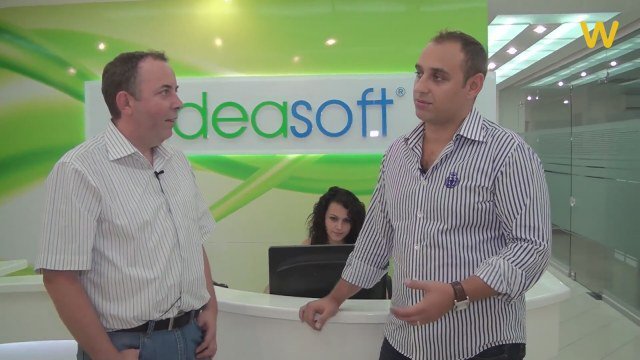
By July 2012, he was welcoming an office visit as a co-founder and CEO. The company had recently received investment in exchange for a minority stake. The scene provides a useful middle distance between the tiny founding office and the much later acquisition: a functioning software business, a team and a founder explaining the working environment. There was already an organization to walk around.
Kerem Kaya’s recollection adds some useful untidiness to the beginning. The partners sold websites door to door, then sold accounting software and a management program for internet cafés. Revenue from that work went back into developing their commerce product. Kaya dated their first e-commerce software sale to April 1, 2007. The company had learned to sell other things before it could sell the product that would define it.
That sequence matters. It puts customer conversations ahead of the finished platform and gives the founders a less tidy apprenticeship than a launch date suggests. Özkara built and put websites online while his partners worked on sales. Later, a company selling software would need its own support, accounts and management. At the beginning, those jobs arrived before there were departments to receive them. The eventual platform grew out of a business whose founders had already encountered the merchant, the sales call and the practical business of keeping the lights on.
The economics graduate had moved into commerce infrastructure. His later postgraduate study was in management information systems. The combination fits the problems his career would keep returning to: what the technology can do, how the customer uses it, and whether the arrangement makes business sense. An online store lives at the meeting point of all three.
The English-language bet
In February 2014, Özkara introduced Shopio at the E-Ticaret’14 conference. IdeaSoft had concentrated on Turkey. This product aimed outward, with an English-language service and initial target markets including the United States, Canada, Britain and Australia. There were further expansion plans, too. The intended merchant could upload product photographs and information and begin assembling an online business without first commissioning the whole technical structure.
The product also made room for developers and designers. Its launch plan included modules, design flexibility, responsive themes and tools for measuring traffic. Tax handling across countries was part of the proposed distinction. These were practical concerns for a product crossing borders: the shop had to suit different screens, different businesses and different rules. The interface could be welcoming while the machinery underneath did rather more work.
“It’s no longer the fashion to sell online but a necessity.”
Seyhun Özkara, Shopio launch-era announcement, 2014
A company announcement that May identified him as Shopio’s CEO and co-founder. Its offer emphasized ready-to-use services for smaller businesses and a free entry plan. The appeal was straightforward. Merchants could try online retail without building a software operation of their own. Özkara was taking a familiar problem, lowering the entry barrier and offering the answer to people far beyond IdeaSoft’s original market.
Years later, his account of the attempt was candid. The paying users had come, but acquiring them demanded spending that was hard to recover through subscriptions. He described the mismatch between the resources available to his venture and the marketing scale of a competitor such as Shopify. He had tried those markets. That experience informed his later preference for opportunities closer to Turkey and in surrounding regions.
His account paired customer traction with acquisition spending that made the model difficult to sustain. This is a historical recollection, not a current user count.
The number gives the experiment some weight. Hundreds of customers had made a purchasing decision. Their presence demonstrated demand, while the cost of reaching them limited what that demand could become. For anyone reading the episode as a simple product contest, the uncomfortable detail is the marketing bill. A better storefront still needs someone to discover it.
The order still has to arrive
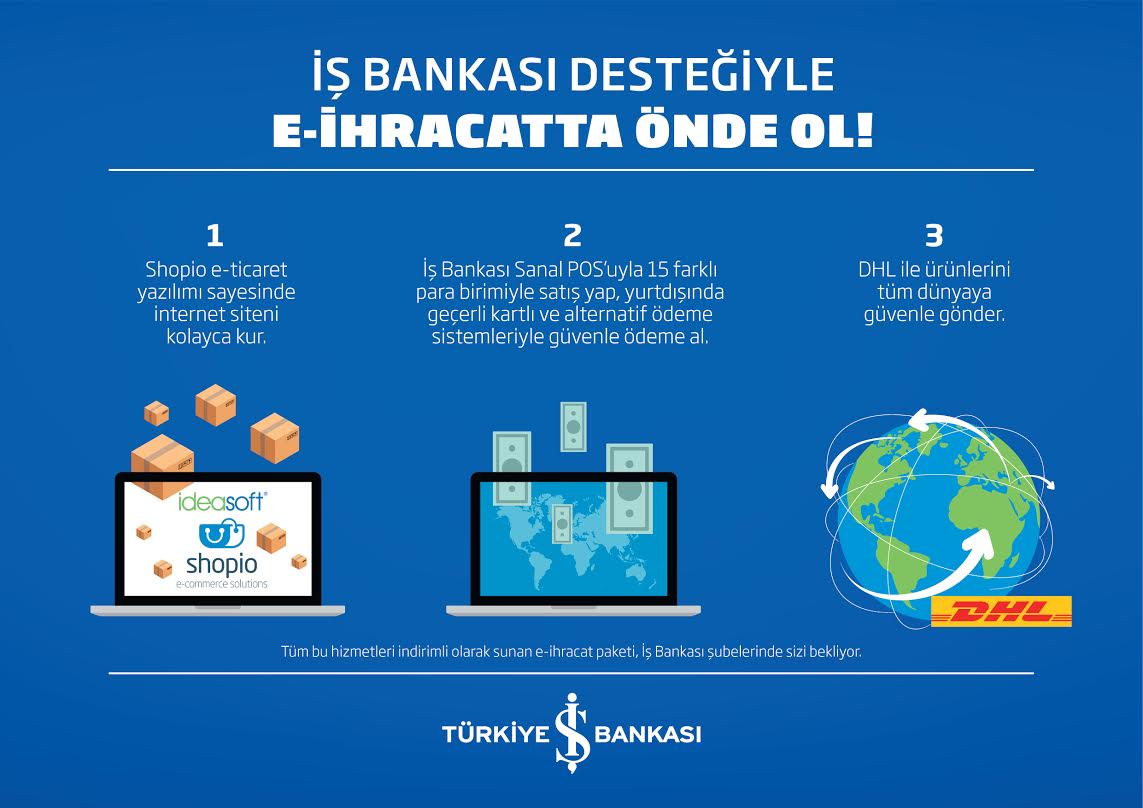
Shopio’s international work also took a more collaborative form. In June 2017, it appeared in an export package bringing together IdeaSoft, İş Bankası and DHL Express. The software supplied the storefront, the bank supplied payment services and DHL supplied delivery. Businesses looking for buyers abroad could access the services together at discounted prices.
That arrangement followed the order beyond the attractive part of the screen. The merchant needed to receive money and send something physical to a person elsewhere. An international customer is a gratifying addition to a dashboard; an international parcel requires a considerably less abstract relationship. Bringing the three services into one offer acknowledged the distance between opening a store and completing a sale.
Merchant education formed another part of Özkara’s work. At the 2018 KOBİ E-Ticaret Zirvesi, attended by approximately a thousand people, he described weekly training to help brands adapt. The gathering covered subjects such as selling through marketplaces, logistics, social selling and invoicing. These were the questions that followed once a business had decided to join online commerce.
He had also helped establish EDER, the association bringing e-commerce infrastructure providers together, and participated in training small and midsize businesses. The work put him among merchants learning a new operating routine. A functioning platform could remove technical obstacles. Using it well still involved habits, decisions and questions that a demonstration could leave unanswered.
He paid attention to other routes into retail, too. Discussing Instagram’s role in entrepreneurship in 2016, he described people starting with social accounts and later developing larger businesses, including physical shops. The movement could run in several directions. A merchant might find an audience before needing a full storefront. Software entered a story already in progress.
A company with room for other people
By 2020, the business around the software was broadening again. Idea Teknoloji Yatırımları announced its first investment, in Sopyo, with Özkara named as its CEO. Sopyo helped sellers coordinate operations across channels through marketplace and accounting integrations. The investment focus extended to software subscriptions, financial technology, commerce and exports. The merchant’s scattered working day was becoming another place to build.
That same year, Özkara described IdeaSoft’s strategy as moving from an infrastructure supplier toward a platform and ecosystem. The ambition connected products, partners and the additional help merchants needed as they grew. It also required a company capable of organizing more than code. His recurring emphasis on teams belongs in that context: the work had spread across specialties that the founders once handled themselves.
His own description of leadership favored involvement, learning and helping colleagues develop. Outside work, his interests included fishing and cars, with time set aside for family. Fishing makes an amusing companion to a subscription business: the waiting is familiar, although a fish has yet to submit a feature request. The hobbies offer a quieter glimpse of someone whose public working life revolved around other people’s transactions.
In 2025, the ownership chapter changed. Sipay Global’s acquisition of IdeaSoft was reported in June, and Sinan Akdal took the CEO role. Özkara initially continued on the board. By then the company had supplied commerce infrastructure to more than 30,000 businesses over its history. The student enterprise had become something that could continue under different owners and management.
He later announced that his remaining formal roles at IdeaSoft had ended. His public profile now identifies him as independent, while he continues to describe himself as a builder. The distinction matters to his story. Shopio records an ambition tested abroad; IdeaSoft records the accumulated work of founders, colleagues and merchants over years. His next venture need not repeat either one. He carries the experience of both.