A merchant can open a shop window without opening a shop. That was the seduction of the online store builder in 2014: upload a photograph, type a price, choose a theme, and the counter appears. Shopio, developed by Turkish e-commerce company IdeaSoft, offered small businesses precisely that invitation. It removed the need to hire a developer before testing whether anybody wanted the goods. The transaction, however, had a second half. The buyer needed to pay. The seller needed to calculate tax. Somebody had to move the parcel.
- Shopio built hosted storefronts for small and midsize merchants, with themes, catalogs and payment integrations.
- Its 2014 Small Plan was advertised with no monthly subscription fee; later published tiers carried monthly prices.
- For exporters, IdeaSoft paired Shopio with İş Bankası payments and DHL Express delivery in 2017.
- The useful lesson: test the whole route from product page to paid, delivered order.
The company was a new name with an older trade behind it. IdeaSoft had spent roughly a decade supplying e-commerce software in Turkey. At the E-Ticaret’14 conference, founder Seyhun Özkara presented Shopio as a more international project. The launch coverage described an open beta in February and a planned wider release in March. A May announcement put the target plainly: small and midsize businesses that wanted to sell online without technical knowledge or installation work.
An international shop, before the first order
Shopio’s opening offer was deliberately modest in price and broad in scope. Its Small Plan carried no monthly charge in the 2014 announcement. Hosting and installation were part of the offer. Responsive themes made a store usable on a phone, tablet or desktop. Payment integrations named in the announcement included PayPal, Authorize.net, Moneybookers and Braintree. IdeaSoft said its experience already powered more than 10,000 online stores, a measure of the parent company’s work rather than a Shopio customer count.
A seller could organize products and categories, use a theme, manage orders and look at store reports. The promise was practical: a business owner with photographs and product details could start assembling a storefront. Developers and designers were invited to build modules and themes around it. Shopio was trying to serve both the owner who had no technical team and the maker who wanted room to customize.
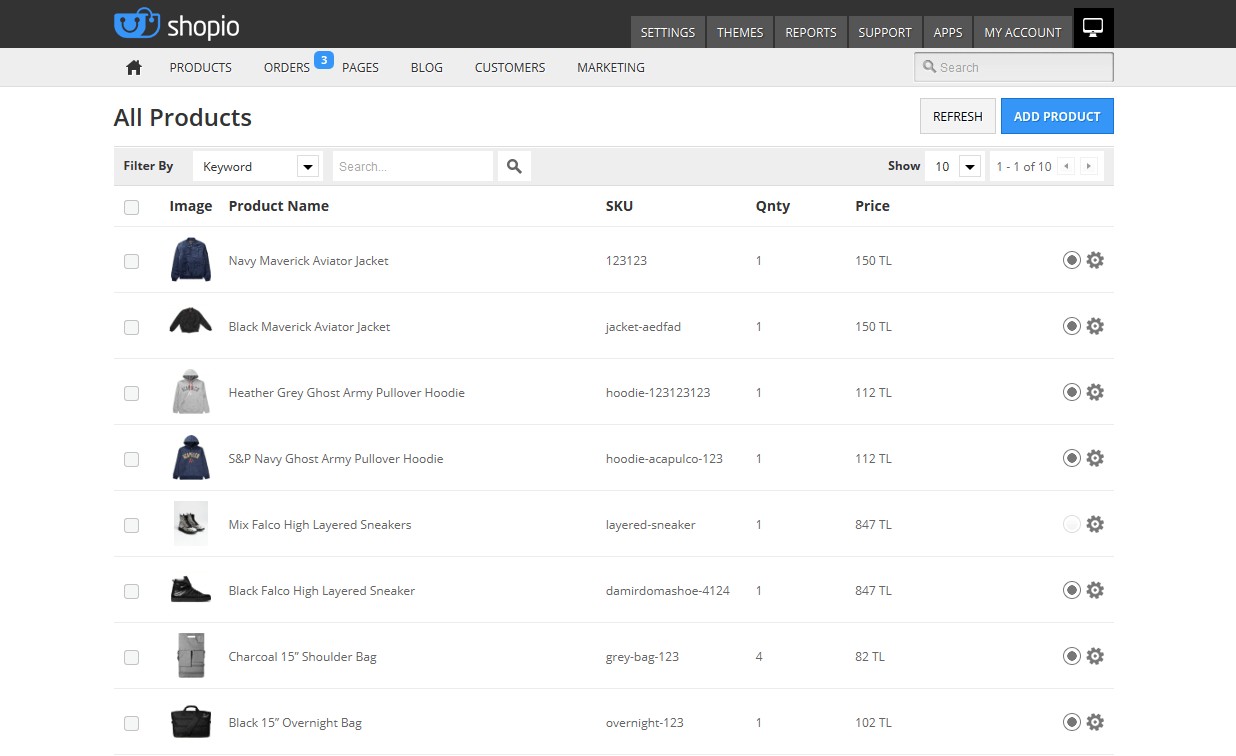
This was crowded territory. Shopify and Wix offered quick routes to a web store; WooCommerce let sellers build on WordPress. Shopio’s sharper argument was localization. At its announcement, Özkara discussed adapting the system to different countries’ tax rules. The company also planned English-language service for markets including the United States, Canada, Britain and Australia. Those were ambitions at launch, not a count of markets won.
A free storefront is a cheap experiment
The free Small Plan made sense as a way to lower the cost of the first experiment. A merchant could find out whether the photographs, copy and price drew an order before committing to a monthly software bill. That is what the offer actually bought: a chance to test. It did not buy customers or a guaranteed route into a foreign market.
Small Plan advertised without a monthly subscription fee.
Monthly paid plans listed from $19.95 to $149.95; G2 says the underlying pricing information was updated in October 2024.
The later pricing tells a different, dated part of the business model. G2 lists a Startup tier with 100 products and five gigabytes each of bandwidth and storage, plus larger paid tiers. Capterra lists a Basic tier at $29.95 a month. These are directory listings, not a live quote from Shopio. Read together with the launch announcement, they show the familiar store-builder ladder: make the first step small, then charge for more capacity and features as a merchant grows.
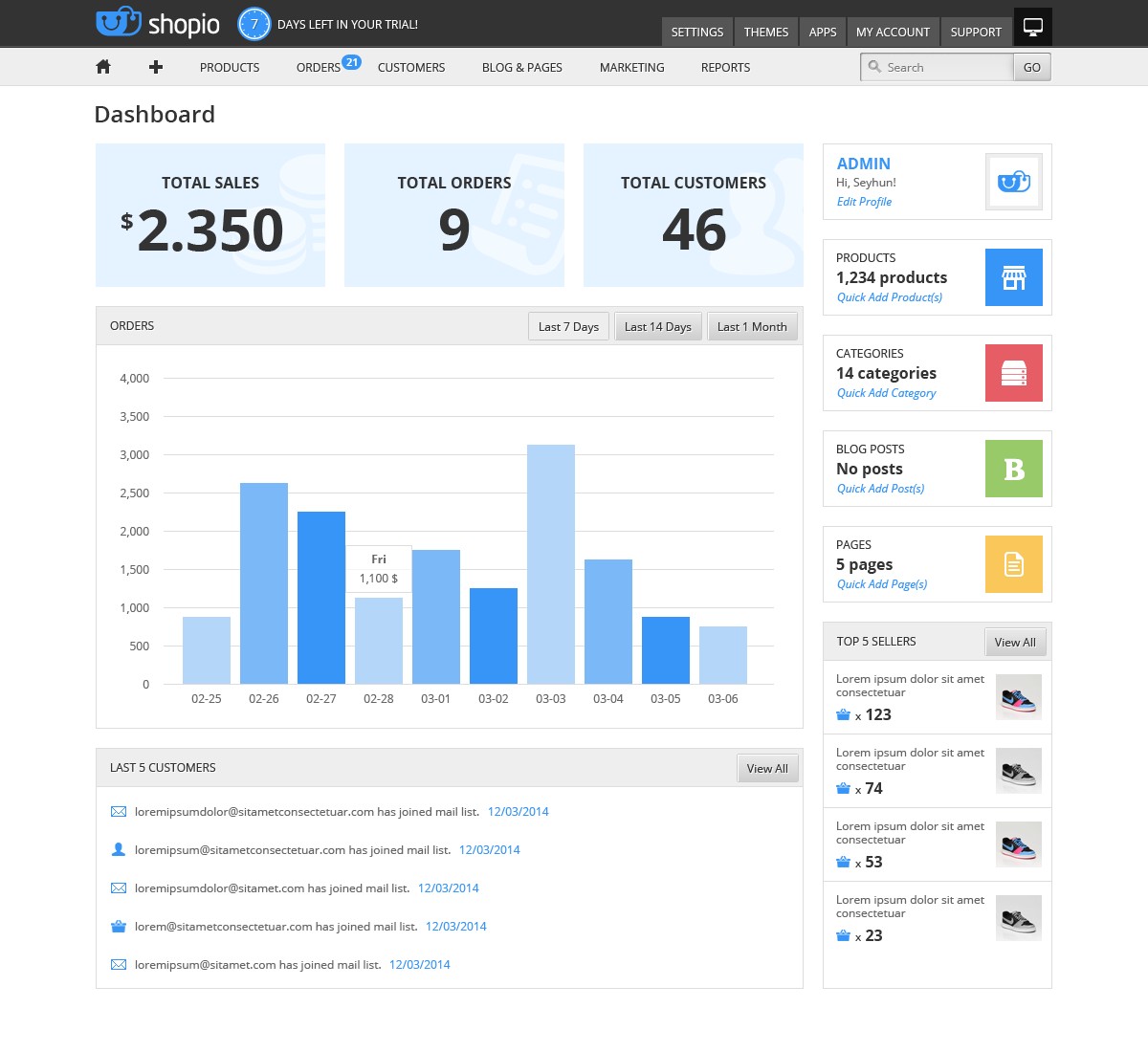
The early screens hint at the product’s appeal. Sales, orders and customer counts sit up front. A chart turns daily revenue into a quick visual answer to the question every owner asks in the morning: did anything sell while I slept? The screenshot is a demonstration, with sample figures and placeholder text. It is useful evidence of the interface, not evidence that Shopio itself generated those sales.
The problem moved beyond the page
By 2017, IdeaSoft had an unusually clear explanation of what was slowing exporters. Özkara said many Turkish businesses hesitated to sell abroad because they did not know how to handle payment and shipping. The issue was not that they lacked another color palette for their store. They could imagine the customer; they could not confidently complete the order.
“Many businesses ... hesitate to open up abroad because they do not know how to manage shipping and payment processes.”Seyhun Özkara, translated from İş Bankası’s 2017 announcement
That observation changed the shape of the offer. In June 2017, İş Bankası announced an export package with IdeaSoft and DHL Express. Shopio supplied the commerce software. The bank supplied virtual POS payment acceptance. DHL supplied international delivery services. The three firms offered the pieces together at discounted prices to businesses looking for foreign customers.
A 2018 banking protocol gave the Shopio piece more definition. It described support for nearly 50 languages, search optimization, Google Analytics integration, visitor reports and tax rates set by product and country. The bank’s own part allowed sales in 15 currencies; DHL’s part covered shipping support. Those distinctions matter. A software company can build a better checkout, but it cannot become a bank or an air cargo network by adding a feature request.
This was the clearest difference between Shopio’s early store-builder pitch and its later export package. The first solved the visible problem: getting a professional shop online. The second faced the invisible work beneath a sale. It is a more useful story than a claim that one platform had more templates than another.
What a small seller can borrow
A merchant considering the same move can copy the sequence without copying the software. First, list one product and show it to real buyers. Then place a test order from the country you want to serve. Check what the buyer sees in their currency, whether their card is accepted, which tax rule is applied, how a return would work and when the parcel arrives. A polished homepage is a poor substitute for any of those answers.
For a software company, the lesson is equally plain. Follow the customer past the screen where your product appears to end. Shopio began with the storefront because that was the obvious obstacle. IdeaSoft’s later account of merchants’ hesitation pointed to payments and delivery. The partnership was a concrete response to that finding, and it used firms that already knew those jobs.
There is a limit to the model. A merchant with unusual goods, complex returns, restricted shipping routes or country-specific compliance needs still has to check the details. A bundled package can reduce setup work; it cannot make every border identical. Nor can an old plan price establish today’s cost. Shopio’s public pages and listings preserve parts of its history, but the supplied domain did not resolve during this research, so current signup terms should be confirmed directly before anyone plans a launch around them.
The charming part of online commerce is the shop window. It shows a product waiting for someone, somewhere, to want it. Shopio’s more durable insight was that the sale continues after the click. The money must arrive. The rules must fit. The box must leave. Only then does the shop window become a business.