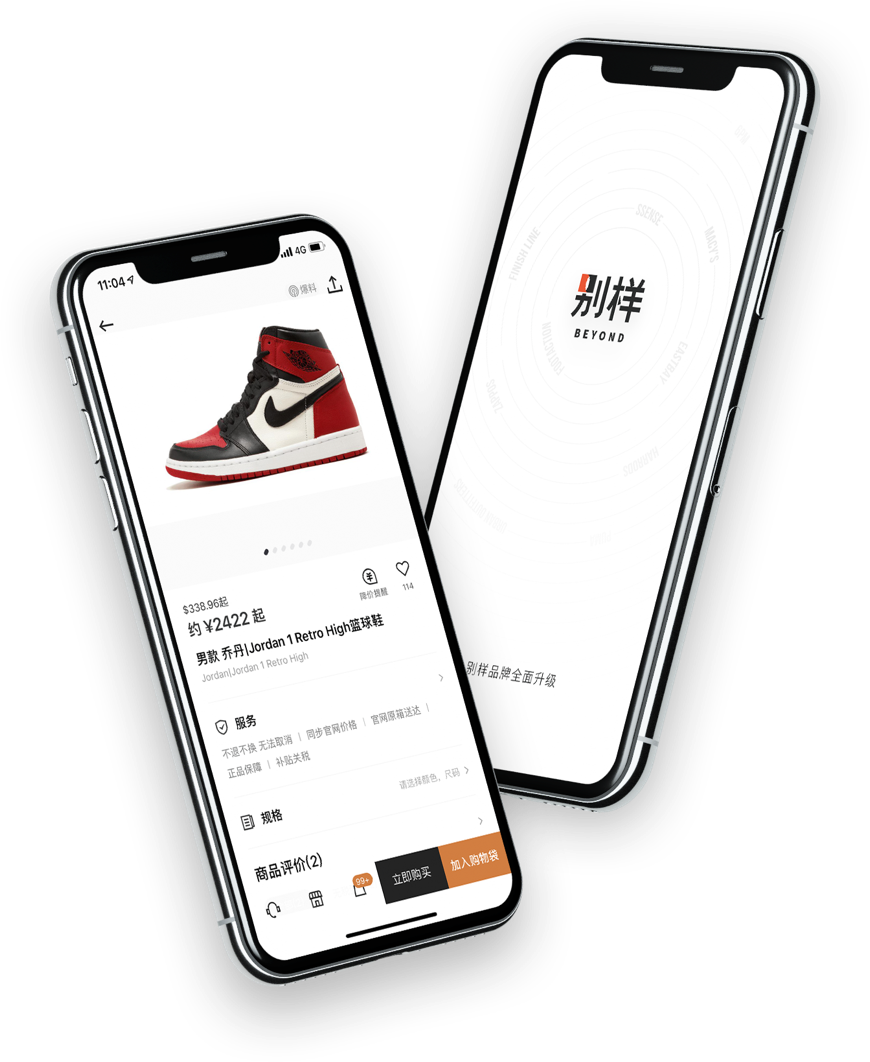
In December 2014, a new Chinese-language app offered an agreeable service: it showed shoppers Western products and discounts. It was called, in translation, “Fifth Avenue in Your Pocket.” What it could not do was sell them anything. The founders imagined a guide. Their readers imagined a checkout.
The emails asking how to buy kept coming. For Albert Shen and his co-founders, Chengdu Huang and Jun Liu, adding a purchase button was not a modest software update. It meant taking responsibility for merchants, payment, customer questions, parcels and the border in between. The team debated it, then added transactions in April 2015. Its first reported order traveled from New York City to Shanghai. The interesting part of the story begins at the moment a recommendation became an obligation.
- What it sells: Beyond and BeyondStyle shopping experiences, plus CloudStore AI commerce APIs.
- Who pays: Merchant partners historically shared revenue; CloudStore AI now publishes credit-based developer prices.
- The hard bit: Turning product discovery into an authentic, paid-for order that actually arrives.
- The lesson: The missing step in a customer's journey may be the business.
A sale that looked domestic
BorderX Lab's first serious customer was two customers. One was the Chinese shopper who could see a Western price online but faced unfamiliar payment methods, uncertain authenticity and a shipment that might disappear into customs. The other was the American or European merchant, tempted by demand but reluctant to build a Chinese storefront, translate a catalog, staff Mandarin customer care and learn cross-border logistics for an uncertain payoff.
Beyond, also called BieYang, put those inconveniences under one roof. It localized product details, made editorial and influencer content, marketed to Chinese shoppers, took local payments, handled questions and cancellations, and coordinated shipping. In a 2019 interview, BorderX Lab partnerships executive Jeff Unze described a simple arrangement on the merchant side: a merchant could ship to one of BorderX's US logistics centers and be paid as though making a domestic sale. BorderX carried the purchase across the more difficult leg.
There was no upfront merchant fee in the revenue-share model Unze described. That mattered. He said a larger Chinese platform could require a big initial advertising commitment, with break-even years away. BorderX's pitch was a less expensive experiment in demand. It was particularly attractive to a brand that wanted a foothold, not a full China operation on day one. The limits were just as practical: a merchant still needed reliable domestic shipping, suitable products, workable margins and a partner able to keep service and customs moving.
The skincare test
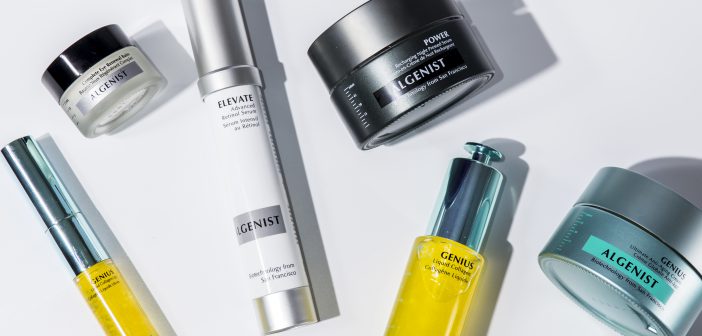
Algenist, the skincare company, offers a cleaner view than any market-size prediction. Its digital marketing director Irene Shin said Beyond supplied reviews and editorial material to bring Chinese shoppers to Algenist, then handled payment, shipping, product questions and cancellations. A shopper paid BorderX; BorderX bought from Algenist and forwarded the goods. Algenist received US dollars and avoided operating foreign payments or shipment itself.
The result was a reported 53% increase in Algenist's sales through BorderX in the first half of 2018 compared with the first half of 2017. Shin also said BorderX had been among Algenist's top three sales affiliates for more than a year. This is one merchant's reported channel result, not proof that every partner saw the same growth. It does show the value of solving the entire transaction. A Mandarin product page alone would have left Algenist with the hard half of the work.
“So to the merchant, every sale looks like a domestic sale.”Jeff Unze, BorderX Lab partnerships executive, 2019
Other merchant names appeared as Beyond grew: Pixie Market became its 25th direct fashion partnership in 2017. By the $20 million Series B announced in May 2018, the company said it had more than 50 merchants, a catalog above five million products and more than three million app downloads. Kleiner Perkins led the financing, joined by Hillhouse Capital Group, CBC, Welight Capital and iFly Venture Capital. The company said it had been profitable since the third quarter of 2017. Those figures describe the business at that time; app downloads do not equal active customers.
reported in 2018
2018 catalog
Kleiner Perkins
2018 company-reported figures. The catalog and merchant network have since changed.
A border is more than a line on a map
The company expanded the merchant side after the first wave of large retail partners. In 2020, Shen announced Beyond Global Marketplace as a way to serve smaller businesses. His argument was about inventory risk: a seller should not have to stock a foreign bonded warehouse before discovering whether anyone abroad wanted the goods. BorderX proposed shipping after the order. For a boutique with many products and little spare cash, that changed the cost of finding out.
BorderX also kept working on the physical route. It said it began collaborating with JD in August 2021 on Hong Kong warehousing and cross-border logistics, and later described a COSCO arrangement covering warehousing and customs clearance. These partnerships explain something easy to miss in a software profile. “Cross-border ecommerce” is a chain of local decisions about where to hold a parcel, how to clear it and who answers when it is late.
The shopper becomes software
Today BorderX Lab tells a second version of the same story. BeyondStyle is a consumer shopping and price-discovery service; AI Price Hunter watches prices, and ShopGeni helps find products. CloudStore AI packages catalog, checkout and logistics tracking as APIs for developers building shopping agents. In 2025 the company added search and visual-search tools and announced work with PayOS and Visa Intelligent Commerce on agent-initiated checkout. Its own comparison for ShopGeni's discovery role is Amazon's Rufus or Walmart's Sparky. The distinction BorderX wants to own is what happens after the suggestion.
A chatbot can recommend a coat. To purchase it, it needs a current catalog, a price, inventory, a payment path, a merchant willing to sell and a way to tell the buyer where the coat went. BorderX says its systems have processed more than five million orders and more than $1 billion in gross merchandise value. Those are company-reported cumulative totals, but they point to the bet: years spent building real transactions may be useful when a new interface starts making the requests.
Enterprise terms are custom. Published prices may change; the company describes a public sandbox-key application path.
That price card is also a useful reality check. The old merchant model was a share of sales. The new developer product has an explicit monthly and usage cost. A small team can test an agent without first arranging every merchant and warehouse relationship itself, but must still manage API credits, catalog limits, payment rules, customer trust and the consequences of a bad order. BorderX is selling a shorter route to the checkout, not a guarantee that shoppers will want what an agent finds.
The copyable part
The founders did not begin with a grand theory of autonomous commerce. They began with a narrow information service and noticed the unanswered request beside it. Anyone building for a market separated by language, regulation or geography can copy that habit: watch what customers ask you to finish after your product says its work is done. Then measure the cost of owning that last step. In BorderX's case it took order software, merchant agreements, payment handling, customer care and shipping partners. The attractive line on the app screen was paid for by a lot of unphotogenic work.
That is why BorderX Lab occupies an unusual spot between a marketplace, a logistics operator and a software provider. Its first app made foreign goods legible to shoppers. Its newer products try to make them actionable to software. The unit of value has stayed stubbornly physical: a real item, bought at a real price, arriving where someone expected it.