- What it is: Japanese snack subscriptions plus premium gifts, Asian groceries, pop-culture goods, wholesale distribution, and private label.
- Who buys: Curious eaters and gift shoppers worldwide; founder Danny Taing has said more than 80% of customers were non-Asian.
- The edge: Regional makers, tea pairings, tasting data, and a culture guide instead of an anime-first candy pile.
- The caution: A recurring card charge does not make inventory, freight, or fulfillment light.
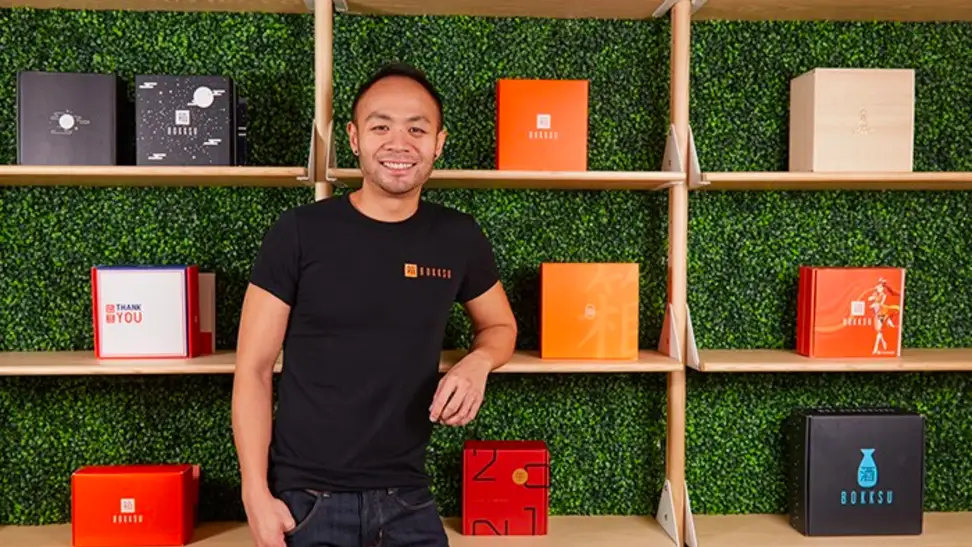
The first Bokksu supply chain would make an operations manager blink. Danny Taing bought Japanese snacks at retail, online or in person. Orders went to a friend's small apartment in Tokyo. The friend repacked them into larger cartons and carried those cartons to the post office. In New York, Taing and his retired mother packed the individual subscription boxes in his living room. His mother, he jokes, was the company's first unpaid intern.
This was not a charming rehearsal for the real company. It was the real company. Bokksu had no purchasing leverage, no supplier credit, and no logistics director. What it did have was a clear objection to the market around it. Japanese snack subscriptions already existed, but most sold a loud, familiar Japan: neon candy, cartoons, novelty. Taing wanted the quieter shelf - matcha cakes, rice crackers, regional confections, and tea from businesses whose recipes had outlived several generations of customers.
The booklet is part of the food
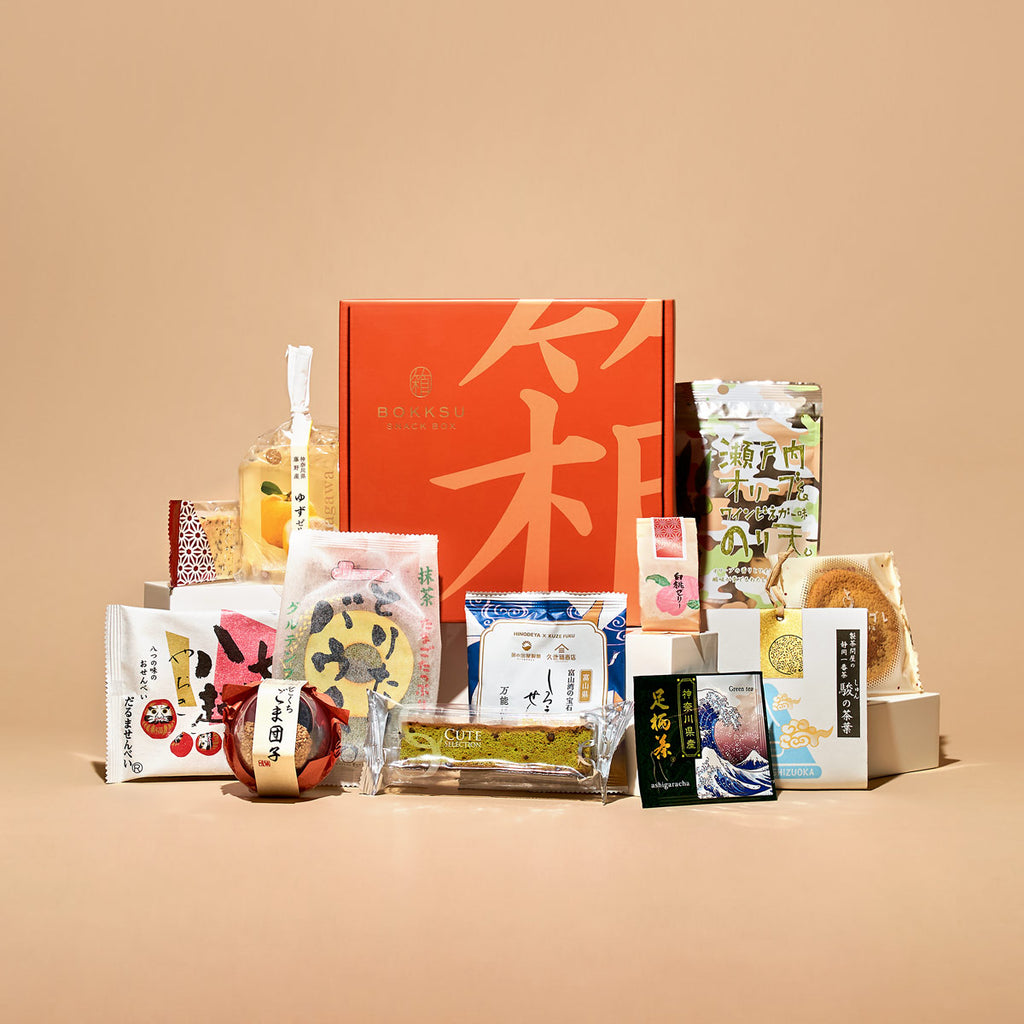
Bokksu's flagship box is a monthly assortment of roughly 20 to 22 sweets, savory snacks, and a tea pairing. A 24-page guide explains what each item is, where it comes from, how it tastes, and which allergens it contains. That booklet solves an unglamorous problem: discovery food can feel like homework. A packet covered in unfamiliar characters is intriguing until nobody knows whether it contains shrimp.
The guide makes the assortment legible without making it ordinary. It also turns a parcel into a gift. The customer is not merely receiving calories; the customer can narrate what is happening at the table. Bokksu's closest subscription rivals include Sakuraco and TokyoTreat. The practical distinction is editorial. TokyoTreat leans toward popular convenience snacks and pop culture. Sakuraco often pairs traditional sweets with homeware. Bokksu positions itself around regional food, tea, makers, and polished gifting. Similar postage, different Japans.
“I wanted something that had a recurring subscription model that could allow me to bootstrap because I didn't have any funding.”Danny Taing, founder and CEO
That recurring model was the financial choice, not just the product choice. Subscribers pay before the box ships, giving a small company a demand signal and some working capital. Yet suppliers initially wanted deposits or payment up front. For the first two or three years, Bokksu had little access to trade credit. The cost of the idea was not a publicly disclosed magic number. It was founder savings, retail-priced inventory, debt financing, and cash tied up before a parcel could earn its keep.
The ad worked. Everything else complained.
In early 2018, Bokksu had about 1,000 subscribers. A Facebook campaign caught, and within a month the number passed 3,000. This is the kind of sentence founders like to place in a pitch deck. The next sentence is more useful: the warehouse in Japan could not handle three times the orders. Bokksu did not yet have a logistics team, much less a director.
The first thing to fail was fulfillment. The failure revealed that the product was no longer the box. The product was the repeatable movement of thousands of different, shelf-life-sensitive items across borders on a deadline. Bokksu had already begun correcting one absurdity in 2017, when it stopped importing Classic boxes into America only to re-export them to international customers. Shipping directly from Japan through Japan Post cut that loop and made fresher, shorter-dated products possible.
Curate one repeat purchase. A changing box created retention and a regular reason to learn what customers liked.
Earn the supply. Direct maker relationships replaced retail scavenging and created products competitors could not simply reorder.
Remove the bad miles. Direct-from-Japan fulfillment reduced a two-country detour and widened the usable snack shelf life.
Expand from the evidence. Boutique, Market, wholesale, and private label followed what the subscription taught.
Forty samples enter. Twenty leave.
Bokksu plans themes about six months ahead. Its Tokyo team solicits ideas from more than 100 family businesses and conducts a first tasting. Forty or fifty samples can then travel to New York, where the wider team scores them and argues. Flavor matters, but so do weight, package size, color, cost, allergens, and the visual jolt when the lid opens. Curation here is half editorial meeting, half three-dimensional spreadsheet.
The process also answers what customers can do with Bokksu. They can outsource the intimidating part of discovery, send a gift that has a story attached, or buy favorites later through the Boutique. The broader company now includes Bokksu Market for Asian groceries, Sugoi Mart for Japanese pop-culture goods, Japan Crate for a younger anime-and-gaming audience, and a wholesale business that reported reaching more than 5,000 US retail doors.
The $22 million Series A in 2022, at a reported $100 million valuation, changed what Bokksu could attempt. So did its 2023 acquisition of Japan Crate. But capital did not repeal the physics of groceries. Public filings reported $25.8 million in 2023 revenue and, by the end of 2024, $961,000 in cash with about six months of runway. In January 2025 the company sought up to $1.235 million through a crowdfunding SAFE, with most planned proceeds directed to retail inventory and private-label development. The numbers complicate the cheerful unboxing, as useful numbers should.
Copy the order, not the orange
The portable lesson is sequencing. Bokksu began with a narrow recurring product. It used that product to earn maker trust and collect preference data. It then opened an à la carte shop, widened into groceries, bought an adjacent audience, and carried the resulting knowledge into wholesale and private label. A founder can copy that order: begin with repeat behavior, make the point of view visible, and expand only where existing knowledge lowers the next risk.
The sequence is less useful when the assortment is easy to clone, gross margins cannot absorb international freight, or suppliers cannot scale without losing quality. It also depends on retention. A subscription that customers forget to cancel is not a durable brand; it is a future support queue. And if demand can triple in a month, the warehouse deserves a vote before marketing presses publish.
Anyone can put imported snacks in a box. It takes years to become a reliable buyer for small makers, translate their work for another market, and know which unfamiliar flavor will delight rather than merely confuse.
Taing once met investors who heard “Japanese snacks” and predicted perhaps 1,000 users. Their mistake was treating the first SKU as the final market. Bokksu's own mistake, briefly, was discovering what happened when 1,000 became 3,000 faster than the cartons could move. Both errors came from staring too hard at the box. The interesting company was always the bridge beneath it.