The plan was to make a map. Liyia Wu loved shopping and travel, and imagined a directory that would point Chinese visitors toward interesting American stores. It was a defensible idea in the solemn language of pitch decks. It was also, she discovered after failed attempts to acquire users, an idea few people urgently wanted.
Plenty of founders preserve a weak idea because they have already polished it. Wu did something less ceremonial. She kept the desire and discarded the product. People still wanted discovery; perhaps they did not need directions. What if the store itself could travel?
A merchant before she had a market
Wu was born in Beijing in 1980 and spent a peripatetic childhood shaped by her father's work. She lived in Budapest in 1992, Singapore in 1993 and moved to Vancouver in 1994. The first business story she tells is agreeably small: silk pajamas and bedding sold at a Budapest weekend market. Before the apps and investors, there was a table, a product and the immediate verdict of a passerby.
In Vancouver she studied finance and accounting at the University of British Columbia's Sauder School of Business. A job in media and advertising followed in Beijing, but the arithmetic did not settle the question of what she wanted to make. In 2005 she went to New York, accelerated through fashion merchandising at Parsons and joined Twinkle by Wenlan as a merchandiser. Numbers had not been wasted; they had merely acquired fabric.
Back in Beijing in 2008, Wu opened IShop, a multi-brand boutique carrying contemporary American and European designers. Her ambition was a Chinese answer to Opening Ceremony: edited, international and curious. Then pregnancy made the trade-show circuit impractical. She changed the operation again, turning from buyer to maker and launching the jersey label Wo2 in late 2009, the same month her son was born.
She had no formal design training. Wo2 nevertheless grew to four Beijing stores and more than 100 retail accounts in China and the United States. Its sweetest performance indicator arrived without an email. Stopped at a traffic light after Sunday brunch, Wu watched five people cross in front of her car wearing dresses she had designed. A dashboard could count units. It could not arrange that little parade.
“I look at life as an adventure, and I put in 1000% of myself in every decision.”Liyia Wu
The useful stranger beside the fitting room
Wu closed the label in 2016 and founded ShopShops in New York. Once the directory faltered, she returned to what physical stores did well. A good boutique is more than stock arranged under flattering bulbs. There is music, accident and judgment. Someone knows the material, can turn a bag to the light, can tell you whether a shoe runs small. Another shopper may volunteer an opinion. Conventional ecommerce had made checkout wonderfully efficient while firing nearly everyone from the scene.
Livestreaming offered a peculiar repair. A host could enter a store with a phone, show an object from all sides, answer questions and carry the local knowledge of that room to viewers elsewhere. Wu and her business partner hosted the first sessions themselves because, as she later explained, nobody else knew what they were talking about. In China, where audiences were already watching ordinary lives unfold on video, the behavior did not require a manifesto. It required merchandise.
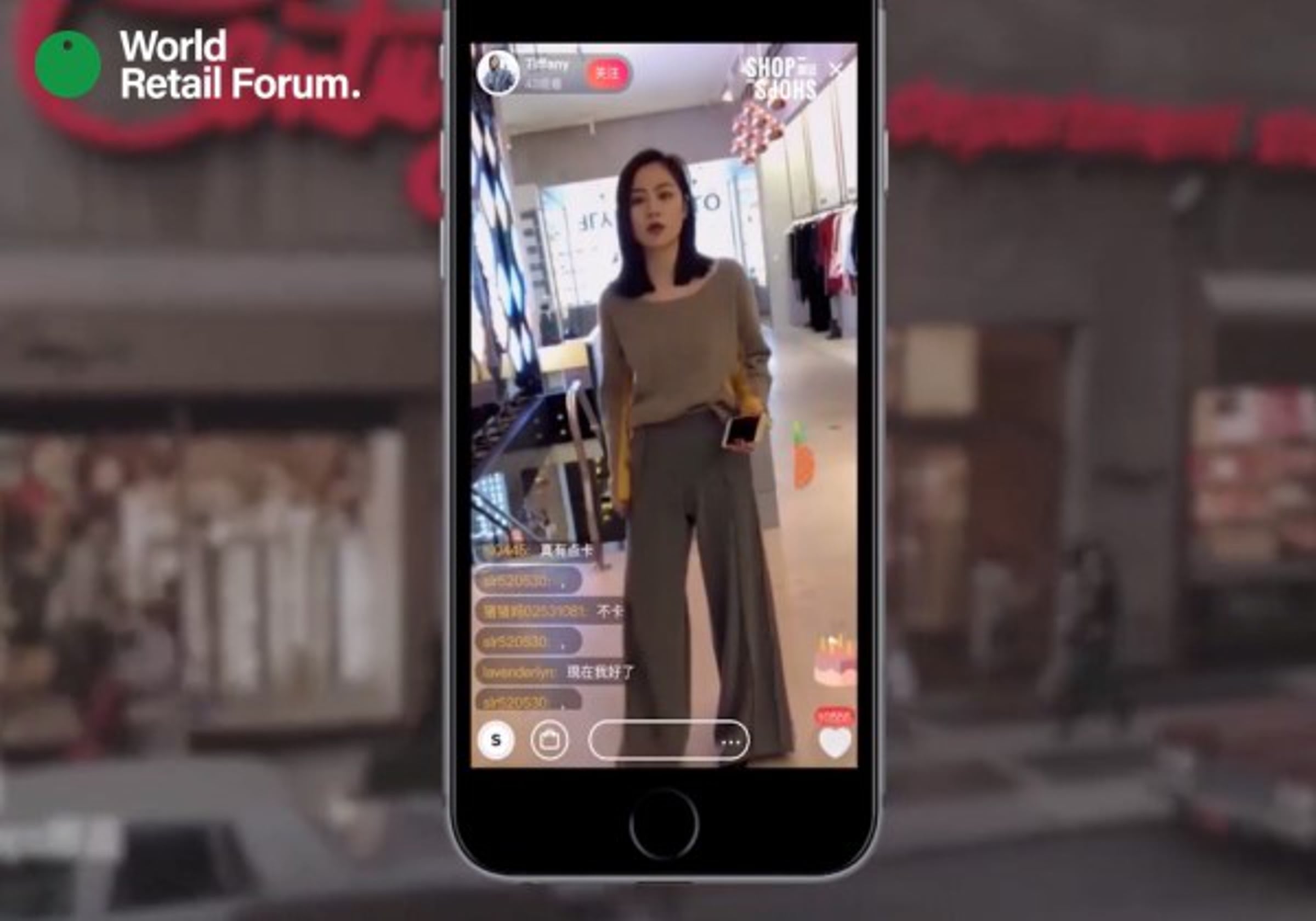
Her early sales route through Soho, Chelsea and other shopping districts was not greeted as prophecy. Wu recalls that 99.9 percent of store managers said no. She kept returning until a few agreed to trials. This is entrepreneurship stripped of its tasteful podcast lighting: asking the same unenthused people to reconsider letting you point a camera at their inventory.
The model eventually joined three constituencies. Stores or sellers supplied goods. Hosts supplied expertise and presence. Shoppers supplied attention, questions and purchase decisions. Wu sometimes called the mixture “retailtaimerce” - retail, entertainment and commerce collapsed into one inelegant but accurate portmanteau.
By 2018, Union Square Ventures had invested. A $15 million Series B followed in 2021. In a 2023 interview, Wu said the platform had passed 2.7 million users across the United States, Europe, Asia and the Middle East, with 12,000 livestream segments a year and more than 1,000 retail partners. Those figures described reach, but the smaller mechanism remained the point: a viewer could ask a person to bring the clasp closer to the camera.
When the object has already had a life
ShopShops widened into the American market and increasingly centered designer resale. This sharpened the problem that live video was suited to solve. A pre-owned bag is not a standardized square on a catalog page. It has corners, wear, provenance and a price inseparable from trust. The host can reveal the scuff that photography politely forgets. The chat can ask again. Authentication and purchase protection can sit behind the performance.
Wu's language around second-hand fashion is notably social. She has argued that slow fashion begins with how people think, not simply what they buy; that quality and life cycle matter; and that a shared shopping experience can return some human exchange to consumption. In 2023 she described a series with stylist Stacy London in which garments came with memories from their owners' closets. Resale, in that telling, is not the dreary afterlife of retail. It is where the object finally gets a biography.
That fits Wu's own preferred method. She thinks in viewpoints. The three-sided marketplace works, she has said, only if she can imagine the needs of shopper, store and host. Authenticity is both verification and demeanor: the item should be what it claims, and the person selling it should not behave like a pop-up ad in human form.
“Open up your phone, and with a click of a button you can be on any street, anywhere, opening the doors of stores that are interesting.”Liyia Wu
A new owner, the same question
In May 2025, Wu spoke at a forum about selling to American consumers. ShopShops had learned, she said, that an app alone was insufficient: shoppers searched the web, looked for an official site and wanted visible assurances. Live video reduced the distance between representation and reality; third-party protection reduced the remaining doubt. She put the platform's repeat-purchase rate at 60 percent.
That December, Komehyo Holdings of Japan completed its acquisition of iShopShops. The combination is almost suspiciously neat. Komehyo brought decades in pre-owned luxury and authentication; ShopShops brought a live-commerce platform and a North American audience. A company born between American boutiques and Chinese viewers had acquired a Japanese parent with global resale ambitions. Cross-border commerce, having spent years erasing borders, had produced quite a collection of passports.
The deal also changed the corporate facts. Komehyo announced a new president and director for iShopShops, while the consumer brand continued as a live marketplace. Founders are often written as though they stand outside time, eternally at the whiteboard on day one. Wu's more interesting record is a sequence of exits from her own prior certainty: finance into fashion, buying into design, directory into video, new luxury into resale, independence into a larger group.
One ambition sits outside that corporate line. Wu has said she would like children from low-income families to encounter art and fashion as forms of expression rather than lessons in logos. Let them make a dress from flowers or a shirt from materials found in nature, she suggested. It is a modestly radical view from someone who sells expensive objects: taste need not wait for purchasing power.
The map was hiding in plain sight
ShopShops did not ultimately abandon Wu's first idea. It animated it. The directory promised to tell travelers where the interesting stores were; livestreaming opened the door and let everyone look around. Geography became programming. The pin on the map acquired a voice.
Wu's story is tempting to flatten into foresight: a founder sees that video will transform shopping, then builds the future. Her own account is funnier and more useful. She started with no idea what she was doing. The stores mostly refused. The customer-acquisition tests failed. The first hosts were the founders because nobody else understood the job. Vision arrived wearing work clothes.
What survived every version was her affection for the act of shopping, distinct from the click of buying. Shopping contains suspense, company and a little theatre. Buying is paperwork. Wu built around the first and attached the second at the end. The map failed because it pointed toward the experience. The camera worked because it brought the experience home.