A customer in California sees a mug on a website. Somewhere else, a seller sees a possible margin. Between those two people sit a payment, a product, a factory, a shipping label, a customs crossing and the unnerving question of who answers when the mug arrives broken. The website is the cleanest part of the transaction. OpenCommerce Group built its business around the less photogenic pieces.
- OpenCommerce Group sells commerce software and services to merchants who sell across borders.
- ShopBase builds the storefront; PrintBase handles print-on-demand; PlusBase helps source and sell physical products.
- The company moved beyond Beeketing's marketing tools after learning that attracting users was easier than getting them to pay.
- For merchants, the useful question is total order margin, including platform fees, product costs and shipping.
The company started in 2014, when online retail was filling up with tools promising more clicks, better recommendations and recovered carts. Its earlier Beeketing business lived in that world. Co-founder Phuong Anh Ha later described an uncomfortable lesson from those years: a product could attract a crowd without persuading that crowd to open its wallet. In her account, early Beeketing traction did not translate into willing paying customers. Attention was real. The business case was less obliging.
That experience explains the move to ShopBase better than any tidy tale of disruption. A merchant might want a clever promotion, but first needs a reliable place to sell, something worth selling, a way to collect money and a way to deliver the order. If any one of those fails, the promotion has merely helped the merchant disappoint more people. The founders followed the sale backward and built a wider system.

The three bases beneath a sale
ShopBase, launched in 2019, is the storefront. A seller can create a hosted shop, attach a domain, list products and take orders. The platform adds built-in tools for upsells, discounts, abandoned carts and analytics. This puts it in the same buying conversation as Shopify or WooCommerce, but with a deliberate emphasis on dropshipping, print-on-demand and white-label selling. Those merchants may own the customer relationship without keeping every item on a shelf.
PrintBase is for the seller whose product begins as a design. It joins a shop with print-on-demand production and fulfillment, so the merchant can sell a customized item before arranging a conventional inventory run. PlusBase faces a different headache: finding physical products, getting quotes, setting a retail price and arranging shipment. Its help guides even describe what to do when a supplier cost or shipping fee changes. That is a telling document. A product page can sit still while a margin moves beneath it.
Different sellers use different routes through the system. The diagram shows the jobs, not a required four-step product bundle.
The distinction matters because OpenCommerce Group's customer is the merchant, not the person buying the mug. Its customer may be a solo seller testing a niche, a design-led print shop or a team running several storefronts. The pitch is practical: reduce the number of vendors and handoffs between an idea and a delivered order. A business already content with its own suppliers and fulfillment partners may need less of that bundle. A new cross-border seller may need nearly all of it.
A large number with a small footnote
When OpenCommerce Group announced a US$7 million Series A in February 2022, led by VNG with Do Ventures participating, it reported more than 86,700 sellers from 195 countries and US$670 million in cumulative gross merchandise value. Those were the company's figures at the time. Gross merchandise value is the value of transactions passing through merchants' stores; it is not OpenCommerce Group's revenue. That distinction is as important as the impressive geography.
Company-reported figures from the February 2022 funding announcement; GMV means merchant sales volume.
The company's current website reports more than 100,000 customers and 130,000 stores created. A store count and a customer count answer different questions: one merchant can run several storefronts. The numbers make a clear claim about reach while leaving the more revealing operating figures, such as active paying accounts and merchant profitability, outside public view.
A website can cross a border instantly. The goods still have to travel.The operating problem behind OpenCommerce Group's product line
There is a geographical logic to its work. The company is based in Hanoi and lists offices in San Francisco, Ho Chi Minh City, Shenzhen and Wilmington. In a founder interview, Ha described moving closer to China's supply and logistics networks because a cross-border seller's promise depends on the physical route, not only the checkout page. The same interview described a misstep in the US: using a marketing approach from other markets before the product's local fit was clear. It is a small corrective to the idea that software alone makes every country the same country.
The bill arrives in layers
What does the merchant pay? ShopBase currently advertises a 14-day trial and monthly storefront plans at US$19, US$59 and US$249. Its pricing page lists platform transaction fees of 2%, 1% and 0.5% for those tiers. The subscription buys a working storefront and a set of selling tools; it does not make products, postage or acquisition free. Merchants using PrintBase or PlusBase also need to understand base product costs, processing charges, shipping adjustments and the possibility that a quote changes.
Monthly prices and platform rates shown on ShopBase's pricing page in September 2026; product, shipping and other applicable fees vary.
For a seller, this means a useful experiment is smaller and less romantic than “launch a global brand.” Choose one product and one destination market. Write down the retail price. Subtract the product quote, shipping, payment and platform charges, expected returns and the cost of reaching a buyer. Then send a test order to see what the customer actually receives and when. The first unit of learning is an order with an honest margin, not a handsome homepage.
It also suggests when the integrated approach may disappoint. If a merchant already has cheap, dependable suppliers and its own shipping operation, a bundled system can duplicate work. If product quality is uncertain, automating an order merely speeds up the complaint. If advertising costs eat the remaining margin, a low monthly subscription will not rescue the business. None of these is a special flaw in ShopBase; they are the stubborn arithmetic of retail.
From marketing trick to merchant machinery
The company still carries Beeketing's interest in conversion: ShopBase includes upsells, cross-sells and cart recovery. But those features now sit beside the unglamorous work of sourcing, making, charging and shipping. That is its clearest difference from a general store builder. OpenCommerce Group does not merely sell the page on which a product appears; it sells ways to make that page's promise plausible.
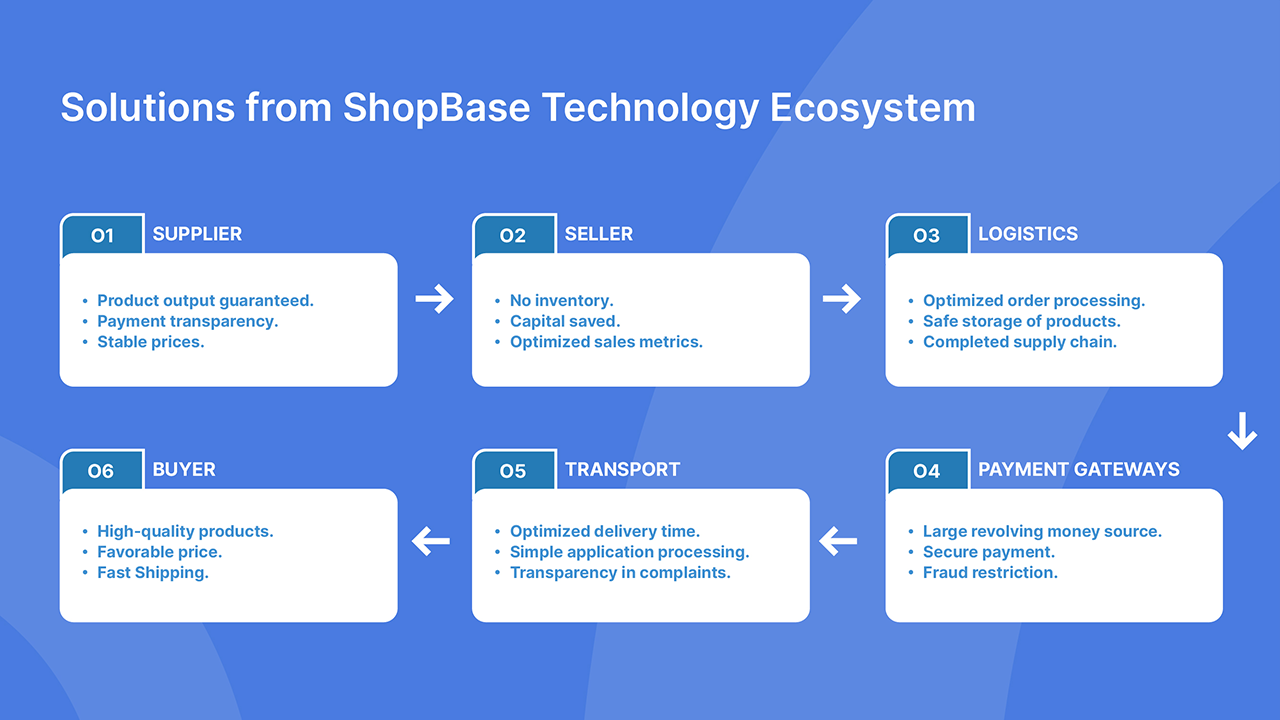
There is an internal echo in the story. OpenCommerce Group calls its employees “Openers” and speaks about candor and adapting quickly; Ha has described changing how the company hired after finding that conventional interview questions missed the qualities it needed. The same habit appears in the product history: an early answer drew attention, but the company kept looking at the whole problem. In 2022, Quan Truong said the new capital would go to product improvements and reaching new sellers. The current lineup shows the bet's shape: three named products organized around the merchant's route to a customer.

The portable lesson is blunt. A large audience can be a flattering distraction. Payment reveals more. And in ecommerce, payment is only the start of a chain that ends when a real person receives a real object. OpenCommerce Group made that chain its subject. The website was never the whole store.