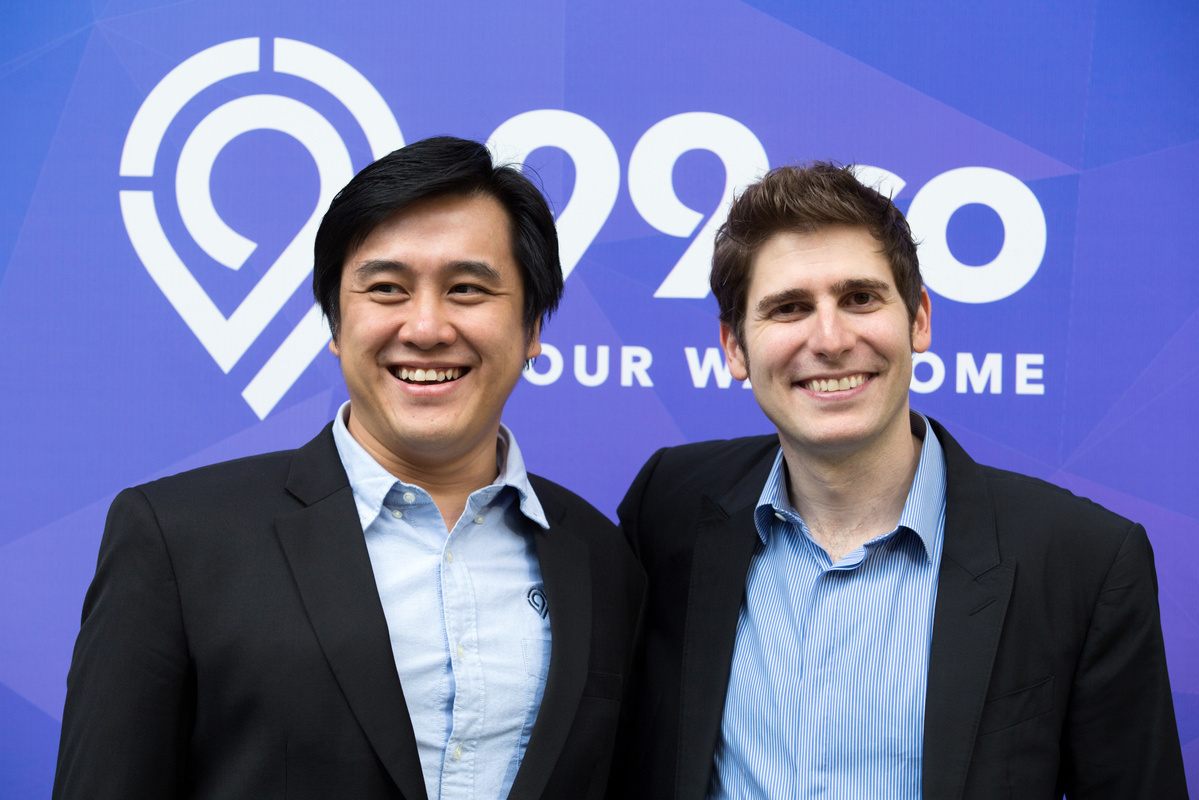
In May 2016, Eduardo Saverin turned up to talk to 300 property agents in Singapore. The occasion was the second birthday of 99.co, a house-hunting startup. For someone whose first company had become Facebook, it was an agreeably ungrand room to be in. No film premiere. No stock-exchange bell. Just an investor helping a founder explain why finding a home ought to work better.
Saverin had met founder Darius Cheung at Singapore's Block 71 startup hub in 2014 and invested that year. What impressed him was the mission, followed by the discipline. He praised Cheung's “relentless focus” and “ruthless execution.” The language was practical. A famous surname could attract attention; a useful product would have to earn the rest.
That appearance offers a way into Saverin's working life. The Facebook story remains attached to him, complete with a Hollywood actor and a disputed friendship. His later career has a different setting and a larger cast. Based in Singapore, he now co-leads B Capital, the investment firm he founded with Raj Ganguly in 2015. The question running through it is simple: where might the next consequential company begin?
A Brazilian beginning, a Harvard balance sheet
Eduardo Luiz Saverin was born in São Paulo on March 19, 1982. His family later settled in Miami, where he attended Gulliver Preparatory School. Harvard followed. He studied economics, became president of the Harvard Investment Association and graduated magna cum laude in 2006. The finance side of his future was already taking shape before anybody had a Facebook feed to refresh.
At Harvard, he met Mark Zuckerberg. When Facebook launched in 2004, Saverin supplied early financing and served as chief financial officer and business manager. Its initial audience was university students. Looking back from a world in which social platforms seem permanent, it is easy to forget the smallness of the opening proposition: put a college community online and see whether its members come back.
The partnership broke down. A dispute over Saverin's ownership led to litigation and a settlement. His co-founder status endured, along with an equity interest. The settlement belongs to the history of the business; the highly polished confrontations in The Social Network belong to a film. Andrew Garfield's performance made Saverin recognisable to people who had never read a technology company's ownership documents. That is an unusual form of investor relations.
Saverin has publicly praised Zuckerberg's work since their split. In a 2019 interview, he said he was proud of the institution Zuckerberg had built. He also acknowledged the curiosity about his own history. The continued interest is understandable: the early Facebook partnership contains money, friendship and competing ideas about what a business needs. Yet it can make the years that followed look like an epilogue. They have now lasted considerably longer than the partnership itself.
Singapore became the centre of the map
Saverin moved to Singapore in 2009. He later gave up his US citizenship and remains a Brazilian citizen. By the time Facebook went public in 2012, his life was already taking place in another part of the world. The geographical shift would become central to his investment career.
His own account of arriving there is less ceremonious than a grand relocation strategy. In a 2016 conference conversation, he described coming to advise a friend's business and staying. He had become curious about Southeast Asia partly through Facebook's Indonesian community. The users on the screen had prompted an interest in the places where they lived.
He also compared Singapore to a real-life version of SimCity, a game he had enjoyed growing up. It is a revealingly nerdy compliment: an entire city appreciated through the eyes of someone who once liked arranging one on a computer. Chess was another early interest. Beneath the very adult business of allocating capital sits a recognisable curiosity about systems and how they fit together.
Living across Brazil, the United States and Singapore gives his career a literal international dimension. It also makes the geographical assumptions of venture capital harder to take for granted. A founder in one market may see a problem that an investor elsewhere has never encountered. Understanding that difference requires more than a flight and a pleasantly arranged conference badge.
- São PauloBorn · 1982
- MiamiSchool years
- HarvardFacebook · 2004
- SingaporeBased here since 2009
The introduction after the investment
When Saverin and Ganguly established B Capital in 2015, they built around an awkward fact of startup life. Raising money solves one problem. It does not automatically produce customers, recruit a capable executive or explain how to sell into a country with unfamiliar rules. Those jobs remain on the founder's desk the morning after the financing announcement.
B Capital's answer includes an internal team supporting portfolio companies and a strategic partnership with Boston Consulting Group. The relationship connects young businesses with established-company experience and networks. In practice, the firm's stated support ranges from entering markets to recruiting talent and making commercial connections. These are less photogenic activities than signing a cheque. They are also where many promising plans meet resistance.
Howard Morgan joined the effort as chair and is now listed among its co-founders. His background includes Renaissance Technologies and First Round Capital. In 2017, Morgan described Saverin as humble and self-effacing, an observation that sits some distance from the personality a viewer might assemble from a two-hour drama. The partnership itself brings together different kinds of experience: a founder, an investor and a veteran of building investment organisations.
The distinction matters for Saverin's second act. A personal portfolio can revolve around one person's instincts and availability. An investment firm has to make its help repeatable across partners, companies and offices. B Capital's model puts that organisational question beside the investment question. Which business deserves backing, and who will help when its next difficult decision arrives?
“Today, you can go global by design.”
Eduardo Saverin · Web Summit Qatar, 2026
A neighbourhood market on a national screen
One useful glimpse of Saverin's thinking comes from a 2021 essay he co-wrote about B Capital's investment in Meesho. Its starting point was the familiar experience of a neighbourhood market. Why should buying online lose the variety, conversation and recommendations that make local commerce work?
The essay considered Indian small businesses: craftspeople, traders and shopkeepers trying to reach buyers through digital channels. Meesho supplied tools and logistics that could help those sellers operate online. Saverin and his colleagues described following the company since 2018 before investing. Their interest included its culture and the consistency of its values across the leadership team.
It is an investment argument with a human-sized unit of measurement: the shopkeeper. The ambition may be national, but the transaction still involves someone with goods to sell and someone deciding whether to buy them. That connection between a large market and an ordinary person's problem recurs in Saverin's public description of the companies he wants to support.
The same logic makes geography more interesting than a list of fashionable cities. A product has to fit how people already communicate, trade and make decisions. Expansion then asks whether that understanding can travel. A map can mark the next market in a second; a business may spend years learning how to serve it.
The bigger cheques, and the longer wait
B Capital's growth has given that approach more money to work with. In January 2023, the firm closed its Growth Fund III series, including related companion funds, with approximately US$2.1 billion in commitments. The announcement described a focus on growth investments across the United States and Asia. The figure represents several funds together, an important detail when the number is large enough to acquire a life of its own.
Capital commitments to Growth Fund III and related companion funds.
In 2024, Saverin co-wrote an argument for deep-technology investing in the Gulf Cooperation Council. It discussed the region's capital, government support and opportunities in areas including artificial intelligence, autonomous systems, food production and climate technology. These are businesses whose development can demand sustained funding before a market is ready to reward them.
The argument added a longer clock to the geographical thesis. Finding talent outside the usual centres is one task; supporting an idea through research, development and adoption is another. The essay treated local institutions and research capacity as parts of the investment environment. A promising laboratory does not become a functioning business merely because somebody admires its promise.
The next tool on the investor's desk
By February 2026, Saverin was discussing global company-building at Web Summit Qatar. Facebook had become international rapidly, he said, in some ways almost accidentally. Founders now had the opportunity to design for international reach from the beginning. AI was part of that opportunity, alongside the practical questions of computing capacity, energy and available talent.
His formulation, “global by design,” gives a compact name to an ambition he had been discussing for years. It asks founders to think beyond their initial market while paying attention to what makes that first market distinctive. The work is in reconciling those two demands. Software can cross a border faster than a company can learn the business customs on the other side.
The investment firm is changing too. In July 2026, B Capital raised US$500 million for early-stage startups. That month it also appointed Andrew Jackson chief AI officer, with a remit that included developing AI tools for the firm. Saverin had championed its AI work. Evaluating technology and using it inside the investment process were becoming neighbouring activities.
Something that lasts beyond the launch
There is a quieter measure of Saverin's connection to Singapore. In 2024, his family gave S$20 million to Singapore American School, supporting facilities and programmes including STEM laboratories and Chinese immersion. His wife, Elaine, described the donation as a commitment to the school and its future students. The couple married in 2015.
School buildings operate on a different timetable from a funding round. Students arrive, learn and leave; the next cohort takes their place. The gift is a concrete expression of a family putting resources into the place where it lives, alongside the international work that makes the family name familiar.
Saverin's career began with a small community that found a reason to connect online. His current work returns to the earlier, uncertain moment in other companies' lives: a founder has an idea, a product needs customers, and the next market is still unfamiliar. There are more partners now, more countries and substantially more money. The useful question is still the one suggested by that room of property agents: what can you help someone build?