Bryan Mistele thought raising money would take a month. He had been a general manager at Microsoft. He understood cars, software and the awkward space where the two met. He had a plan for a company that would use GPS signals to help people avoid traffic. A month seemed a reasonable allowance for persuading investors. The investors had other plans.
By his later account, the process took twelve months and produced 70 rejections. There are many ways to measure congestion. For a new founder, a calendar full of meetings that end without a cheque must have its own unpleasant familiarity. You can see the destination. Nothing appears to be moving.
The ambition itself was older. At 16, after working around electrical engineers, Mistele had written down a goal: start a technology company and run it as CEO, with 200 people. That is unusually specific teenage planning. Most adolescent visions of the future leave the staffing requirements to somebody else.
Detroit, with a software detour
Mistele grew up in Detroit, studied computer engineering at the University of Michigan and went to Ford. The geography was conventional; the interest in computers gave it a different direction. He later earned an MBA at Harvard Business School and moved to the Seattle area to work at Microsoft. His route carried him through two industries that would increasingly have to learn each other’s language.
At Microsoft, his responsibilities ranged across personal finance, real estate, mobile services and automotive technology. The variety matters. A company such as INRIX needs somebody to understand what software can do, then somebody to work out who will buy it. Mistele had spent years close to both questions, building businesses inside a much larger organization.
His automotive work supplied the immediate opening. Cars were becoming a place where computing could do more than sit politely in the background. His eventual co-founder, Craig Chapman, brought engineering experience to the venture. In 2004, they left Microsoft and founded INRIX. Mistele’s teenage staffing plan had finally acquired an address and a commercial problem.
Let the vehicles describe the road
The central proposition was easy to grasp, even if implementing it was demanding. A vehicle moving along a road knows something useful about that road. Collect enough observations of movement, combine them carefully, and they can help reveal the traffic around them. The stream of vehicles becomes part of the means of measuring the stream.
INRIX licensed predictive traffic technology developed at Microsoft Research. That research had explored machine learning models capable of estimating traffic conditions and anticipating changes, including on roads without direct sensing. Historical patterns and present observations could inform a forecast. The opportunity depended on turning research into information that a customer could use while deciding where to go.
In April 2005, INRIX announced $6.1 million in Series A funding, co-led by August Capital and Venrock. Its announcement described a Seattle-area pilot with more than 3,000 users and plans to take the technology nationwide. The newly funded company had to cross the gap between a promising local demonstration and a service that could travel.
The founding team also included operations executive Seth Eisner, previously at Expedia. That detail is a useful corrective to the solitary-founder picture. Mistele could articulate the destination; a research license, engineering, operations and outside capital all had to come together to make the journey possible. The work had a cast.
The awkward business of getting a yes
Fundraising supplied material for stories as well as bank balances. Mistele has recalled making four consecutive presentations on Sand Hill Road and confusing which venture firm he was addressing. A personal connection he tried to make with a senior partner belonged to another meeting. It was an efficient way to discover the value of a pause between appointments.
He has also credited former Microsoft managers Paul Gross and David Weld with helping INRIX in its early days. His version of entrepreneurship leaves room for embarrassment and assistance. Credentials could open a conversation. They could hardly guarantee that he would remember which conversation he was in.
Once INRIX had established itself, the questions became larger. Porsche SE announced an investment of roughly $55 million for around ten percent of the company in September 2014. For the investor, connectivity between vehicles and infrastructure was an expanding field. For Mistele, the investment supported an ambition to extend INRIX beyond traffic information into connected-car and city services.
In 2015, INRIX acquired ParkMe. Finding parking, comparing options and handling the last part of a journey sat naturally beside traffic information. A driver who reaches the destination and then circles it for twenty minutes has grounds to question whether arrival has really occurred. Parking gave the business another part of the trip to understand.
The second turn was a business model
Recognition followed. In June 2018, Mistele was inducted into the TU-Automotive Hall of Fame for his contribution to connected-vehicle technology. By then the idea of a car as a computing platform had become far less unusual. An industry award could acknowledge the early wager. It could offer little instruction about the next one.
In October 2020, Mistele described another change of direction. INRIX would put greater emphasis on software subscriptions for public agencies and enterprises. Automotive products, he wrote, represented about a third of the business, compared with 66 percent five years earlier. Software subscriptions also accounted for about a third of revenue. These were figures from that moment, and they explained why he wanted the company to change.
The distinction is practical. Selling data leaves the buyer with work to do. Software can package that information around a recurring task: examining a road, understanding a network or deciding where to spend money. INRIX IQ gathered tools into a suite intended to make those tasks more accessible.
There is an interesting strain of patience in this stage of Mistele’s career. Leaving a big employer requires conviction. Revisiting the model of your own established company requires the willingness to examine what that conviction has produced. The original insight can remain useful while the way customers buy and apply it changes.
From a traffic report to a question
In August 2023, INRIX announced $70 million in financing from funds managed by Morgan Stanley Expansion Capital and Morgan Stanley Tactical Value. The stated uses included strategic growth and refinancing debt. That combination belongs to the less theatrical side of entrepreneurship: financing the future while dealing with the obligations already on the books.
That November brought Mission Control, a cloud-based application for transportation operations. Its launch described the combination of historical and real-time road information in a tool for monitoring conditions. Planned integration with Compass, INRIX’s generative AI technology, aimed to let users query a large transportation dataset in ordinary language.
Mistele’s own explanation at the time made the aspiration more precise. He wanted the system to help explain why something was happening, suggest an action and predict the effect of taking it. Each step raises the stakes. Seeing a jam is useful. Choosing an intervention requires an explanation that stands up outside the screen.
“Our vision is clear, but we have a lot to do to achieve it.”
Bryan Mistele, November 2023
The qualification gives his ambition some welcome weight. A transportation department has roads to operate, budgets to defend and decisions with consequences beyond a product demonstration. The promise of easier access to information earns its place when people can put it to work.
An agreement, and a longer horizon
On October 16, 2026, Arity, an Allstate subsidiary, announced an agreement to acquire substantially all of INRIX’s assets. The announcement expected the transaction to close in 2026, subject to customary closing conditions. That is the position of the deal in the announcement: an agreement, with completion still ahead.
The rationale joined INRIX’s transportation analytics with Arity’s driving-behavior data and predictive analysis. In the announcement, Mistele spoke about understanding how people, vehicles, roads and goods interact. The language had widened considerably from a driver looking for a quicker route home. The underlying interest in how movement can be understood remained recognizable.
An open-water sort of patience
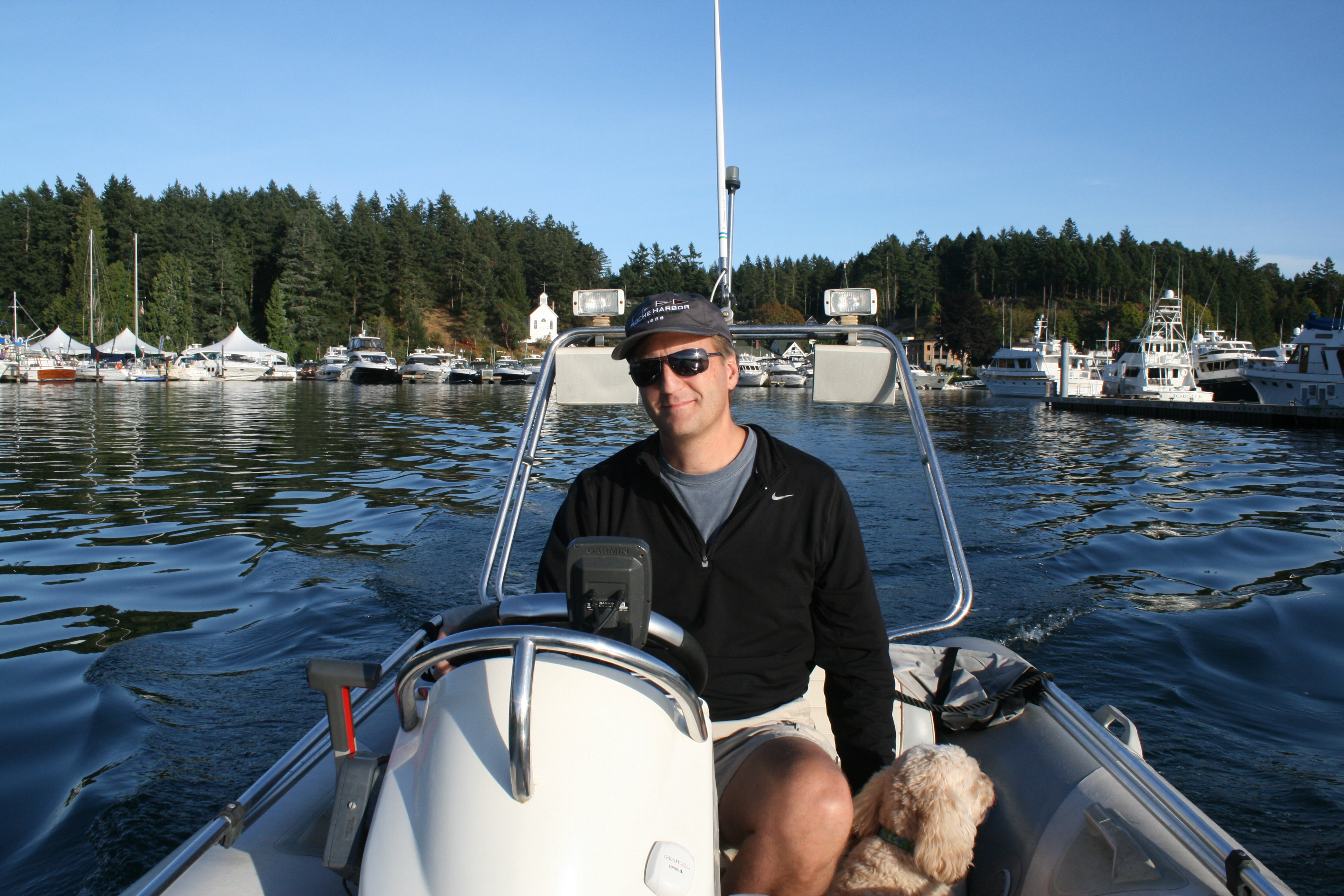
Away from roads, Mistele likes boats. His personal biography places family and boating alongside his work, and a 2018 interview described an office with seven boat pictures and paintings. He called himself an introvert who had learned to be extroverted at work. He also set aside occasional days for reading and thinking away from meetings.
Those details make a useful companion to the teenage goal. It is easy to recognize ambition when somebody writes down a future company’s headcount. It takes longer to see the habits that allow a person to remain occupied by the same problem for years.
Mistele began with the idea that movement could reveal something about a road. His career has required repeated decisions about where that knowledge might lead. Sometimes the route has involved investors. Sometimes a different product or customer. The waiting has been part of it from the beginning. The destination remains a fairly human one: getting people some of their time back.