The founding insight arrived at Alex Blum's apartment inside a lonely paper bag. A restaurant courier had crossed New York carrying exactly one order, Blum later wrote, and now had to return to the same restaurant with nothing. The food was fine. The route was absurd. Blum and technical co-founder Mike Chevett bootstrapped Relay in 2014 around a crisp question: what if neighborhood restaurants shared the delivery capacity they each struggled to manage alone?
Relay did not ask diners to download another app. It sat behind the order. A restaurant could accept business from its own website, the telephone, Toast or a marketplace, then send the delivery to Relay's software and courier network. The diner saw the restaurant. The restaurant kept the relationship. Relay handled dispatch, pickup, tracking and the stubborn geography between a hot kitchen and a hungry person.
That distinction made Relay a business-to-business logistics company in a market famous for consumer apps. DoorDash, Uber Eats and Grubhub bundle discovery, ordering, payment and delivery. Relay unbundled the last piece. Its pitch was almost cheeky: use the marketplaces for marketing if you like, but do not automatically rent their courier, surrender the customer data and pay a commission on the whole basket.
The product was the handoff
Inside a restaurant, Relay looked less like a moonshot than a calmer shift. Orders appeared in a web dashboard. Staff moved food from “Preparing” to “Ready.” That action could summon a courier within minutes. Once picked up, the courier became visible to both restaurant and customer. Phone and catering orders could be typed in manually. Third-party orders could flow through an integration instead of spawning another tablet and another pickup scrum.
Relay's invisible three-step product
The customers were restaurants with enough delivery demand to feel the pain but not enough desire to become logistics companies. Calexico said Relay let it fulfill as many orders as it could handle while protecting control and margins. The Bagel Place praised courier tracking. Public profiles named Sweetgreen, Just Salad, Tacombi and Papa Johns among users. One third-party company profile put Relay at thousands of restaurants and more than 25,000 daily orders, though the company did not publish a consistent audited scale.
Weekends Cafe offers the most vivid case. The Williamsburg shop had become so popular on delivery apps that, according to its owner, 20 drivers could wait outside on a small street. Orders, neighbors and pickups collided. With Otter gathering demand, Square acting as the POS and Relay supplying drivers, the cafe reported that delivery became easier to run. It said fees fell 10 percent - about $200,000 a year. That is a customer claim, not a universal rate card, but it explains the attraction better than any slogan.
What it cost - and what broke first
Relay made money by charging for fulfillment rather than charging a percentage for discovery. Pricing was quoted by restaurant and delivery profile; the company's calculator asked merchants to enter their Relay fee per order. The useful comparison was not “free versus paid.” Delivery is never free. It was a known fulfillment charge versus a marketplace commission that could rise with the basket, plus whatever value the restaurant placed on keeping customer information and brand control.
The first documented scaling failure was painfully ordinary. Relay collected couriers' banking details through paper forms, typed routing numbers into online banking and initiated individual payments every week. The faster the network grew, the more its back office became a productivity sink. With one developer, Relay integrated Dwolla's ACH tools in two weeks. The case study reported a 30 percent increase in completed courier registrations, onboarding time cut in half, and eight hours of manual work removed each week - an estimated $1,200 monthly saving.
This is the most copyable part of Relay. Do not automate whatever looks futuristic. Automate the point where growth produces linear clerical labor. Make onboarding self-serve. Give payouts predictable pricing. Measure completion, time and error rates before adding ornament. Relay's routing idea was sophisticated; one of its most legible wins came from deleting a stack of bank forms.
Wonder buys the route
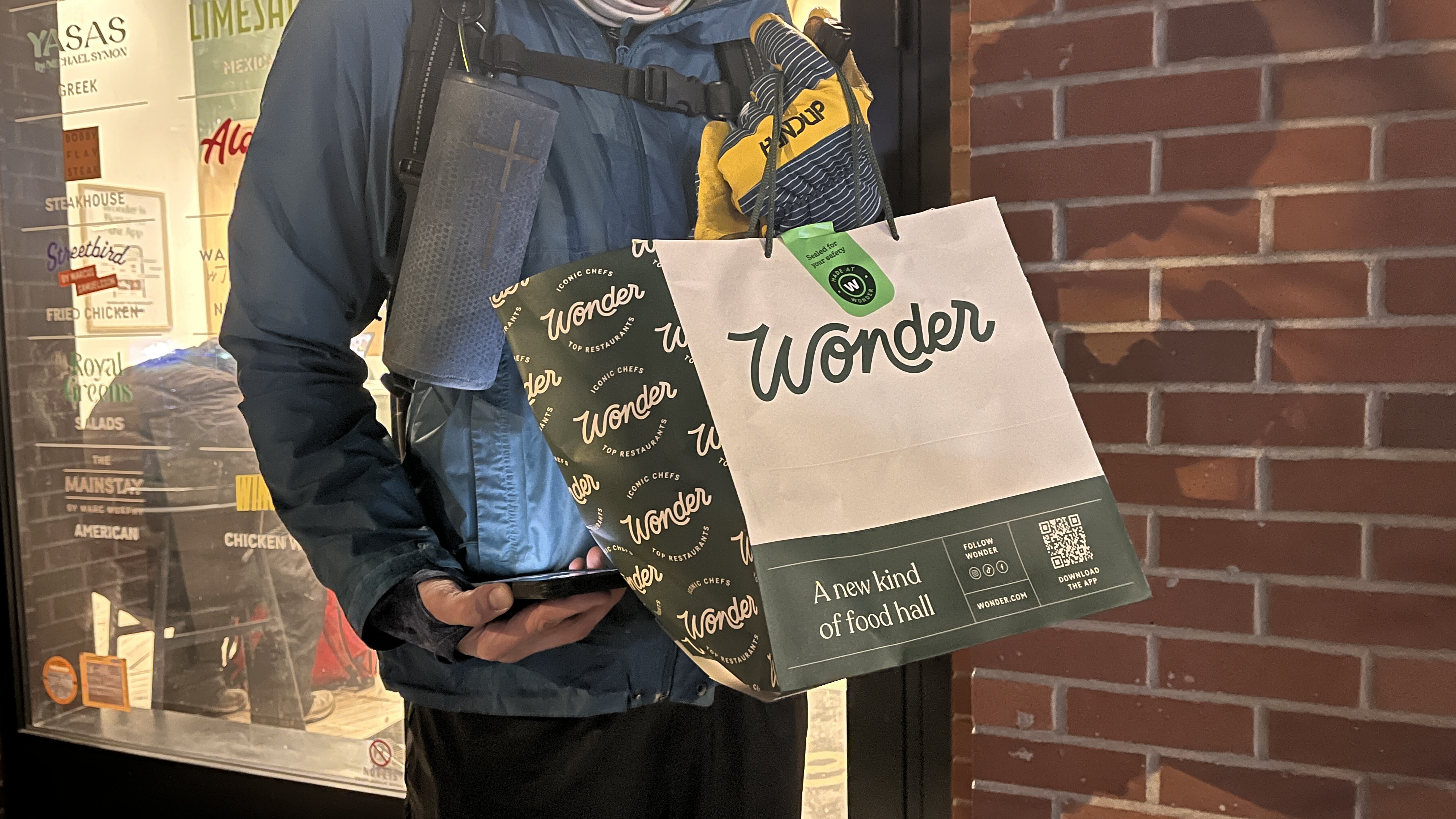
Wonder, Marc Lore's multi-restaurant food-hall company, used Relay for about a year before acquiring it in April 2024. The sale price stayed private. The strategic logic did not. Wonder wanted a tighter kitchen-to-door system, and Relay brought direct courier relationships, dispatch technology and years of New York operating knowledge. A Wonder spokesperson said the goal was better speed, accuracy and economics without immediate changes for restaurant partners or couriers.
Later that year, Wonder said improved kitchen and delivery coordination had reduced the average time food waited for pickup to about one minute, with orders delivered in under 30 minutes and 98 percent accuracy. Those were Wonder-wide operating claims, not a clean Relay-only experiment. Still, they show what the acquirer wanted: the handoff. A perfectly cooked meal loses its edge while waiting on a shelf. Owning courier timing made the kitchen more valuable.
Relay's deeper expertise was density management. Couriers worked scheduled shifts and zones rather than appearing only when an order flashed. Restaurants gained capacity for storms, holidays and dinner peaks without maintaining a private fleet. Relay could aggregate orders across merchants, reducing the lonely round trip that bothered Blum. In dense neighborhoods with repeat demand, the network had a chance to keep riders moving and the delivery fee predictable.
New York changes the equation
The same model carried a structural vulnerability: its margin depended on the cost and utilization of human couriers. New York's worker-pay rules initially treated Relay differently from the large consumer apps after a 2023 court decision, in part because Relay contracted directly with restaurants and already paid a base rate. City officials later called that gap a misinterpretation and moved to extend protections across more contracted delivery work.
The dispute was not academic. Officials argued that Relay workers received less than the standard covering major apps. Relay maintained that its B2B model was different and warned that higher costs would reach restaurants. In a separate enforcement case, the company agreed in 2025 to pay $200,000 to workers and a $20,000 civil penalty over deactivations connected to delivery-distance preferences.
In February 2026, Relay told couriers that it could no longer operate a sustainable business in New York City. Delivery operations ended April 1. The company pointed workers toward other apps. Its home market - the dense city that made pooled bike delivery intuitive - had become the place where its economics no longer closed.
That ending should not be flattened into either “regulation killed innovation” or “cheap labor was the only innovation.” Relay solved real restaurant problems. Couriers also bore bikes, gear, weather, road risk and unpaid preparation. A durable delivery model has to price both truths at once. If it works only while a key input remains politically or legally underpriced, the risk belongs in the business model, not in a footnote.
The playbook, with warning labels
A restaurant can copy Relay's logic without copying its corporate history. Separate acquisition from retention. Use a marketplace when it creates incremental demand, but give repeat customers a direct channel. Consolidate every order into one operating queue. Contract fulfillment separately when a fixed charge beats a basket-based commission. Track courier arrival against kitchen readiness, because the handoff is where soggy fries and refunds are born.
A startup can copy the platform lesson. Find a fragmented, ugly workflow that many small businesses repeat badly. Pool the operational capacity, not necessarily the customer relationship. Integrate with the systems already sitting on the counter. Automate onboarding and money movement early. Most importantly, model the network at the zone and hour level. Annual averages do not deliver dinner on a rainy Friday.
Works when
Orders are dense, trips are short, kitchens are predictable, direct demand already exists and a separate courier fee undercuts the marketplace bundle.
Breaks when
Volume is thin, zones sprawl, wait times rise, labor and insurance costs outrun the fee, or the marketplace is the only reason customers order at all.
Relay's sharpest idea survives its New York operation: delivery does not have to be owned by the company that owns the search box. But unbundling removes a subsidy as well as a commission. The standalone last mile must pay for dispatch, slack capacity, support, insurance and the person on the bike. Restaurants can keep the customer. Someone still has to price the ride honestly.