The clue was a budget nobody wanted to spend. At HubSpot in 2015, Brian Balfour’s colleagues kept asking how to get better at their jobs. They had money for professional development. They had questions about growth, strategy, and monetization. Yet little of the allowance was being used. Balfour, then the company’s vice president of growth, went looking for something useful. His search kept ending in disappointment.
- The customer: working product and growth professionals with decisions to make.
- The offer: operator-led courses, guides, real work examples, and a peer community.
- The twist: Reforge built AI product tools, then joined Miro’s acquisition plans in 2026.
The budget nobody spent
Balfour’s problem was surprisingly specific. His team needed help with the work directly ahead of them. A broad business education could leave the immediate question untouched. At a friend’s suggestion, he reconnected with Andrew Chen, who was experimenting with Silicon Valley Business Review. In 2016, they created the SVBR Growth Series, the beginning of Reforge.
Experienced professionals can be competent enough to get promoted and still face problems they have never solved. Reforge built for that uncomfortable interval. Its subject matter grew beyond acquisition into retention, product strategy, leadership, and other responsibilities that arrive without an instruction manual.
Buy the work, not just the lesson
Reforge’s method is to extract how experienced operators think, then make that thinking usable. Its instructors and collaborators have included Casey Winters, Elena Verna, and Ravi Mehta. In its 2022 fundraising essay, the company described spending 50 to 100 hours with experts to develop a program. The scarce ingredient was their accumulated judgment.
“Most knowledge is trapped in the heads of a few.”
Brian Balfour · Reforge’s 2022 funding announcement
The delivery mixes live cohorts with on-demand study. More revealing are the artifacts: examples of actual work that members can inspect, save, and adapt. A strategy document shows the shape of a decision in a way that a lecture about strategy sometimes cannot. The current catalog advertises more than 1,400 artifacts, alongside guides and courses.
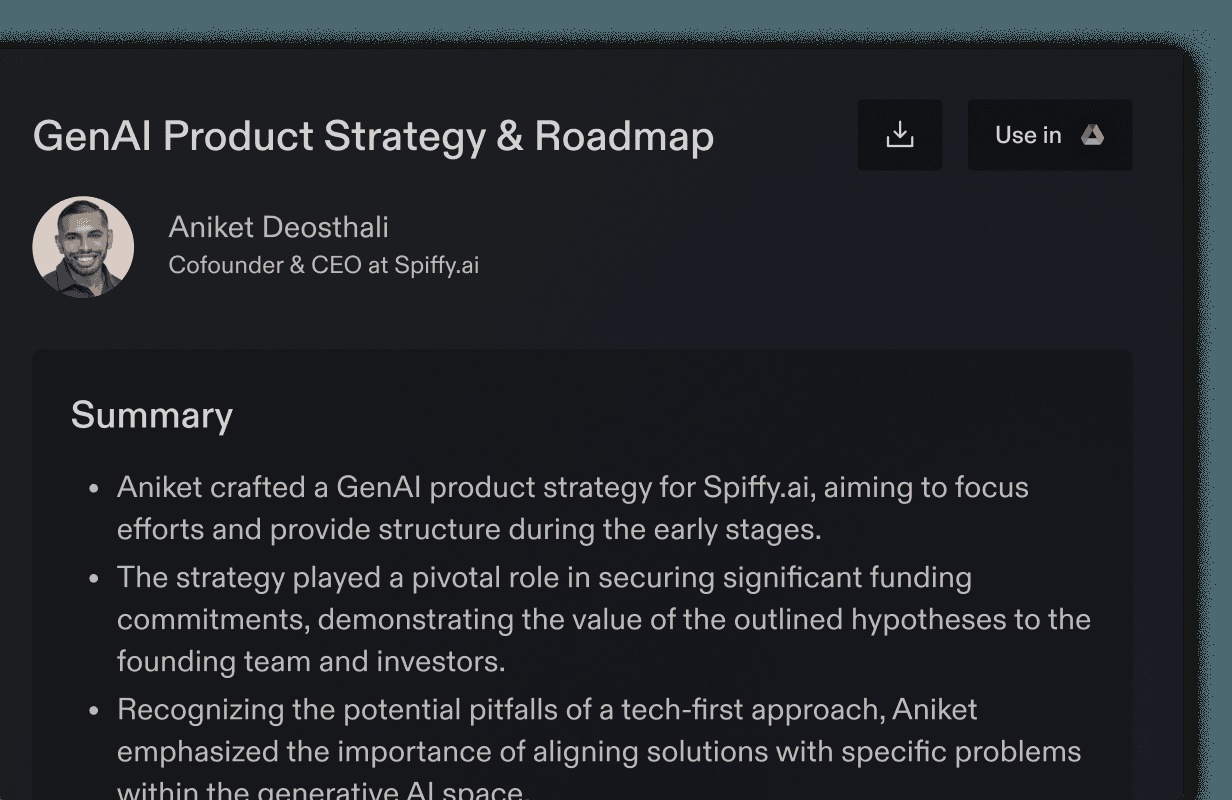
Here is a practical way to use that arrangement: bring one unresolved decision to the material. Find a relevant example. Write down which assumptions differ in your company. Test one change, then check the result. The point is to put the example under pressure. Counting watched videos tells you much less.
The community supplies a second kind of context: peers working through related problems. Membership includes a Slack community, and the help center specifies one live course per season, in spring and fall. That rhythm suits someone who can protect time for discussion and application. A subscription left unopened is an expensive bookmark, however distinguished the people behind it.
Then the teachers became builders
Reforge’s next move followed another workplace irritation. Customer knowledge lived everywhere: support systems, sales calls, surveys, reviews. Bringing it together took effort before anyone could ask a useful question. In January 2025, Reforge acquired Monterey AI and introduced Insight Analytics to aggregate and analyze that scattered feedback.
The portfolio expanded. Research combined AI interviews and surveys, collecting new evidence rather than only sorting existing evidence. Build addressed prototyping. Prefab, which joined in September 2025, added feature flags and configuration for launches. The company was assembling tools around the same product decisions its courses discussed.
- 01ListenGather customer evidence
- 02ExplorePrototype alternatives
- 03ValidateTest before committing
Editorial map of the workflow, not a measured performance claim.
Build’s positioning was especially concrete. A team extending an existing product already has customers, design conventions, and strategic constraints. Reforge wanted its prototypes to start there. Tools such as Lovable, v0, and Bolt are alternatives for generating software; Build emphasized the context and collaboration around testing a proposed feature.
The underlying bet is reasonable: when generating an interface becomes easier, choosing the interface deserves more attention. But a convincing prototype is still only a hypothesis. If the supplied feedback misses important customers, faster synthesis can preserve the blind spot. The useful habit to copy is comparing alternatives against evidence before committing engineering time.
The reinvention had a human bill
Reforge financed expansion with a $21 million round in 2021 and a $60 million Series B in 2022. Balfour had described the earlier business as profitable, with eight-figure revenue. He said financing would allow expansion on a timetable its cash flow could not support.
The expansion did not proceed smoothly. Balfour publicly announced staff cuts during a strategic shift in 2023. In a January 2026 interview, he estimated that roughly a quarter of the original team could make the transition into the new business, emphasizing that this reflected different skills and interests, not deficient talent. The course-building organization did not transfer intact.
He also described returning to hands-on work while COO Tom Willerer took operational and people responsibilities. Balfour helped sell the new products and wrote early marketing materials. The transferable lesson is modest: an established audience does not remove the need to learn how a new product sells. Someone still has to have those first conversations.
A school inside a workspace
Miro announced its Reforge acquisition on March 24, 2026. The arrangement preserves Reforge Learning’s separate brand and vendor-neutral courses while bringing Insights, Research, and Build into Miro’s product offering. Miro reported more than 100,000 Learning alumni and named customers including Workday, Xero, SAP, Mastercard, and Netflix.
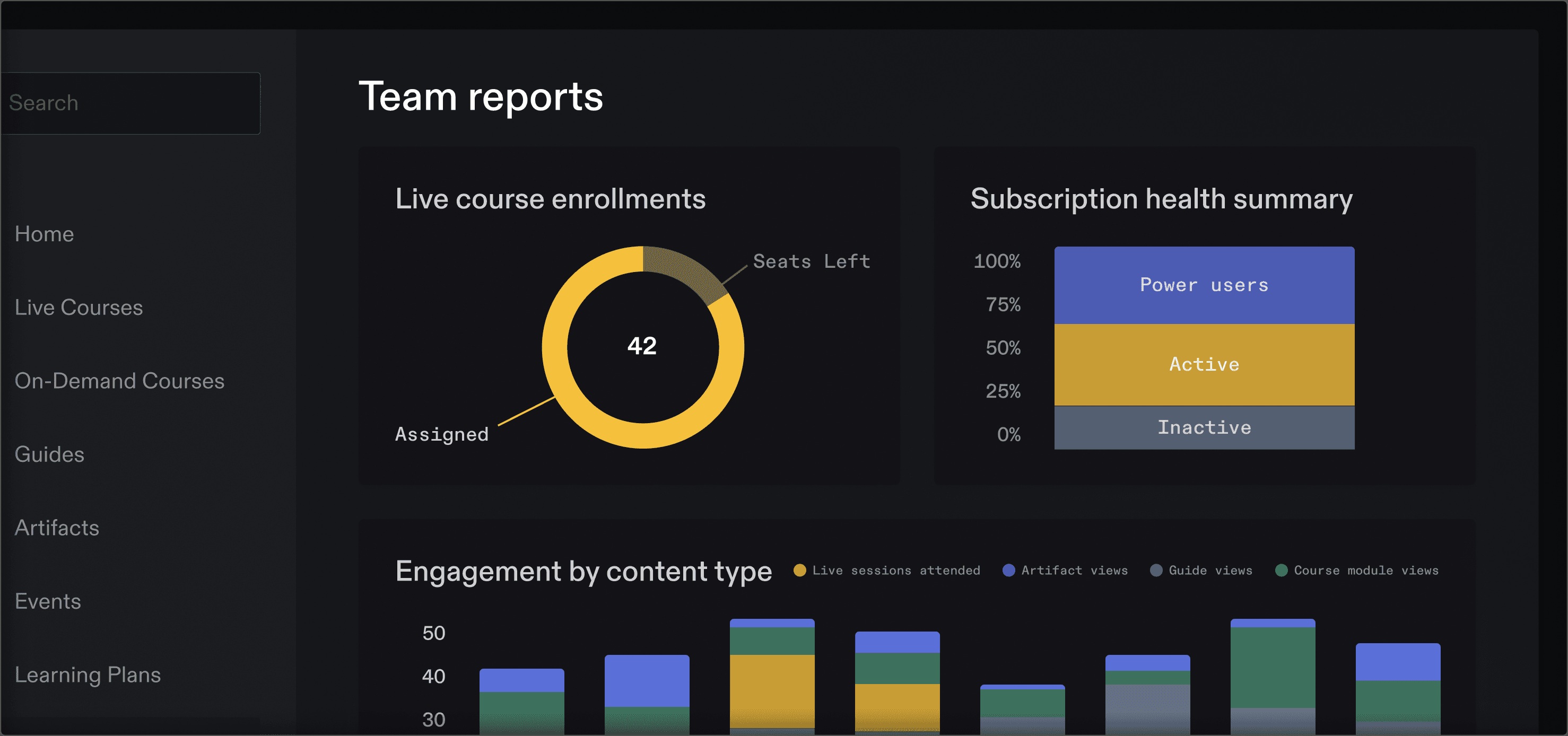
For learners, the immediate buying decision remains concrete. Individual membership lists at $1,995 annually, plus tax. Ten seats cost $9,995; thirty cost $23,995. Those team packages substantially reduce the per-seat price, provided the seats get used.
USD, before tax. Team figures divide the full annual package by its seat count; all seats must be purchased.
An October 2026 Reforge essay examines the “executive builder,” drawing on a session with instructor Jiaona Zhang. Its concern is familiar: product leaders face changing expectations about what they should build themselves. Reforge is still looking for the question that a professional’s existing education did not prepare them to answer.
A specialist cohort competes with alternatives such as Maven and Product School; broad catalogs such as Coursera and Udemy offer another route. Reforge’s case rests on operator experience and immediate application. Someone seeking an accredited degree, a guaranteed job, or passive inspiration has a different shopping list. Before paying, pick that problem, check the syllabus, and decide what observable improvement would justify the time and money. If the work offers no room to experiment, access to somebody else’s expertise may have nowhere to go. The person with a live product problem has something more useful: a way to judge whether the purchase worked.