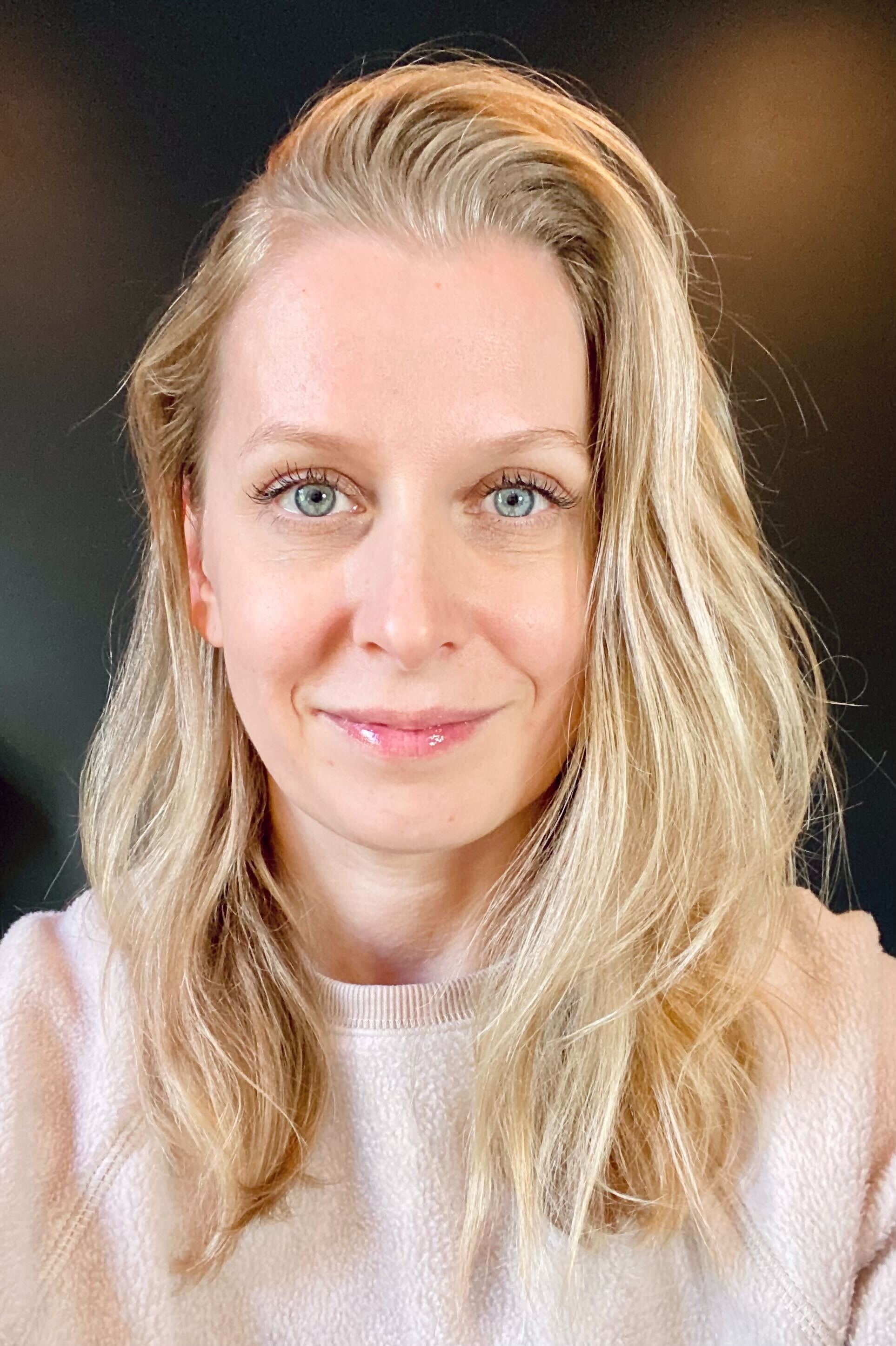
The Growth Mind Behind a $6.6 Billion Company
She was rewriting Slack messages in her sleep. Leaning on a glass of wine each night to wind down. Her marriage was fraying at the edges, her daughter growing up in the peripheral vision of a packed calendar. Elena Verna was, by every external measure, one of Silicon Valley's most successful growth operators. Internally, she was running out of runway.
So she quit. Then she built something bigger.
Today, Elena Verna is Head of Growth at Lovable - the AI app builder that went from zero to $200M ARR in under a year and is now at $400M, adding roughly $100 million per month. She found the product the way most great operators find their next obsession: by complaining about the old thing. She was venting about ChatGPT's design suggestions when someone pointed her toward Lovable. She built a pricing page. Thought, "Oh my gosh." Then joined the company.
"The biggest impact I can make is not on value generated for one company. It's on learnings I can propagate."
- Elena VernaThat instinct - to propagate learnings, not hoard them - is the thread that runs through everything she does. Her newsletter, Elena's Growth Scoop, has 89,000 subscribers and a 40% open rate in an era when most email campaigns pray for 20%. She's a Partner at Reforge, where she built courses on growth leadership, monetization, and experimentation that have shaped how a generation of operators think. She appeared on Lenny's Podcast four times - a number people in the product/growth community cite the way baseball fans cite batting averages.
The $100 Origin Story
Russia in the 1990s. Her mother's life savings - enough to buy an apartment - evaporated to the value of a loaf of bread in a matter of weeks. That's the hyperinflation of post-Soviet collapse measured in household terms. Elena Verna was a child watching her family's financial floor disappear.
She wanted to be a competitive dance instructor. She did not become one.
In 2001, she immigrated to the United States at around 14, carrying approximately $100 and zero English. She found her footing at a community college, then applied to Stanford with a single application she couldn't afford to repeat. Stanford passed. UC Berkeley did not. She earned a B.S. in Statistics - and compressed an entire year's worth of coursework into one semester when her mother arranged a January start date at Safeway and the internship required she be enrolled. She figured it out. She always figures it out.
The Guiding Principle
"I will figure it out" - not a motivational poster slogan but the operating system of someone who had no other option. Elena Verna has said this is the phrase that has governed her entire life. It is also, probably not coincidentally, the best growth mindset you can have: high tolerance for ambiguity, low tolerance for excuses.
Craigslist and the Tiny Nothing Company
After Safeway - where she built personalized coupon algorithms and grew frustrated at 18-24 month shipping cycles - she found her next job on Craigslist. It was a listing for a tiny startup nobody had heard of. Her former manager told her: "Why are you going to some tiny, nothing company? What a mistake."
The company was SurveyMonkey.
She joined as one of the first analysts - employee somewhere in the range of #12 - and stayed for roughly eight years. She created new SurveyMonkey user accounts every week, obsessively, just to watch the product from a new user's eyes. She launched one of the company's first formal Growth teams at a time when only Facebook had anything that looked like one. She rose to SVP of Growth. Under her watch, the company scaled to 60 million users and 600,000+ paying customers.
Then CEO Dave Goldberg died suddenly in 2015. It was a pivotal and painful moment - the kind that doesn't announce itself and doesn't leave cleanly. She eventually left.
The Burnout, the Solopreneur Turn, and the Sleep She Got Back
There's a version of this story where Elena Verna keeps climbing the org chart. After SurveyMonkey, she went to Malwarebytes as SVP of Product and Growth. Cybersecurity moved too slowly; the culture didn't fit. She left after two years. And then, in 2019, she published a piece called "Why I Quit Full-Time Roles" and became, essentially, the most prolific interim growth executive in B2B tech.
The math was good. Miro needed an interim CMO during COVID hypergrowth - she did that. Amplitude needed an interim Head of Growth - she did that. Dropbox, Netlify, MongoDB, Superhuman, Maze, Krisp, Sanity: she advised them. She joined Reforge as a Partner. She started sleeping seven-plus hours a night. She stopped mentally rewriting Slack messages at 2am. She got her marriage back. She got to play with her daughter.
Her daughter, she has said, lets her "discover the world all over again." That is the kind of line that gets passed around growth Slack channels because it says something about what the cost of ambition actually is, and what it takes to recover it.
The Frameworks That Became Industry Vocabulary
Elena Verna did not invent Product-Led Growth. She did, however, do as much as anyone to translate it from a Silicon Valley insider concept into a framework that operators at mid-size B2B companies could actually use. Her contributions to the language of growth are substantial enough that "PLG" being on her Substack handle before it became a buzzword is a reasonable flex.