There is a particular kind of hiring problem that begins after somebody applies. The résumé has arrived. The manager has seen it, perhaps. Someone has promised to arrange an interview. Then the application disappears into a collection of messages, attachments and good intentions. RecruitHire By 500apps built its proposition around making those small handoffs visible. A candidate would have a record, a stage and a place in the queue.
- Applicant tracking, résumé parsing and custom hiring stages.
- Historically bundled with 50 apps at $14.99 per user monthly.
- Parent 500apps now announces a suite wind-down.
The intriguing detail was the price tag attached to that orderliness. RecruitHire was marketed at $14.99 per user per month, with access to a suite of 50 business applications. Hiring software became one reason to buy a much larger subscription. For a small company juggling recruitment with everything else, the offer had an obvious appeal: one purchasing decision could cover several administrative headaches.
Today that pitch has acquired a second chapter. The 500apps website carries a notice announcing the suite's wind-down and a move toward 500agents. Read RecruitHire with that notice in view and a useful question emerges. How much software does a small business actually want to manage?
A résumé gets somewhere to go
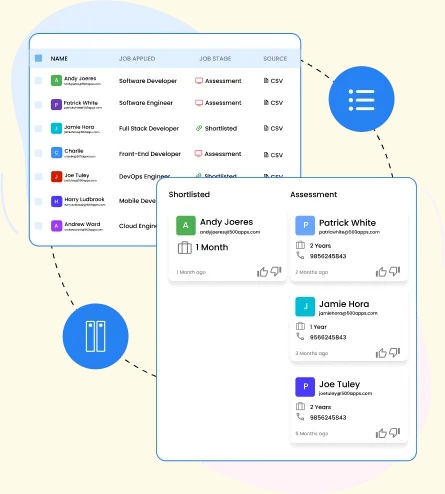
RecruitHire belongs to the applicant tracking system market. Its company description lists an application tracker, career site, job posting forms and résumé parser. Recruiters could add candidates, manage positions and move applications through screening stages. Triggered surveys and email templates extended that record into a repeatable sequence. The expertise here was in arranging recruitment work so that the next action did not depend entirely on someone's memory.
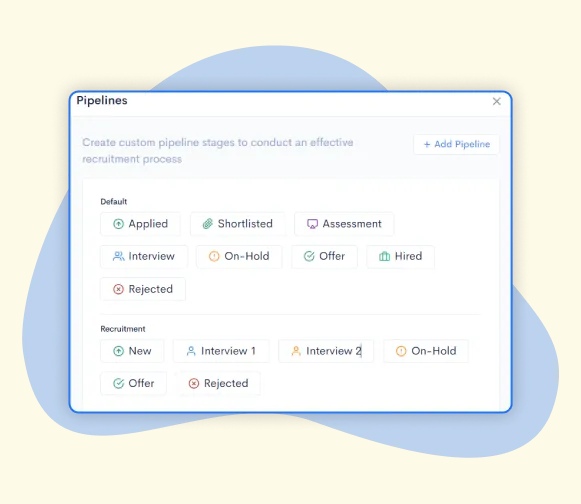
The product materials make the mechanics quite tangible. A team could import candidate records in bulk using CSV or XLS files. Custom stages let an employer give its hiring process its own shape. Filtering narrowed a pool by criteria such as experience or location. Activity tracking and notifications helped people follow changes. Each feature addressed a mundane source of friction: typing the same information, searching for a file, asking a colleague for an update.
The career portal handled the candidate-facing side; the pipeline handled the employer's view. Those two surfaces matter because a hiring process is experienced from both directions. An employer wants an organized shortlist. An applicant wants a clear way to apply and some indication that the application has reached a human. Putting both into one system gives a team a place to coordinate that exchange.
- 01 Apply
- 02 Screen
- 03 Interview
- 04 Decide
The extra forty-nine apps
Small and medium-sized businesses were an explicit audience in RecruitHire's directory listings. HR staff, recruiters and managers handling several open positions were the natural users. Its offer also crossed into technical hiring: the company's LinkedIn product description advertised NinjaInterview integration for virtual interviews and automated coding assessments. That made an assessment another step in the recruitment process rather than a separate administrative expedition.
The competitive setting included dedicated recruiting tools such as Workable, Breezy HR and Zoho Recruit. RecruitHire's distinction was its commercial packaging. It brought familiar ATS functions into the broader 500apps subscription. A buyer could evaluate the hiring tool while also considering the usefulness of the rest of the suite. That is a different purchasing calculation from choosing a recruiter-only system.
The arithmetic was pleasantly short. At the advertised monthly rate, five paid users would total $74.95 a month before any applicable taxes or extras. G2's pricing record, last updated in October 2024, listed a free trial and a $14.99 Basic edition. These are historical advertised terms. They explain the proposition rather than establish a live offer during the suite's wind-down.
A bundle's value depends on use. Fifty available applications do not automatically remove fifty problems. For a team that needs several of them, shared purchasing can be convenient. For one that needs only recruitment, the sensible comparison remains the hiring work itself: candidate records, communication, assessments and the effort required to keep everything current.
RecruitHire inside a 50-app subscription.
Advertised pricing, recorded by G2 in October 2024.
The people behind the workflow
Customer comments offer a smaller, more human view of the product. On Trustpilot, reviewer Alphonsus Ekeh described using custom flows for shortlisting, interview updates, rejection emails and offers. He also highlighted bulk imports and sending NinjaInterview results to shortlisted candidates. The attraction was practical: fewer repeated steps between receiving an application and deciding what to do with it.
Another reviewer, Fatima Abdulmalik, praised communication templates, tracking and a support representative's help. These accounts describe individual experiences, rather than a measured improvement across the customer base. Still, they reveal what users chose to celebrate. The memorable feature was sometimes a prompt answer from support. Recruitment software may organize people into rows; buying it remains a relationship between people.
That gives a reader something concrete to copy without buying the same product. Define the stages before automating them. Decide what message follows each decision. Keep interview feedback beside the candidate record. Give the team a common view of progress. Automation is most useful when it carries out a process that colleagues already understand. An unclear decision does not become clearer because an email sends itself.
When the bundle became the question
The parent's current notice supplies the reversal. It says the team had been “spreading thin across 50 products” and credits customer feedback with informing its next direction. The stated successor, 500agents, is a conversational AI platform. The announcement describes a relative 90-day wind-down, assistance exporting customer data and early access for existing customers. It does not establish a calendar shutdown date.
Taken on its own terms, that explanation points to a limit in the breadth-first strategy. The team was reconsidering how much it could sensibly build and support. For existing RecruitHire users, the immediate work is concrete: arrange exports, preserve recruitment records and plan continuity for open roles. A hiring process has to survive the software carrying it.
RecruitHire's useful idea was modest and durable: make the next hiring step visible. Its parent's change of direction adds a second lesson for software buyers. Count the tools if you like. Then trace one real application through them. The test is whether the people doing the hiring can finish the job.
“spreading thin across 50 products”500apps, in its customer wind-down notice