The raw material arrives warm, wet and in a hurry. Brewer's spent grain is what remains after hot water has pulled fermentable sugars from malted barley. It still contains protein and fiber, but it also spoils quickly. To most breweries, it is a heavy disposal problem with a ticking biological clock. To RE:harvest, the Seoul company founded by Alexander Myoung Joon Min in 2019, it is inventory wearing the wrong name.
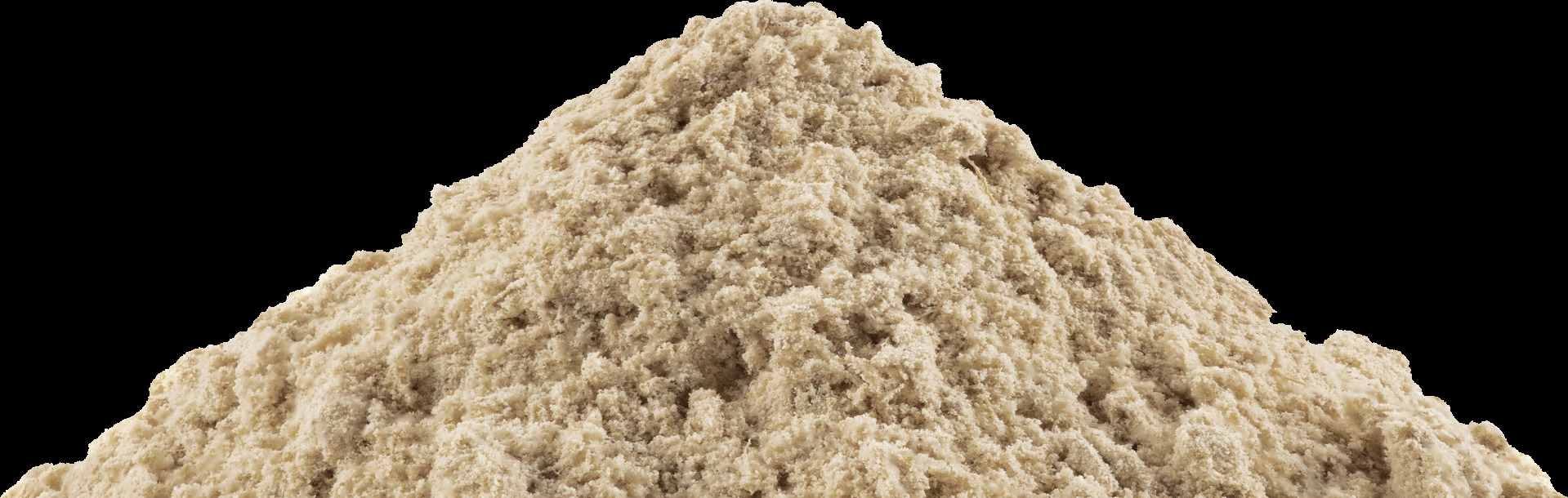
The company's work begins before anybody mentions granola. Grain is collected the day it is produced, moved through a temperature-controlled chain, then cleaned, dehydrated, dried, milled and inspected at RE:harvest's plant in Hwaseong. The fine, beige result is RE:nergy powder, an ingredient designed to replace a portion of ordinary flour or add fiber and protein to bread, pizza dough, pasta, batter, sauces, bars and snacks.
That sounds like a tidy loop, which is why upcycling photographs so well. But the company is more interesting when the loop gets messy. Its public record contains an unusually useful example of what happens after a technically sound climate idea meets food regulation, capital expenditure and customers who quite reasonably want certified output before committing to buy.
01 / The actual trick
Waste is cheap. Consistency is expensive.
RE:harvest's earliest feedstocks came from beer and sikhye, the Korean sweet rice drink. Agreements with six producers, including Oriental Brewery and Seojung Cooking, gave it access to what a 2022 report described as roughly 56 percent of South Korea's beer and sikhye by-products. The exchange made intuitive sense: manufacturers reduced a disposal burden, while RE:harvest acquired raw material at little or no cost.
Free feedstock is a seductive phrase. It can make a young industrial company look like it has cheated gravity. The less charming line items are refrigerated collection, sanitation, energy, moisture removal, quality control, packaging and the tests required to call the result food. A by-product also changes with the recipe, season and factory that produced it. The valuable technology is not merely milling grain. It is making Tuesday's output behave like Monday's.
The first usable powder took about a year of trial and error, according to Min. Later descriptions of the process added ultraviolet and far-infrared pretreatment, controlled drying and specialized sterilization. The company filed patents around raw-material processing and earned Korean green technology and HACCP-related credentials. Food upcycling, it turns out, looks less like composting and more like precision manufacturing.
Figures are company-reported comparisons published by Korean public agencies and trade bodies. Water savings are reported at roughly 3.5 to 3.7 tons per kilogram; nutrition varies by formulation.
02 / Who pays
One powder, three routes to a purchase order
RE:harvest sits between companies with too much residue and companies that need ingredients, recipes or a credible environmental story. Its core business is B2B: sell RE:nergy powder to manufacturers for use in their products. A second channel sells finished goods such as bars, granola, shakes and baked products. A third, B2B2C, co-develops food with a partner and sends it to market under a joint or private label.
Those channels reinforce one another. Ingredient sales can move volume. Consumer products teach shoppers that "spent" grain is still food and provide fast feedback on taste. Co-developed products let a large partner test an ESG claim without constructing a new processing line. OB's brewer's grain has appeared in RE:nergy bars and crackers. CJ-linked businesses and bakery or restaurant names including Tous les Jours, The Bread Blue and Bronx have explored bread, dough and other applications.
The moat is not finding waste. It is giving a food company the same safe ingredient again tomorrow.YesPress analysis
This is also where RE:harvest differs from composting, feed or disposal. Those routes may be appropriate, but they usually preserve less of the material's economic value. RE:harvest tries to keep a food-grade resource in the human food chain. Conventional flour remains the obvious alternative; other upcycled ingredient companies, including Renewal Mill, Upcycled Foods and Agrain, attack related streams. RE:harvest's edge is its Korean collection network, processing knowledge and named relationships on both sides of the transaction.
03 / The bill arrives
What it cost, and what failed first
Public funding accounts vary by date and currency. Korea's agriculture ministry cited a 5 billion won large-scale investment around the Series A period. A 2023 trade profile put cumulative investment at 8 billion won from investors including STIC Ventures, BNK Ventures, CJ CheilJedang and Hanwha Investment & Securities. Data supplied with this profile records $11.08 million in total funding and a $6.71 million latest round. No public valuation was found.
The operating numbers are more revealing than the fundraising total. A 2025 case study prepared for the RE:harvest-ASEIC P4G partnership reported revenue rising from $1.11 million in 2023 to $1.84 million in 2024. Gross loss narrowed sharply, from about $145,000 to $32,000. Net loss remained near $2 million, and 2024 cash flow was negative $1.7 million. Offtake agreements, meanwhile, rose from seven to 19. Demand signals improved; the business had not reached self-sustaining economics.
More sales, still a long drying cycle
Reported in the April 2025 P4G case study. Rounded to two decimal places.
The first thing to fail in Indonesia was not the ingredient. It was the planned sequence. Potential clients wanted powder made in a facility carrying standards such as GMP, HACCP and Halal. A small pilot plant could not obtain all of those credentials. A full plant could, but required major capital before RE:harvest had secured enough long-term local buyers. Investors balked. After shareholder meetings, the company suspended both pilot-scale and full-scale construction in Indonesia.
That decision is the profile's most valuable detail. Climate companies are often encouraged to build capacity as proof of seriousness. RE:harvest did something more serious: it admitted that steel would not solve unvalidated demand.
Old sequence
Build local plant → win certification → persuade customers → hope volume fills it.
New sequence
Process pilot in Korea → test products → secure buyers → reconsider local plant.
04 / The change of mind
Bring the experiment home, then earn the factory
For roughly a year of pilot work, by-product collected from Multi Bintang would go to RE:harvest's equipped Korean facility for processing and compliance tests, then return to Indonesia as an ingredient. Locally, the company and a restaurant partner could sell ready-to-eat items or premixes that did not require the same BPOM pathway, gathering consumer feedback sooner. In parallel, potential Indonesian manufacturers could develop packaged snacks, with regulatory approval pursued for wider retail later.
It is not a perfect solution. Shipping wet or processed material across borders adds cost and emissions to a business built on avoiding waste. The partnership hired a carbon consultant and concluded that future facilities should include process-level energy monitoring, flow meters and other measurement from the start. Retrofitting measurement later is costly and disruptive. Another assumption changed too: at larger volumes, Multi Bintang could not necessarily provide by-product for free. Sustainability had to connect to sales, and the feedstock might need to be purchased.

Min's own change of mind began earlier. A third-generation Korean American and former food-industry consultant, he has described visiting Rwanda, where hunger was visible, and then a Michelin-starred French restaurant that discarded about 281 kilograms of usable by-products a day. A colorectal-cancer diagnosis in 2017 sharpened the impulse to do something useful. The contrast pushed him from advising food companies to trying to rewire one stubborn part of their supply chain.
05 / The stealable playbook
What another founder can copy - and when not to
Secure the by-product source and a downstream product partner. Supply without demand is just better-organized waste.
Pizza, bread and cookies reduce the behavioral leap. Consumers need not learn a new meal to try a new ingredient.
A consumer snack can teach the market and test taste while B2B ingredient contracts take longer to close.
Require purchase intent, certification logic and unit economics before committing to a specialized local plant.
Measure energy, water and emissions at process level. A climate claim without operational data ages badly.
"By-product" invites curiosity. "Waste" can trigger disgust. The underlying food safety must justify the language.
The model works best when a large, predictable producer generates a consistent by-product near a certified processing line; the ingredient has a credible nutritional or functional advantage; and downstream brands will commit to recipes and volume. Korea's compact geography and concentrated food manufacturing help. The model gets weaker when feedstock is scattered, variable or contaminated, when refrigerated transport consumes the margin, when regulation demands full capacity before a market test, or when a sustainability label cannot overcome taste and price.
Where RE:harvest sits in the food economy
disposal
feed + compost
food ingredient
RE:harvest has already widened its experiments beyond beer and sikhye residue to soy pulp, rice bran, oilseed meal, cocoa shell, carrot and kale by-products. It has also explored using material unsuitable for food in pencils, golf tees and other non-food objects. The ambition is a portfolio of circular materials. The discipline should remain the same: find the highest practical use, not the most photogenic prototype.
The company has won a Future Food Asia prize, joined the Upcycled Food Association, opened a larger Korean plant, gained B Corp recognition and established an Indonesian entity. Those are useful signals. The paused factory is the stronger one. It shows a team willing to let market evidence interrupt a neat expansion story.
Food upcycling will not rescue every peel, pulp or pile of grain. It does not need to. RE:harvest's bet is narrower and more credible: some material called waste is still a safe, nutritious industrial input, if somebody does the inconvenient work between the brewery and the bakery. The powder is the visible product. The real product is permission to harvest the same resource twice.