Ravi Bulusu arrived at a Senate witness table by way of a problem that looked, at first, like something an engineer could simply solve. There was a shortage. He understood systems. He had capital, technical experience and the instinct to build. So why not make what was missing? In ordinary times, this would be the beginning of a neat founder story. In 2020, it became a tour of every awkward joint in the American machine.
Bulusu was then a Seattle-area Microsoft engineer, one of the highly skilled immigrants caught in the employment-based green-card backlog. The arrangement permitted him to do demanding work for an established company while making it hazardous to own the new company he wanted to create. He told a newspaper that the backlog felt like a straitjacket. It is an unusually economical description of a policy problem: useful arms, restricted movement.
His proposed business was not a novelty app or a minor convenience. He wanted to produce masks when domestic supply had failed to keep pace. Unable to follow the obvious route without risking his immigration position, he put money into an operation another immigrant had opened near Wichita, Kansas. They hoped to employ 20 people. That company became MolMas, and Bulusu would soon describe himself publicly as a co-founder.
01 · The physical internetEvery dependency acquires a price tag
Software people speak of stacks. Manufacturing has one too, except its layers arrive on trucks, occupy floor space and refuse to be patched overnight. MolMas needed machinery, raw material, testing, certification, buyers and distribution. Each part depended on the next, and several were still tied to the same overseas supply network the company was trying to work around.
Bulusu’s account of the early months is striking for its motion. Prices changed by the day. Equipment that had been ordinary before the emergency became dear. Raw material quotes reached levels that made planning feel faintly theatrical. Young manufacturers trying to iterate on a product could then wait months for another testing cycle because certification lines were crowded. At the far end, public buyers often had rules designed to select the lowest price. A domestic newcomer could succeed at making the thing and still lose in the system that brought it to a customer.
The product was only one link in the product
The indignity had a comic edge. Online platforms had sensibly moved to stop price gouging. Their broad restrictions also made it hard for legitimate new manufacturers to advertise. MolMas was pushed toward cold calls and old email tactics at precisely the moment when the country was celebrating modern ingenuity. The factory floor belonged to the emergency; the sales playbook had wandered in from the age of dial-up.
Five minutes, one national argument
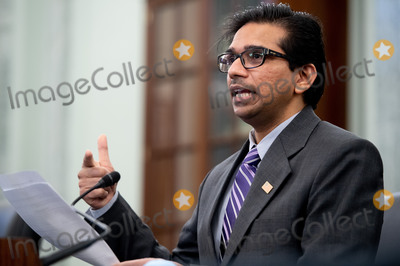
On November 17, 2020, Bulusu appeared before the Senate Commerce Subcommittee on Manufacturing, Trade, and Consumer Protection. He brought a founder’s complaint, but he framed it as a question of national design. Domestic capacity, he argued, should be treated as infrastructure. Startups needed time to survive, certification needed a priority route during emergencies, and procurement needed to value resilience along with price.
His chosen metaphor was the race to the Moon. American technical achievement, he said, had helped inspire him, a first-generation immigrant, to come to the country and contribute. The line carried a quiet sting. Here was someone drawn by the national talent for audacious building, explaining that he had found the making of a modest disposable product entangled in law, pricing and vanished capacity.
Bulusu was especially persuasive when he sounded least like a speechmaker. In written answers submitted after the hearing, he reduced the grand cause to an operator’s checklist: study the market, ask buyers what they need, quantify demand, create redundancy in raw materials, expect familiar marketing channels to fail, and begin certification early. The romance of manufacturing lasted roughly as long as it took to meet the queue.
The episode also revealed a distinctive form of persistence. He did not get the corporate structure he first wanted. He found another route. MolMas did not inherit a mature domestic supply base. It assembled what it could. The company did not enjoy frictionless access to customers. It called them. None of this is tidy enough for a founder myth, which is precisely why it is useful.
The immigration obstacle deserves another look because it reverses the usual argument about entrepreneurial risk. Founders are expected to risk comfort, capital and reputation. Bulusu faced an additional wager: disturb the employment relationship attached to his legal status and the consequences could reach beyond the business. The policy did not distinguish between reckless improvisation and an engineer trying to supply an urgently needed product. It simply made movement expensive.
That context changes the meaning of the Kansas investment. It was neither a passive financial bet nor the exact venture he had first imagined. It was an architectural workaround. One person could form the company; another could bring capital, software experience and a willingness to wrestle with suppliers. The arrangement let the work proceed while the law kept its straight face. By the time Bulusu reached the Senate, he had earned the peculiar authority of someone who had been both welcomed for his skill and constrained in applying it.
There is an older clue to this operating style in his work with 1M/1M, the entrepreneurship program founded by Sramana Mitra. A public recommendation describes him handling social media, offshore vendors and a remote summer group of 45 interns. Those tasks lack the polished glamour attached to startup life. They require follow-through, clear handoffs and tolerance for the minor failures that multiply when people are scattered. Long before a global emergency made distributed work ordinary, Bulusu was already practicing the unphotogenic art of keeping it moving.
03 · Back to dataA career that refuses one noun
The factory chapter sits inside a career with a restless taxonomy. Bulusu had worked in software design and senior innovation roles at Microsoft. He spent years as an ambassador for the 1M/1M entrepreneurship program, where a public recommendation credits him with managing a geographically dispersed summer group of 45 interns. After MolMas came a CTO role at Q4 Sports, a performance-footwear company built around athlete partnerships.
One résumé, several kinds of machinery
In April 2022, he moved to Truveta, the health-system-owned company building a platform around de-identified clinical data. His public role was described with two plain words: images, data. They are modest labels for hard material. Medical images are heavy, sensitive and context-dependent. Longitudinal records arrive from organizations with different systems and habits. Turning them into research-ready information is another exercise in finding what refuses to line up.
The change of medium is worth noticing. A mask can be held, counted and stacked in a carton. A clinical image becomes useful only through layers of definition, access control and connection to the rest of a record. Yet the operator’s problem remains familiar. Quality has to be established. Provenance has to survive the trip. A researcher at the far end must be able to trust what arrived. Truveta’s wider project, built with participating health systems, depends on normalizing information that was never created for one common research platform. Bulusu had moved from a supply chain of fabric, machines and freight into a supply chain of pixels, metadata and permissions. In both cases, the attractive noun at the center could distract from the unglamorous connective work around it.
There is no reason to pretend that sports shoes, face masks and clinical data belong to one market. They do belong to one kind of mind. Each domain contains an object surrounded by a less visible system: the athlete and the endorsement model, the mask and the supply chain, the image and the clinical context. Bulusu’s work repeatedly lands in the surrounding machinery.
04 · The hidden next actStealth is a pause, not a conclusion
His current public profile says only “Stealth Startup” in the Greater Seattle Area. The title supplied for him is founder. There is no public product to admire, market to size or slogan to quote. That blankness should be respected. It also offers a clean place to look backward.
At Microsoft, Bulusu worked within one of technology’s established institutions. With MolMas, he encountered the physical cost of missing infrastructure. At Truveta, he worked where information becomes usable only after different institutions agree on structure and trust. The particulars changed. The problem shape did not.
In his Senate testimony, Bulusu asked policymakers not to wonder whether America could rebuild capability. The country had already proved that it could. His optimism was not breezy. It arrived carrying invoices, testing delays and the memory of a founder plan narrowed by immigration status. That gives it weight.
The usual profile wants a clean upward line. Bulusu’s public story offers a better drawing: a route around a barrier, then another, then another. Sometimes the detour is the career. Sometimes a factory is also an education in policy. Sometimes a software engineer ends up at a witness table because code has taught him to distrust any system whose dependencies nobody can see.
Whatever his new company is building, it begins with an advantage no pitch deck can manufacture. Its founder has already watched several kinds of systems fail in public. He has also learned that the useful response is neither mystique nor complaint. Find the constraint. Name it precisely. Then take the long way around.