Every patient leaves a trail, though never in one place. A doctor keeps a record. A pharmacy knows about a prescription. A laboratory holds a result. An insurer sees a claim. Each party possesses a chapter and none possesses the book. Andrew Goldberg has spent the past dozen years building a company around this particularly modern nuisance: everybody has data, and the data has declined to introduce itself.
Goldberg is the co-founder and chief operating officer of HealthVerity, the Philadelphia company he started with Andrew Kress in 2014. The duplicate first names are the charming part. The less charming duplication lives inside healthcare systems, where records can repeat, conflict or sit in splendid isolation. HealthVerity's business is to let organizations find, license and connect de-identified data while keeping identity, permissions and provenance under control.
Goldberg's title makes him responsible for day-to-day operations and performance. That can sound like stewardship of calendars and dashboards. Here it means making a difficult promise repeatable: connect more of a patient's journey without treating privacy as an ornamental clause near the bottom of a contract. The product and the operating philosophy mirror each other. Both are about knowing what joins to what, who may use it and why.
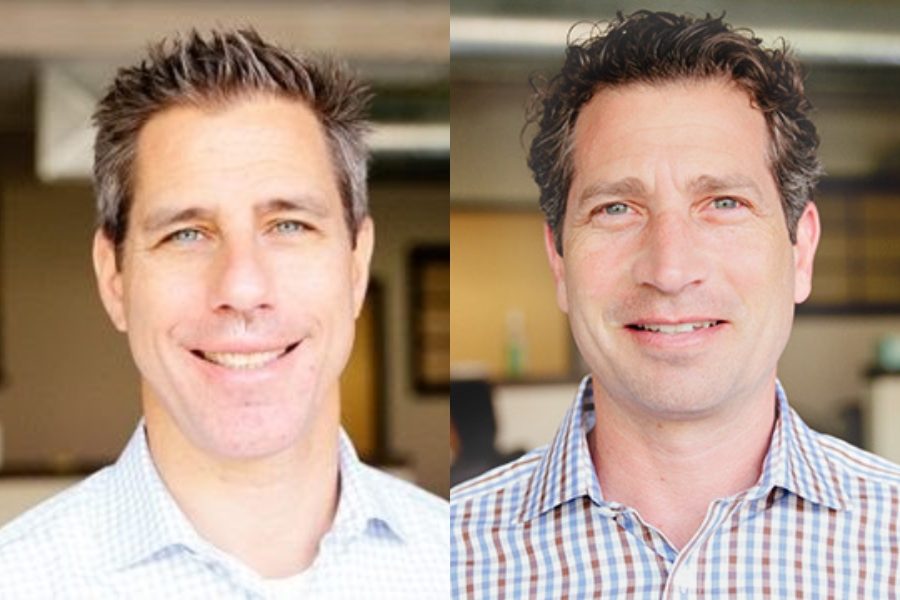
A history degree in a data company
There is a pleasing mismatch in Goldberg's biography. He earned a BA with Honors in History from the University of Pennsylvania, then an MBA with Distinction from Harvard Business School. The founder of a data-infrastructure company was trained first to read the record, weigh context and be suspicious of tidy stories. A database also makes claims about the past. The difference is that it rarely footnotes its doubts.
His career before HealthVerity looks varied until one notices the recurrent architecture. Goldberg held roles at Diageo, Bain & Company and Comcast. He co-founded Eziaz, a venture-backed broadband access company. He became vice president of corporate development at Avaya, then senior vice president of strategy and marketing at Dialogic, where his remit included corporate development and global marketing. Consumer goods, consulting, cable, broadband and enterprise communications appear to be separate worlds. Each is full of networks, negotiations and systems that do not cooperate merely because a slide says they should.
Corporate development taught him what has to fit before a deal can become an operating reality. Telecom taught him that a network is only as useful as its connections. Startups taught him that resources arrive after the need for them. By the time HealthVerity began, he had spent years in the space between strategy and execution, which is where a chief operating officer earns the title. Goldberg, an avid runner, has a pastime well suited to long distances and measurable progress.
There is another advantage to arriving in healthcare data by this route. Goldberg did not begin with allegiance to one kind of record or one institutional silo. His experience was in building companies, evaluating transactions and taking technologies to market. HealthVerity's problem required precisely that wider field of view. The company would not own every fragment. It had to give data holders a reason to participate, give buyers a simpler path to the information they needed and give both sides confidence that the rules would travel with the records. The marketplace was never only a catalog. It was a negotiated system of trust.
The useful difference between 350 and 360
Goldberg has a gift for puncturing a perfect number without abandoning the ambition behind it. Discussing the context that linked data can give pharmaceutical companies, he dismissed the familiar promise of a complete view. Nothing, he said, is truly 360 degrees. A system might reach 350, which is still dramatically more useful than a single stream of information.
It's not a 360 view - because nothing is that complete - but it's at least 350.Andrew Goldberg, on connected patient context
That missing ten degrees is revealing. Goldberg is not selling omniscience. He is selling a better account of what can be known, under rules. A pharmaceutical company may hold more data than it can manage while still missing the signal it needs. Its records may be siloed across departments. Teams may not know which datasets can be linked. Governance may turn a technically possible combination into a legally impermissible one. Even a useful feed can fail if it never enters the workflow where decisions are made.
HealthVerity's answer became an approach organized around four nouns: Identity, Privacy, Governance and Exchange. Identity asks whether two records belong to the same person. Privacy keeps that person from being exposed. Governance decides what use is allowed. Exchange makes the approved connection possible. Put in that order, the sequence feels less like software marketing and more like table manners for institutions.
How a fragment becomes usable evidence
The approach gave HealthVerity room to grow from identity management into a marketplace and wider data ecosystem. Its financing followed: early venture rounds, a $25 million Series C in 2019 and a $100 million Series D in 2021. The big round is a convenient milestone, but money is not the plot. The plot is what the company had to become so that data suppliers and buyers could transact without each project turning into a bespoke expedition through contracts, matching systems and compliance reviews.
The operator asks where the data came from
The arrival of generative AI gave Goldberg a fresh arena for old questions. In a 2024 conversation about AI in life sciences, he kept returning to the quality beneath the model: provenance, linkage accuracy, false positives, false negatives and cost. If a clinical dataset is poorly understood, a more articulate algorithm can produce a more persuasive mistake. The danger is not that a machine says something bizarre. It is that it says something plausible from evidence that never deserved the confidence.
His public questions tend to be practical. How long did implementation take? Which parts of an industry are adopting the technology? How can a buyer distinguish a useful vendor from a fashionable suffix? What does experimentation cost? In one line, he supplied the sentence that should be taped above every exuberant innovation budget: “The trial and error is not free.”
This is skepticism with its sleeves rolled up. Goldberg is plainly interested in what AI can do. He has hosted conversations about clinical-trial optimization, patient engagement and data sourcing. But his argument begins one floor below the demo, in the plumbing. Models change quickly. Clean, permissioned and well-understood inputs remain stubbornly essential. The future, as usual, has a back office.
Roles at Diageo, Bain & Company and Comcast, followed by co-founding broadband venture Eziaz.
Corporate development at Avaya, then strategy, global marketing and corporate development at Dialogic.
Co-founded HealthVerity with Andrew Kress in Philadelphia.
HealthVerity announced a $100 million Series D to continue scaling its platform.
HealthVerity completed its acquisition of Symphony Health, adding commercial data and analytics to its clinical data ecosystem.
Philadelphia, with skates and pointe shoes
For all the national scale in HealthVerity's work, Goldberg's story remains unusually rooted in Philadelphia. He studied history at Penn. He built HealthVerity there. He is a lifelong Flyers fan, an allegiance that supplies regular practice in hope, disappointment and trying again next season. In 2026, he announced another local commitment: appointment as treasurer of Philadelphia Ballet and membership on the executive committee of its board of trustees.
The ballet role looks like a graceful detour until one considers the job. A performing-arts institution also runs on hidden coordination: artists, facilities, schedules, donors, governance and budgets must meet at precisely the right moment. The audience sees the leap. The operator notices the payroll, the building and the rehearsal calendar that made the leap possible.
It is tempting to cast Goldberg as an invisible-hand character, forever arranging the mechanisms behind the curtain. Yet his public work suggests something more sociable. He interviews experts, moderates discussions, explains the company's systems and invites people into the argument. An operator does not connect organizations by admiring boxes on an org chart. He has to persuade people that joining their piece to somebody else's can create more value without surrendering control.
The next set of joins
In May 2026, HealthVerity completed the acquisition of Symphony Health. The combination brought together HealthVerity's clinical-data and identity capabilities with Symphony's commercial healthcare data and analytics. It was a larger version of the company's original proposition: distinct perspectives become more useful when connected. The integration also handed Goldberg the kind of assignment that defines a COO. A transaction may close on one date. Two operating systems take rather longer to shake hands.
The company now has more kinds of data, more history and more workflows to reconcile. Goldberg's earlier career prepared him for deals; HealthVerity prepared him for the consequences. The question is no longer whether fragmented records can be linked. It is how to keep the resulting ecosystem coherent as the number of sources, products and possible uses multiplies.
That challenge suits an executive who describes himself as passionate about combining new ideas and resources. Combining is the operative word. In Goldberg's version of entrepreneurship, the raw materials already exist in abundance: records, software, institutions and expert people. The value appears in the arrangement. A laboratory result gains context beside a claim. A commercial signal becomes more intelligible beside a clinical one. A promising technology becomes useful when it survives procurement, governance and the daily habits of its users. Innovation here is less thunderbolt than competent assembly, which may explain why operators rarely get the dramatic movie scene and frequently get the keys.
His answer, so far, has been consistent. Do not begin with the thrilling conclusion. Begin with identity. Establish the permissions. Preserve the provenance. Make the exchange useful inside a real workflow. Then let the evidence speak, preferably without pretending it has seen the missing ten degrees.