Profile / Founder & CEO
Shubh
Sinha.
He runs a company whose entire product is a shorter wait. Ten to twelve weeks becomes a Tuesday afternoon. The waiting was expensive; the Tuesday is cheap.
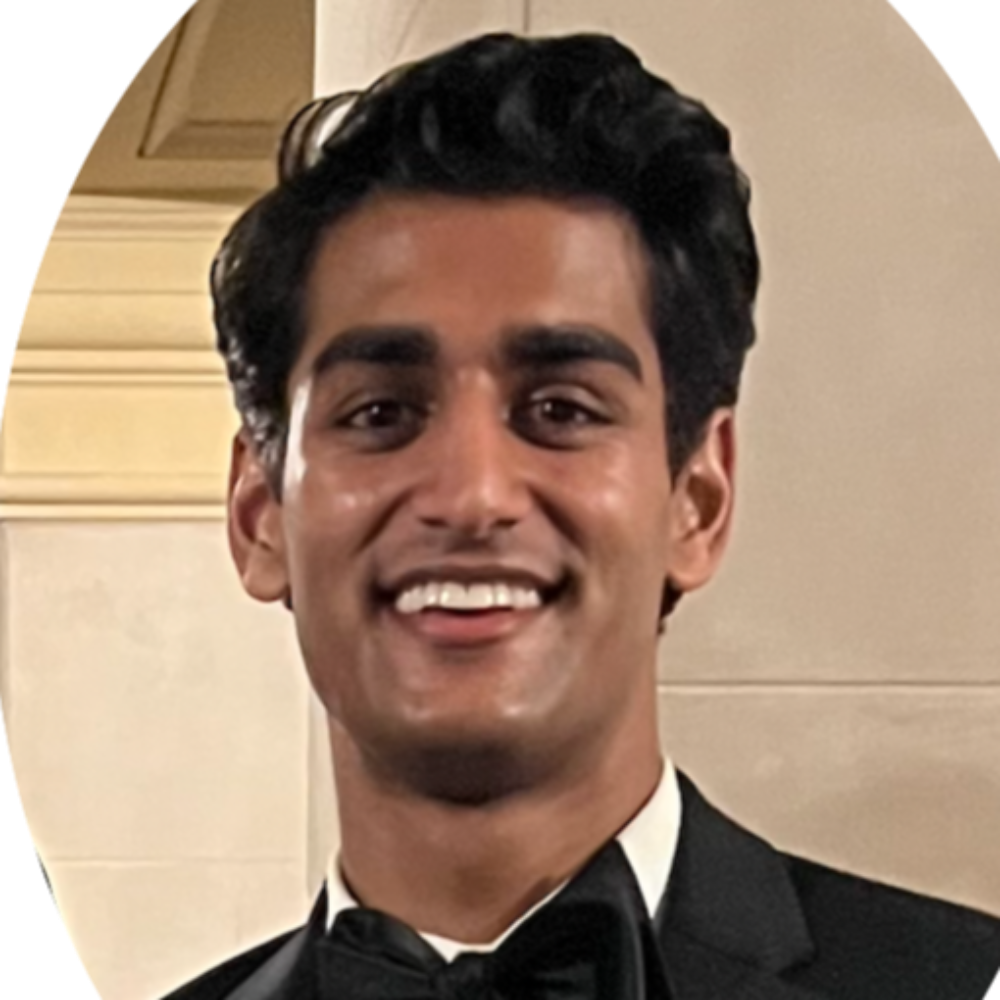
He runs a company whose entire product is a shorter wait. Ten to twelve weeks becomes a Tuesday afternoon. The waiting was expensive; the Tuesday is cheap.
Shubh Sinha is the co-founder and chief executive of Integral Privacy Technologies, a San Francisco company that takes the sort of dataset a hospital, insurer, or pharmaceutical company would normally be terrified to touch and turns it, quickly, into a dataset that can be used. In July 2026 Integral announced a Series A that brought its total funding to about $25 million, from a roster including Venrex, The General Partnership, Array Ventures, GreatPoint Ventures, LiveRamp Ventures, Haystack, and Caffeinated Capital. The company employs roughly forty people. Its founder is thirty-something, wears a hoodie now, and once ran into a pitch meeting wearing a suit.
Integral's product does something that sounds like a bureaucratic detail and is in fact the entire business: it certifies regulated data. HIPAA, GDPR, CCPA, expert-determination, all the acronyms that make a general counsel's calendar fill up. The old way of doing this involved consultants, spreadsheets, and a ten-to-twelve-week window that lawyers politely called "an engagement." Integral's way involves software, and, according to Sinha, "we could assess all of the quality and compliance challenges that a dataset might present within 24 hours." That is the pitch. It is also, if you talk to the right customer, the reason a top-ten pharmaceutical company shipped a project two weeks earlier than planned.
There is a version of this story where the technology is the interesting part. It isn't, quite. What is interesting is that Sinha noticed the data stack and the compliance stack, at every large regulated company, were maintained by different people, using different tools, on different timelines, and pointed at each other with a wary politeness that added months to every project. Integral's bet is that these two stacks should be one stack. The bet is being validated in the boring way, which is that customers keep signing.
Sinha grew up outside Nashville. He first learned to code seriously as a freshman at Purdue, because rent was due and the software job paid it. He has said this in interviews the way most founders describe internships: matter-of-factly, without varnish.
Before Integral he ran product management for regulated data analysis at LiveRamp, working with pharmaceutical, insurance, and digital-health customers. This is where the specific shape of Integral's problem became legible: the compliance work was the bottleneck, not the analytics.
He has been an angel investor since 2021 (Internet Money and others in AI and health SaaS), and a member of the Forbes Technology Council since 2022, where he has written on the responsible handling of healthcare data.
"You have to bond with your team in person. Personal trust is vital for team engagement."
On leading a small company
"My goal is to ensure consumers are treated respectfully and receive tailored products and services at scale."
On why the work matters
"What makes Integral different is time to value - the speed with which we empower organizations to leverage privacy-sensitive data."
On the pitch
"Did we act with good intent? Learning from our mistakes is part of the job."
On running a company for the first time
Sinha and his team once turned up to a customer pitch in full suit-and-tie, only to find the prospect in a t-shirt. They won the deal anyway. The takeaway, he has told interviewers: authenticity beats formality, and enterprise buyers care about answers, not costumes.
An early Integral customer - a top-ten pharmaceutical company - had implementation compressed by two weeks through disciplined testing. In enterprise sales this is called "reference-generating." In casual conversation it is called "the reason we could raise the next round."
Sinha has been candid that the hardest part of building Integral is not the software. It is being new in industries - healthcare, pharma, finance - that structurally distrust newness. The answer, in his telling, has been patient education, not pushy sales.
In a volatile market, the scoreboard is not controllable. The practice reps are. Sinha keeps returning to this idea in interviews - the closest thing he has to a repeatable public philosophy.
Trust doesn't scale over Zoom. He has said this so plainly it's almost surprising. In a remote-first industry, it is close to a contrarian position.
The old Silicon Valley phrase, edited for a regulated-data company. The velocity is the same. The consequences of a bug are not.
Series A lead participation, London-based venture firm.
Early-stage investor; participant in the Series A.
Enterprise-data specialists. Follow-on into the round.
Healthcare and data-infrastructure investor.
Strategic investor - and Sinha's former employer.
Rounding out a syndicate of about a dozen firms and strategics.
Sinha's stated ambition is unusually narrow for a founder in the middle of a Series A cycle. He wants regulated data to move as fast as everything else in the modern data stack. He wants consumers, especially patients, to be treated respectfully at scale. And he is a persistent advocate, off-cycle from any Integral news, for equitable access to computer-science education in American high schools.
The last one is telling. It is the thing he keeps bringing up when nobody is asking about it. If you want to know what a founder actually cares about, listen for what they mention when the microphone is not, technically, on.
Grew up in Smyrna, outside Nashville. Not the standard-issue San Francisco founder biography.
Started software work freshman year at Purdue as a rent-paying gig.
Splits time between New York and San Francisco, with the company headquartered in the latter.
Was writing angel checks before he was writing a company all-hands agenda.
His pitch, in interviews, is more infrastructure than manifesto. It seems to be working.