Randy Chesler’s first month at Glacier was largely spent somewhere other than his new office. In 2015, the incoming president traveled through the bank’s divisions, meeting the people who ran them. Glacier had 13 divisions across six states. Before he could lead the whole organization, he had some introductions to make.
There was time for them. Mick Blodnick, the chief executive Chesler was expected to succeed, would remain in charge until the end of 2016. The arrangement gave the newcomer roughly a year and a half to learn the business alongside his predecessor. In an industry accustomed to announcements about speed, Glacier had arranged a rather deliberate handover.
Chesler arrived with experience at Citibank, Visa, a payments software company and CIT. He knew businesses that operated at considerable scale. Now he was joining an organization whose banking divisions carried different local names. The interesting question was how much of that variety a growing institution could preserve.
A long introduction to a new chair
Glacier’s succession plan gave Chesler a newly created job: president of Glacier Bank, the holding company’s sole banking subsidiary. Blodnick kept the chief executive responsibilities during the transition. The design separated joining the organization from immediately assuming its top job. It also made room for the relationships that an organizational chart can describe only in the broadest terms.
Blodnick had started in a teller line in 1978. His connection to the institution reached back through its earlier identity as First Federal Savings and Loan of Kalispell. By the time Chesler arrived, the company had spent years expanding through acquisitions. Learning its habits meant learning a business that had already worked for someone else.
Chesler’s own family experience was more ordinary than the balance sheets he would eventually oversee. His father sold insurance. He described his upbringing with the words “a paycheck-to-paycheck family.” Banking began for him at Citibank; later jobs took him west. When Glacier’s opportunity appeared, he moved to Montana with his wife and youngest daughter.
His early explanation for the move included the warmth of the people. He also saw an economic opportunity: people could increasingly work away from a fixed desk, making the West’s appeal relevant to employers and businesses as well as visitors. That observation connected his new home to the technology career he had brought with him.
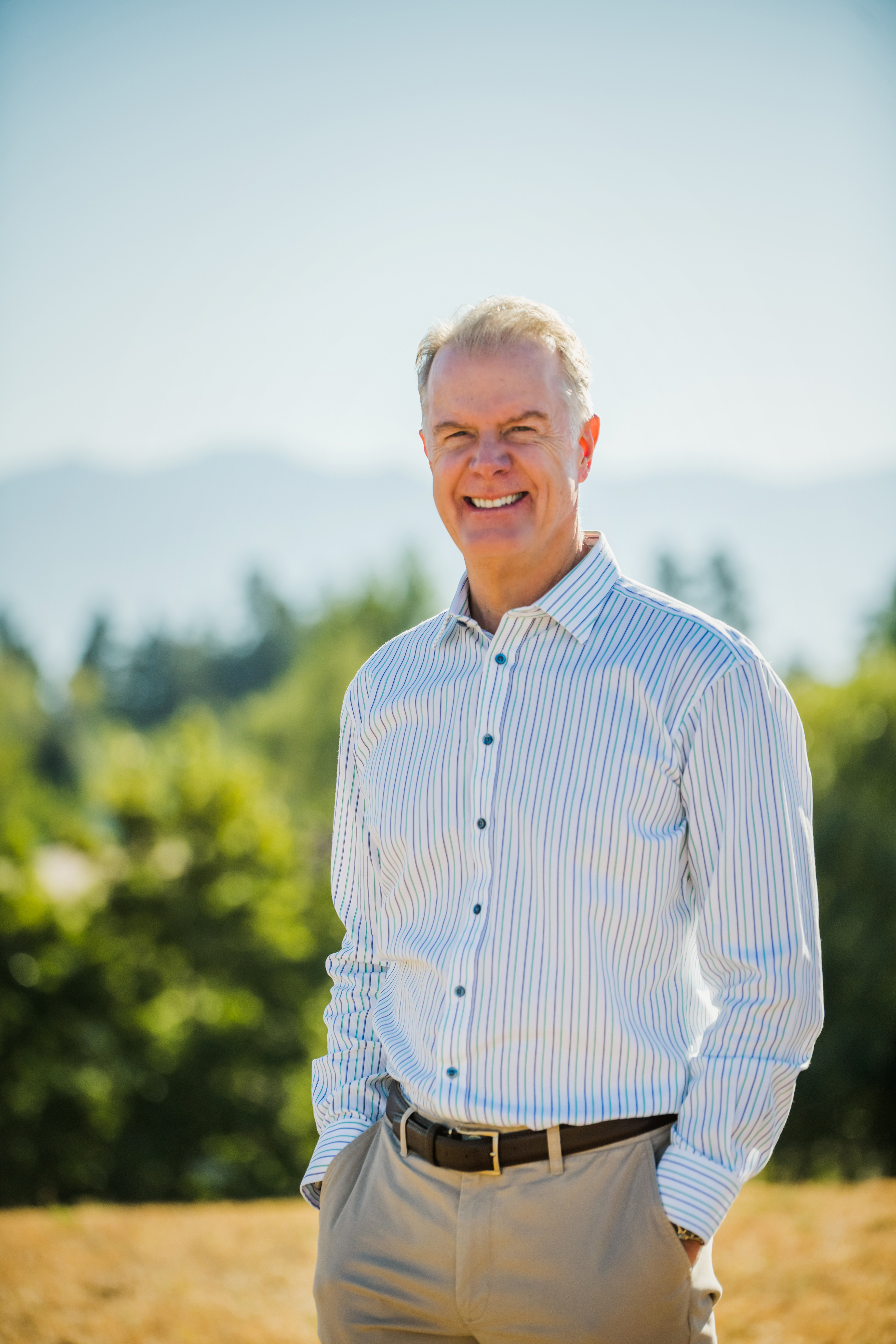
Before the branches, the payment terminal
Chesler’s résumé crosses several different kinds of financial business. At Visa U.S.A., he was an executive vice president with responsibility for member banks. At Associates First Capital, he ran the U.S. card business and Associates National Bank. These were jobs involving the machinery behind everyday spending, along with the institutions that offered the cards.
In 2000, he founded Size Technologies, a consumer payments software company. First Data later bought it. That venture gives his career a dimension easily missed by the title on his Glacier biography. Before leading a network of community banks, he had worked on the software that helped merchants handle payments and loyalty programs.
His name also appears among four inventors on a 2003 application for a configurable stored value platform. Its subject was the coordination of loyalty and payment products across different transaction devices. A customer might see a card or a reward balance; behind it sat software translating messages and applying rules. The application supplies a concrete example of his involvement in payments technology.
By 2013, CIT had appointed him president of CIT Bank, based in Salt Lake City. He had previously led its consumer finance and small business lending operations. When Glacier recruited him two years later, his experience combined consumer payments, commercial lending and the practical business of running a bank.
- 2000Founded Size Technologies
- 2013Appointed president of CIT Bank
- 2015Joined Glacier Bank
- 2017Became Glacier’s CEO
The growth lesson hiding in a card business
Asked in 2019 about a difficult growth assignment, Chesler went back to Associates. The card business had served borrowers in the subprime and near-prime markets. To expand, it developed products for prime and super-prime customers and offered card services to banks. The work included bringing the operating processes into line with the new products.
He recalled revenues in the business he ran rising from $500 million to more than $1 billion in three years. His description concentrated on the adjacent customers and services that made expansion possible. It was a specific account of how growth had happened, rather than a general enthusiasm for getting bigger.
His advice to other chief executives began with understanding what their companies did well and checking that understanding against what customers actually said. Then came a brisk instruction about activities outside the core business.
“Then, get rid of everything that is not core.”
Randy Chesler, 2019
For a banker who had also founded a software company, that was a fairly economical prescription. New products still needed supporting processes and useful customer information. An appealing idea would have to survive contact with the organization expected to deliver it.
Many names, shared machinery
Glacier’s beginnings were modest: five businessmen established First Federal Savings and Loan Association in 1955, with two employees and $172,000 in deposits from 127 local citizens. The later company grew into a collection of banking divisions. Its stated commitment to local independence became a defining part of how it presented that growth.
There is substantial machinery behind the local signs. In 2016, Glacier brought all 13 divisions onto a common core banking platform. The consolidation was described as the largest technology and operations project in the company’s history. Chesler inherited both the local relationships and the need to make shared systems work across the group.
His first agenda as chief executive included improving consumer lending and commercial pricing with technology, pursuing operating efficiencies and preparing for the requirements associated with crossing $10 billion in assets. These were practical obligations of a growing institution. Familiar branch names still required common infrastructure, controls and people who could keep it all running.
Close to customers
Local decisions
Distinct division identities
Community relationships
Across the company
Shared banking infrastructure
Centralized risk management
Company-wide resources
A schematic of responsibilities, not a legal organization chart.
By the end of 2025, Chesler was describing a model that combined local decision-making with centralized risk management. The balance matters. A division needs enough room to understand its customers; the whole company needs a consistent understanding of the risks it accepts. Both responsibilities grow as the map fills in.
Winter has a different address in Arizona
One of Chesler’s more revealing explanations of expansion concerns the weather. Discussing Glacier’s Arizona operations, he pointed to the difference between a Montana winter and the season in the Southwest. Business in Montana slows during spells of extreme cold. Arizona’s winter visitors can bring increased activity to its branches.
He explained that the Arizona acquisition offered a countercyclical balance. Glacier’s move south also followed a chain of neighboring states, giving the organization a connected geographic presence. The reasoning was about customers and economic activity across the calendar, as much as distance across a map.
“We didn’t hop over states to get to a warmer climate,” he said.
There is a little pleasure in hearing a bank executive account for sunshine without making a lifestyle pitch. In Chesler’s telling, seasonal travel shows up in transaction counts. The same person moving south for winter can change where banking activity happens. Geography becomes something the business has to understand in motion.
Texas puts the model on a larger map
In June 2025, Glacier announced an agreement to acquire Guaranty Bancshares, parent of Guaranty Bank & Trust in Texas. The announced all-stock consideration was approximately $476.2 million, based on Glacier’s share price at the time. Guaranty would become the company’s eighteenth banking division, retaining its name within Glacier’s structure.
The deal closed on October 1. Earlier that year, Glacier had bought Bank of Idaho, whose operations joined three existing divisions serving eastern Idaho, Boise and eastern Washington. The two transactions illustrate different ways of fitting an acquisition into the company: adding a distinct division, or combining branches with banks already established nearby.
Company figures; assets rounded. These describe Glacier, rather than Chesler’s personal holdings.
Glacier ended 2025 with $239 million in net income, up 26 percent from 2024. Diluted earnings per share increased 18 percent. Those are different measures of progress, and the distinction becomes useful when acquisitions add both business and shares. The larger company still has to turn its expanding operations into results for each share.
The next handoff is already underway
Chesler’s responsibilities extend beyond Glacier. The company’s 2026 proxy identifies board service with the Glacier National Park Conservancy, Montana High Tech Alliance and Pacific Coast Banking School. He also represents the Ninth District on the Federal Advisory Council. Those connections place him in conversations about conservation, technology, banking education and the conditions businesses face.
Inside Glacier, another succession is unfolding. On August 31, 2026, the company announced Byron Pollan’s appointment as deputy chief financial officer, effective September 1. Pollan is expected to succeed Ron Copher as CFO when Copher retires in mid-2027. He has been Glacier’s treasurer since January 2017 and previously served as treasurer at CIT Bank.
The arrangement allows a period of overlap, with Copher also expected to remain temporarily in an advisory role. It recalls the patience built into Chesler’s own arrival. People who know the organization have time to work together before responsibility changes hands.
Chesler’s task has grown since those first visits to 13 divisions. There are more places, more customers and more shared systems to consider. Yet the work still returns to a recognizable question: who understands the person across the desk, and how much authority do they have to help? A larger balance sheet makes that question worth asking more often.