The Story
Ceramic Beads and a $368 Million Bet
There is a lake in Utah that holds enough lithium to build hundreds of millions of electric vehicle batteries. It is also evaporating. For decades, extracting that lithium required enormous evaporation ponds, billions of liters of freshwater, and years of processing time. Raef Sully runs the company that says it has a different answer: ceramic ion exchange beads, engineered at the molecular level, that can pull lithium from almost any brine - even the dilute, messy, geochemically hostile kind that conventional methods won't touch.
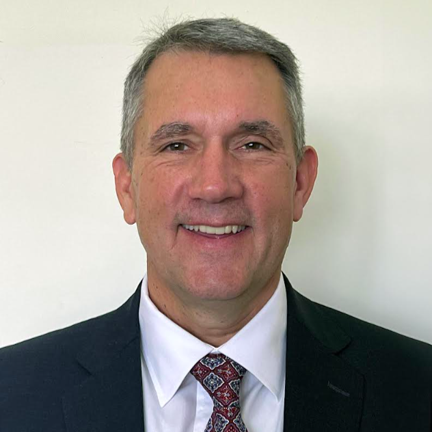
Sully became CEO of Lilac Solutions in February 2024, the same month the company closed its $145 million Series C. The timing was not coincidental. When Mercuria, Lowercarbon Capital, Breakthrough Energy Ventures, T. Rowe Price, Mitsubishi Corporation, and BMW i Ventures all write checks in the same round, they are backing more than technology. They are backing the person who will turn a laboratory demonstration into a commercial operation. That person, they decided, was Sully.
His background is unusual for a clean energy CEO. He holds a doctorate in structural engineering from the University of Sydney - a discipline concerned with how things bear load, resist failure, and stay standing under pressure. After completing his PhD in 1995, he spent years on major infrastructure projects, including tall buildings. He then spent 12 years as a senior consultant and partner at Bain & Company, adding the strategic and financial vocabulary to a foundation already built on engineering rigor. Simultaneously - quietly, for 17 years - he served as an officer in the Australian Army Reserve.
That combination of engineering depth, operational scale experience, and military discipline is rare. It is exactly what Nutrien, the world's largest producer of potash and the second-largest producer of nitrogen, was looking for when they hired him to run their nitrogen and phosphate division. He managed 4,500 people, more than 20 mining and chemicals sites, and a business generating north of $10 billion. When he eventually stepped into an interim EVP/COO role at Nutrien's corporate level, he was one of the most operationally experienced executives in the mining and chemicals sector.
He joined Lilac Solutions as Chief Operating Officer in July 2023. Seven months later, he was running the company.
"Today, aside from the excellent quality fertilizer it will produce, I am particularly excited about its opportunity in emerging industrial and battery applications."- Raef Sully, on emerging applications for Lilac's extraction technology
The Technology
What Ion Exchange Actually Means
Most lithium extraction today relies on one of two methods. Hard rock mining - digging spodumene out of Australian ground and shipping it to China for processing - works but is carbon-intensive and geographically concentrated. Evaporation pond processing - pumping brine into flat pools in Chile and Argentina and waiting 18 months for the sun to do its work - is cheaper but requires enormous land footprint, colossal freshwater use, and works only on high-grade brines.
Lilac's ion exchange technology bypasses both constraints. Their ceramic beads are engineered to selectively bind lithium ions from brine, even when the lithium concentration is as low as 50 mg/L - far below the threshold where evaporation pond economics make sense. The brine passes through cartridges packed with these beads, lithium adsorbs to the surface, and then a wash cycle releases it as a concentrated lithium product. The water goes back. The beads keep cycling.
Under Sully's leadership, the company unveiled Gen 4 technology in June 2024, achieving 80-98% lithium recovery across brine concentrations ranging from 50 to 2,000+ mg/L. The Great Salt Lake pilot - one of eight international field deployments as of early 2026 - hit 87% recovery. Then came Gen 5: 20 times higher production rates per unit volume, cartridges rated to 10,000 cycles. The engineering specificity matters. Every published number reflects a real deployment in real brine, not a modeled projection.
By January 2026, Sully had secured a binding 10-year offtake agreement with Traxys North America for 50,000 tonnes of lithium product from the Great Salt Lake - announced at the Future Minerals Forum in Riyadh. The commercial facility is scheduled to begin construction in June 2026 and come online by end of 2027.
Gen 4 technology operates across this entire concentration range, opening up resources that evaporation ponds cannot economically process.
Gen 5 cartridge life - a durability metric that directly determines the economics of long-term commercial operations.
Including projects in Germany with Neptune Energy and ongoing operations at the Great Salt Lake in Utah.
Binding agreement with Traxys North America announced January 2026, a foundational anchor for the commercial facility business case.
"The reason (for Nutrien) to look at it is to position ourselves for when people are willing to pay - the problem is we're just right at the start of development."- Raef Sully, on the timing and market readiness for new lithium technologies
The Capital Stack
Who Wrote the Checks - and Why
The $145 million Series C was not a single bet from one optimistic fund. It assembled a coalition. Mercuria, one of the world's largest commodity trading houses, brings physical market access and offtake infrastructure. Lowercarbon Capital and Breakthrough Energy Ventures are climate-specific investors with portfolio companies across the clean energy transition. T. Rowe Price provides institutional credibility and long-horizon capital. Mitsubishi Corporation and BMW i Ventures bring downstream demand signal - Mitsubishi has exposure to the entire battery metals supply chain; BMW needs lithium to build cars. Engine Ventures, Aventurine, and Presidio Ventures round out the cap table with strategic depth.
Taken together, the investor syndicate reflects the thesis that Lilac is not a pure technology company waiting for commercialization - it is a supply chain infrastructure play at the intersection of mining, chemicals, and energy. Sully's fluency across all three of those industries is part of what makes the thesis coherent.
His board seat at Arianne Phosphate Inc. extends his presence beyond Lilac - a signal that his credibility within the broader critical minerals sector has been recognized independently.
The Person
From Sydney Skylines to Salt Lake Brines
Raef Sully grew up in Australia and stayed there long enough to earn two degrees from the University of Sydney and serve seventeen years in the Army Reserve - not as a weekend obligation, but as a parallel career in discipline, logistics, and organizational command. The Army does not give you seventeen years of someone's time unless they are showing up with full commitment.
He is now based in Loveland, Colorado, running an Oakland company with global deployments. The physical distance from headquarters reflects a management approach built around trust, delegation, and results - the hallmarks of someone who spent a decade at Bain learning how to diagnose and fix organizational systems, then proved those instincts at scale by managing 4,500 people across 20+ sites at Nutrien.
Colleagues describe a warm leadership style beneath the operational rigor. When Lilac formally announced his CEO appointment, the company's description emphasized his "diverse set of experiences that matches the Lilac ethos of multi-disciplinary innovation and execution." In an industry populated by geologists and electrochemists, Sully's structural engineering background - the science of how systems fail and how to prevent it - gives him a distinctive lens on the challenge of scaling a new industrial process. Every pilot plant is, in its way, a structure under load.
He spoke at the Friends of Great Salt Lake Forum in 2024, presenting on modern lithium extraction for the electric era - a venue where the audience cares equally about the lake's ecosystem and its resource potential. Navigating that room requires someone who can hold both the engineering and the environmental case simultaneously. Sully's presentation on "ultra-low freshwater usage" and minimal environmental footprint was not marketing language; it reflects the core engineering constraint that drove the design of the ion exchange process.