industrial-machinery
(8)
JPW Industries
JPW Industries is the company behind six familiar workshop names. Its real product is not merely machinery - it is a portfolio designed to keep professional shops cutting, holding, lifting and building long after the purchase.
Vermeer Corporation
Vermeer Corporation is a family-owned Iowa manufacturer that turns tough, dirty, essential work into machines. Founded in 1948 by farmer-inventor Gary Vermeer, the company built the first commercially viable large round hay baler and grew into a global maker of trenchers, horizontal directional drills, vacuum excavators, wood grinders and forage equipment. Now in its third generation of family leadership under CEO Jason Andringa, Vermeer is 'Equipped to Do More' - serving agriculture, construction, underground utilities, recycling and environmental markets from Pella, Iowa across six continents.

Jason Andringa
Jason Andringa is the third-generation president and CEO of Vermeer Corporation, the Pella, Iowa manufacturer of industrial and agricultural equipment founded by his grandfather Gary Vermeer in 1948. A mechanical engineer who once worked at NASA's Jet Propulsion Laboratory before joining the family business in 2005, he took the top job in 2015 and led the roughly 4,400-employee company through a devastating 2018 tornado and the pandemic, growing it stronger while staying, in his words, oriented to the long term.
Boston Micro Fabrication (BMF)
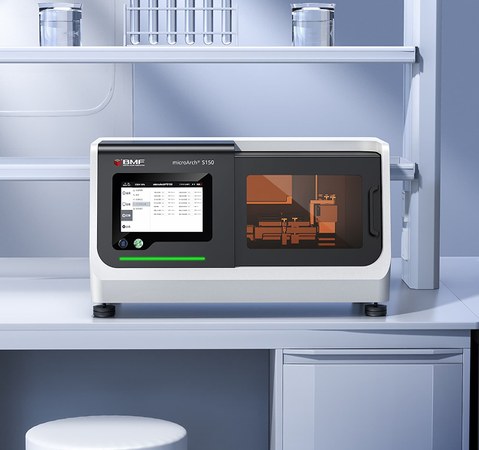
Boston Micro Fabrication (BMF) builds 3D printers that work at a scale most machines can't reach - resolutions down to 2 microns with tolerances of about plus or minus 10 microns. Its microArch printers use a proprietary process called Projection Micro Stereolithography (PuSL) to make tiny, complex parts for medical devices, microfluidics, optics, connectors and semiconductor packaging. Founded in 2016 and headquartered in Maynard, Massachusetts, BMF has placed machines with more than 2,000 customers across roughly 35 countries.
Impossible Objects, Inc.
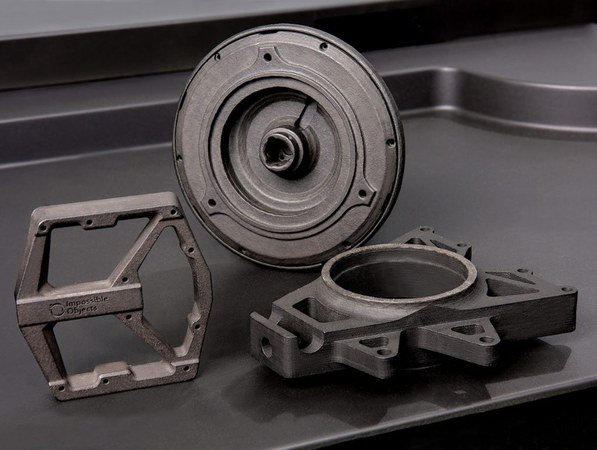
Impossible Objects is a Northbrook, Illinois manufacturer of industrial 3D printers built around its proprietary CBAM (Composite-Based Additive Manufacturing) process. Instead of melting plastic filament, CBAM stacks long-fiber sheets of carbon fiber or fiberglass, inkjet-prints each layer with a fluid, bonds them with high-performance polymer powders like PEEK and nylon, then compresses and heats the stack into a solid composite part. The result is parts the company says are stronger, more dimensionally accurate, and printed up to 15x faster than competing methods - aimed at aerospace, defense, automotive, and electronics customers that need composite parts at production volume.

Azul 3D, Inc.
Azul 3D is a Skokie, Illinois deep-tech manufacturer that builds large-format, high-speed industrial 3D printers powered by its proprietary High Area Rapid Printing (HARP) technology. Spun out of Northwestern University in 2016, the company uses a flowing layer of non-stick fluorinated oil to carry away heat during continuous stereolithographic printing, which lets its machines produce human-sized polymer parts in hours rather than days. Its flagship LAKE printer targets manufacturers who want to make finished goods at scale instead of one-off prototypes.

Raef Sully
Raef Sully is the CEO of Lilac Solutions, an Oakland-based company pioneering direct lithium extraction (DLE) technology using ceramic ion exchange beads. A structural engineer turned management consultant turned industrial executive, Sully brings 30+ years spanning tall buildings, the Australian Army Reserve, Bain & Company, and a decade running Nutrien's $10 billion nitrogen and phosphate division. He joined Lilac as COO in mid-2023 and ascended to CEO in February 2024 - the same month the company closed a $145 million Series C. Under his leadership, Lilac has achieved 87% lithium recovery at the Great Salt Lake, unveiled Gen 5 technology with 20x higher production rates, and signed a binding 10-year offtake agreement with Traxys North America targeting 50,000 tonnes of lithium product.

Riley Reese
Riley Reese is the CEO and co-founder of ARRIS Composites, a Berkeley-based advanced manufacturing company that invented Additive Molding - a patented process combining 3D printing and compression molding to produce continuous carbon-fiber composite parts at commercial scale. A materials scientist who once built biodegradable heart tissue scaffolds at UC Berkeley, Reese pivoted that same obsession with fiber architecture into a $157M-funded company whose technology now shows up in Brooks running shoes, Skydio drones, and bicycle spokes. He previously co-founded AREVO, worked at medical device giant Stryker, and led additive manufacturing programs in Amsterdam at TNO - before returning to Berkeley to tackle what he calls 'a new manufacturing category.'