A successful online sale leaves a surprising amount unfinished. Someone must locate the stock, arrange dispatch, update the other storefronts and check that the eventual payment makes sense. The customer gets a confirmation. The seller gets a list. Punit Gupta found a business in that list.
EasyEcom began in 2015 with the rather more tangible activity of sourcing products locally and selling them online. Gupta and his fellow founders encountered gaps in the technology supporting the trade. Their response was to concentrate on building the software they believed sellers needed. The experience gave the venture a useful starting point: they had been on the receiving end of the problem.
There is a pleasing inconvenience in this origin. An entrepreneur sets out to sell things and discovers that the machinery of selling needs attention. The products become less interesting than the work surrounding them. Gupta’s eventual company would follow an order through inventory, warehouses, accounting and reconciliation, the places where a cheerful sales figure acquires its less cheerful footnotes.
Before the warehouse, the interface
Gupta’s education joined communication design at the Indian Institute of Technology Guwahati with human-computer interaction at Georgia Institute of Technology. His public career record places the latter studies in 2003-2005. These are useful disciplines to bring to business software: the computer may be perfectly satisfied with a process that leaves its human operator thoroughly annoyed.
That connection is a way of reading his career, rather than evidence of a plan made at university. The work itself ranged widely. He worked in research at MiraLab in Geneva, then built an engineering career at Endeavor Telecom in Atlanta, eventually heading engineering. Before warehouses became his subject, he had already spent years dealing with technical systems and the people depending on them.
Former colleagues’ recommendations describe someone whose responsibilities extended beyond a narrow technical title. They recall collaboration with business development, attention to clients and involvement in company initiatives. Taken together, those accounts suggest an engineer accustomed to being asked what a system should accomplish for a business, as well as whether it would run.
The distinction matters in Gupta’s later work. Ecommerce operations software must accommodate people in different jobs who need different answers from the same transaction. A warehouse operator and an accounts team can look at one order and have entirely reasonable, entirely different questions. Making the answers agree is part of the product.
A different kind of stock
In 2012, Gupta founded TradeStreet, a platform where active stock traders could network and exchange ideas. Swati Jindal worked with him there before they founded EasyEcom together. The relationship therefore preceded the inventory business. Their next venture would involve another kind of stock, one that occupied shelves and needed to arrive somewhere.
An early name also appears in Gupta’s project history: Cloudshop. In June 2014, it won the Best UI/UX Experience Award at Startup Weekend Creative Edition in Bangalore. His LinkedIn identifies Cloudshop as the project that became EasyEcom, describing an ecommerce enabler for smaller merchants and manufacturers. The design thread was present before the later, broader operating-system ambition.
The company’s launch in 2015 brought that ambition into contact with everyday selling. Its founders’ own experience exposed the shortcomings they wanted to address. In 2017, Himanshu Gupta and VR Deepak were elevated to co-founder roles. The partnership grew to encompass the technical and commercial responsibilities required by the software business.
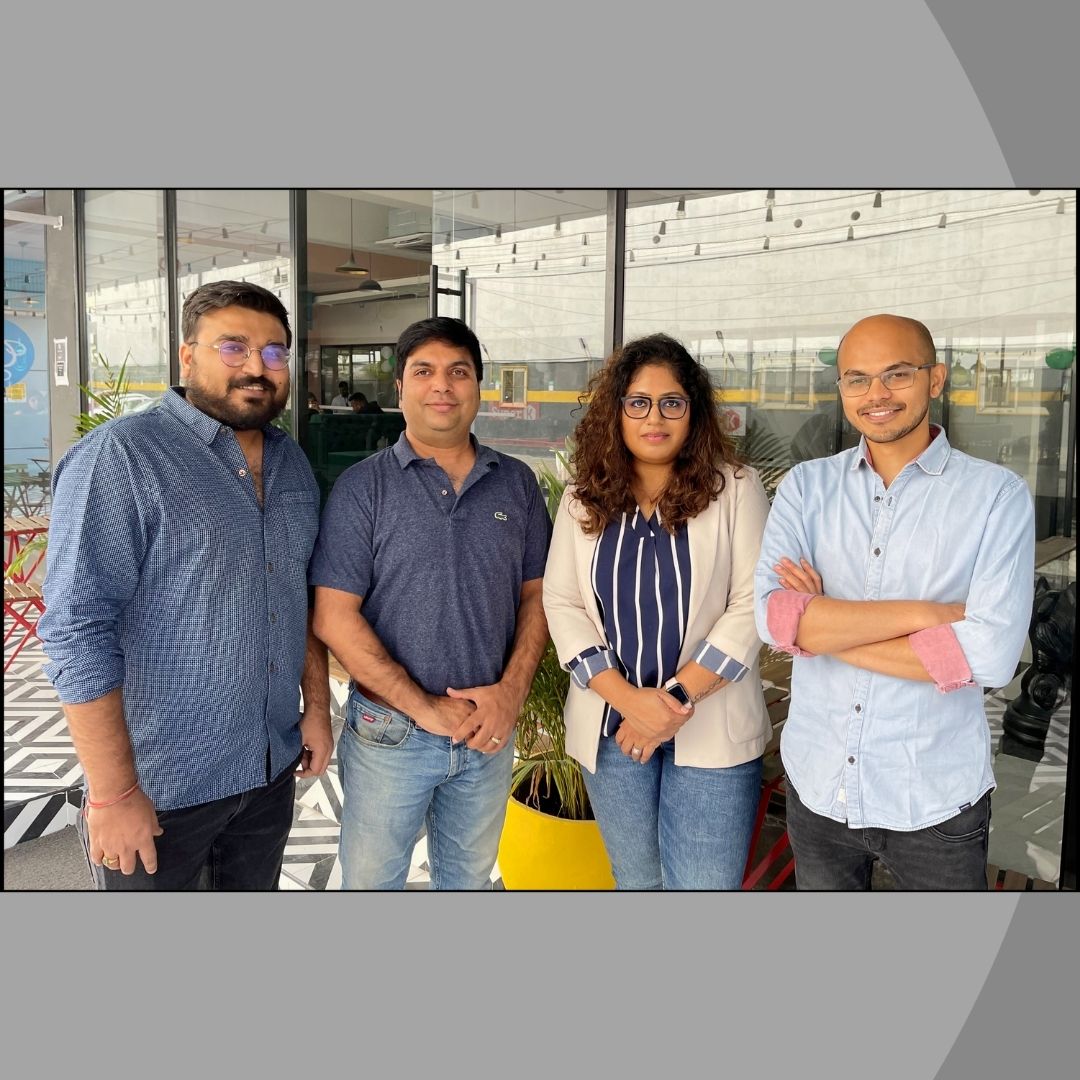
Today their responsibilities are divided across leadership, brand, product and engineering. Gupta remains CEO; Jindal leads marketing; Himanshu Gupta is identified with product and Deepak VR with engineering. It is a useful reminder that a founder’s story can have a central character without requiring a solitary inventor.
The parcel comes back
Gupta’s account of a return is particularly revealing. First comes the inventory work. Then the quality check. Then a credit note. A customer sending something back has initiated a small procession of consequences. The parcel may travel in reverse, but the paperwork acquires fresh destinations.
By 2019, EasyEcom was describing automation that connected these steps with accounting. Its integration with QuickBooks Online synchronised invoices, credit notes and records. Participation in Intuit Circles helped the company develop the integration and reach a wider business ecosystem. For Gupta, partnerships offered a route both into the customer’s workflow and into additional markets.
- 01Item returns
- 02Quality checked
- 03Stock updated
- 04Credit recorded
Illustrative workflow based on Gupta’s explanation of returns management. Steps may vary by merchant.
This attention to what follows a purchase helps explain his emphasis on profitability. In his 2021 discussions of ecommerce, Gupta pointed to channel commissions, shipping costs and the expense of handling individual items. A business can sell energetically while discovering that every additional transaction brings work its existing processes struggle to absorb.
His proposed answer was automation across those processes. Orders from online and offline channels could be managed together. Routing an online order to a nearby location could reduce logistical costs. Payment reconciliation could help a merchant examine whether the amounts received and the charges deducted matched expectations. The connecting idea was to make the operations surrounding a sale manageable.
For a founder, this is a demanding subject because the customer’s difficulty rarely respects the borders of a software category. Inventory meets orders; orders meet dispatch; returns meet accounting. Gupta’s product argument has consistently followed those connections. A neat dashboard has to earn its neatness somewhere underneath.
The visitors arrived. Then what?
Gupta has also spoken with useful candour about the difficulty of finding customers. In 2018, he described an initial reliance on outbound marketing while EasyEcom established traction. Referrals later helped convince the team it had found a market. Content and search became a longer-term investment, although he wished that work had started earlier.
His account included an awkward detail: growing traffic was proving difficult to convert. That admission makes the marketing story more recognisable. A founder can understand the problem, attract interested visitors and still have work to do before those visitors become customers. The funnel, unlike a funding announcement, declines to pose politely for a photograph.
“I have been an entrepreneur all my life.”
Punit Gupta, 2018
Capital arrived alongside that continuing work. Amistad Ventures invested in 2018, with further investment reported in September 2019. The later round brought managing partner Boppanda Ganapathy onto the board. Gupta described plans to strengthen the product and put more resources into sales and marketing. Building and distributing the software remained intertwined responsibilities.
In January 2022, IndiaMART’s wholly owned subsidiary Tradezeal Online invested approximately ₹13.35 crore for a 26.01% stake in EasyEcom’s parent, Edgewise Technologies. The transaction was announced as a $2 million Series A. Gupta said the funds would support technology, marketing and expansion.
Invested by IndiaMART’s Tradezeal Online
The fit had a straightforward commercial logic. IndiaMART connected businesses with opportunities to trade; EasyEcom supplied software for managing the operational consequences. The investment placed Gupta’s company within a broader effort to provide merchants with business tools. It was an expansion of the support around commerce, extending beyond the moment a buyer and seller found each other.
An operating system with its sleeves rolled up
By 2021, Gupta was already articulating a goal of making EasyEcom a complete operating system for ecommerce. He discussed investments in analytics, inventory planning and payment reconciliation. Those statements described a direction for the product, rather than a single finish line. Every additional connection brought another part of the merchant’s working day into view.
He has continued discussing the practical choices behind those systems. A June 2022 podcast conversation covered inventory and warehouse management, when businesses should introduce such software, and the challenges of changing order management systems. The subject is consequential precisely because merchants have existing processes, staff and obligations. Installing a new way of working involves more than admiring its feature list.
EasyEcom’s subsequent product history records automated reconciliation in 2023 and video proof for disputes in 2025. These additions extend the original concern with keeping records aligned. A disputed transaction may require evidence as well as an entry in a database. The business has kept moving into the details that determine what happens after an order is placed.
In January 2026, the company announced Gupta’s planned presence at India Fashion Forum in Bengaluru, where its booth would discuss the unified commerce operating system. The setting was appropriate: fashion retail brings stock, channels and returns into close company. The proposition had broadened, but the operational questions were familiar.
Gupta’s route to this work ran through design, research, telecom engineering and a traders’ network. EasyEcom’s origin then supplied an unusually direct education in its eventual customers’ difficulties. He had started with products to sell. He stayed with the complications.
That is where the personal story and the software business meet. Success creates obligations: find the item, complete the order, account for the return, check the payment. Gupta has built his working life around helping businesses handle those obligations. A sale can be celebrated immediately. Making it add up takes longer.
Continue the conversation
- EasyEcom’s official website ↗
- Punit Gupta on LinkedIn ↗ · Twitter / X ↗ · Facebook ↗
- Listen: Insiders Talk with Punit Gupta ↗
- Listen: Global eCommerce Podcast, 35 minutes ↗
- Read the 2018 marketing conversation ↗
- Returns, accounting and the Intuit partnership ↗
- The January 2022 investment announcement ↗