Before there were offices across time zones, there were two men working two shifts in a cyber-café. In 2012, Puneet Shukla and Siddharth Pethe started S2W Media in Pune, selling during the day and generating leads at night. The arrangement had a useful economy: the people making the promise were also the people who had to deliver it. There was very little room to blame another department.
They came from business technology and services sales. They knew the experience of trying to start a commercial conversation with information that did not hold up. A contact list could look substantial and still leave a seller with surprisingly little to work with. Their opening was the gap between being given somebody’s details and having a sound reason to approach them.
Fourteen years later, Shukla is S2W Media’s President and CEO. His working geography has expanded through New York and London to Dubai. His interests now include property as well as marketing. But the beginning is worth keeping in view: a business relationship could be won in daylight and tested that very evening.
Sales by day. Delivery by night.
The first client project required both founders to do the work themselves. Recruiting the right people in Pune was an early difficulty. By the time of a 2018 company profile, that first customer was still working with the business more than six years on. For a young services firm, repeat work gives an origin story something firmer than nostalgia.
Shukla had a technological background alongside his marketing experience. The early business, called Sell2World, focused on technology clients before broadening its reach. It also added staffing and recruiting services after he spent time studying the American market. The company was already operating with New York headquarters and offices in London and Pune by 2018.
At the beginning, Shukla and Pethe handled sales, campaign management and delivery, including sourcing the information their campaigns used. They became dissatisfied with suppliers’ data and began building and verifying their own database. Shukla trained early team members in finding, storing and checking records. The database required repeated collection, enrichment, updating and validation. Its usefulness depended on maintenance, a job with fewer ceremonial moments than a launch.
That is a revealing piece of the working history. The co-founder was teaching colleagues how to check individual records while trying to build a business that could handle many more of them. Scale began with a repeatable task. The first customer still needed the next campaign delivered.
A market worth moving for
In 2014, two years after starting the company, Shukla moved to New York. He later explained the decision in terms of proximity: relationships, recruitment and an understanding of different markets required him to be there. Serving international clients from Pune had given the business a start. He wanted direct experience of the market on the other end of the work.
“You can’t grow a truly global company with a local mindset.”
Puneet Shukla, reflecting on his move to New York
He credits the team in Pune with keeping operations running and managing projects while he made that move. The detail matters because this version of expansion has two locations in it. New relationships needed somebody on the ground abroad; existing commitments needed people who could be trusted to carry on at home.
The decision also supplies a practical answer to a familiar founder’s problem: how to learn about customers while running the machinery that serves them. Shukla went closer to one and relied on colleagues for the other. A business selling information was making an investment in firsthand understanding.
His own education continued during the company-building years. Between 2017 and 2019, he studied for an MBA at Hult International Business School. Founding a company had preceded that qualification by several years. Work and formal business education overlapped during a period when the firm was already operating internationally.
- 2012Shukla and Pethe start in a Pune cyber-café.
- 2014A first Pune office; Shukla moves to New York.
- 2019Julie Strong joins as CEO at Shukla’s invitation.
- 2021Belfast and Sydney locations open.
- 2022A Córdoba team extends the Latin American presence.
The work travels; the roots stay
In 2019, Shukla invited Julie Strong to become CEO as the company pursued its development into a global direct provider. His current position as President and CEO sits within that longer leadership history. The path included bringing in another chief executive to help move the business into its next phase.
Expansion subsequently took a recognizable shape. Belfast and Sydney locations opened in 2021, alongside appointment-setting and additional lead-qualification services. A Córdoba team followed in 2022, extending the company’s presence into Latin America. Geography and delivery capabilities grew together: more places to work with customers, and more of the work involved in preparing a prospect for a sales conversation.
Pune remained central. Shukla later announced an India head office at AP4 Tech Park, spanning 50,000 square feet. His explanation emphasized the region’s talent, support for Asia-Pacific customers and the ability to work across time zones and cultural contexts. The city where the founders had started was still part of how he planned to serve an international business.
S2W Media’s announced head office at Pune’s AP4 Tech Park.
The floor area is a tangible change from a cyber-café. It also brings the story back to a less photogenic subject: the place where campaigns have to be managed and work has to get done. In Shukla’s account, local presence has a purpose at both ends of the relationship, where customers sit and where colleagues deliver.
The company appeared on the Inc. 5000 in 2024 and again in 2026. Its 2026 listing placed it at number 4,491, with 41 percent three-year growth, and named Shukla as its leader. Those are company results. They mark a further stage in the career of somebody whose first project had required him to share the delivery work personally.
A click still needs a conversation
The marketing vocabulary around Shukla has changed. His 2026 writing addresses artificial intelligence, account-based marketing, customer databases and buying committees. He has written about the cost of applying AI to poor data and the difficulty of selling into an organization where several people influence a purchase. The problems are larger than the accuracy of a single email address.
His argument about intent is particularly plain. Reading content, researching a subject or visiting a website provides a signal. Those actions alone do not establish that somebody is ready to buy. He asks marketers to look at the person’s role, what actually happened, whether there are several signals and whether a business need exists.
A download.
A topic searched.
Which role?
What need?
a sales conversation
makes sense.
A conceptual sequence, not a conversion-rate chart.
The distinction leaves room for human judgment in a business full of scoring systems. It also makes the handover to a salesperson a consequential moment. A signal helps decide where to pay attention. The next conversation needs enough context to justify taking up somebody’s time. Curiosity about a topic has never been a signed purchase order, however attractively it fits inside a dashboard.
At a 2026 sales kickoff in Austin, Shukla described a business environment crowded with content and promises of precision. Asked for a song that represented S2W’s culture, he chose “Believers.” His explanation connected belief in colleagues with belief in clients’ ambitions and the value of properly collected information. It was a warmer answer than one might expect from a discussion about data governance.
His stated ambition there was for S2W to act as a consulting partner, helping clients understand buyers and ask better questions. The emphasis gives his present role continuity with his early work as a seller: the practical value of information is tested when somebody tries to use it.
A family name on the next door
Dubai has added another setting. Shukla moved his family there from London and leads Aarika Real Estate, a business named after his daughter. His approach to property includes understanding the buyer’s objectives and considering the entry price, location, developer, payment plan and eventual exit. He has described the value of relationships that last beyond an individual transaction.
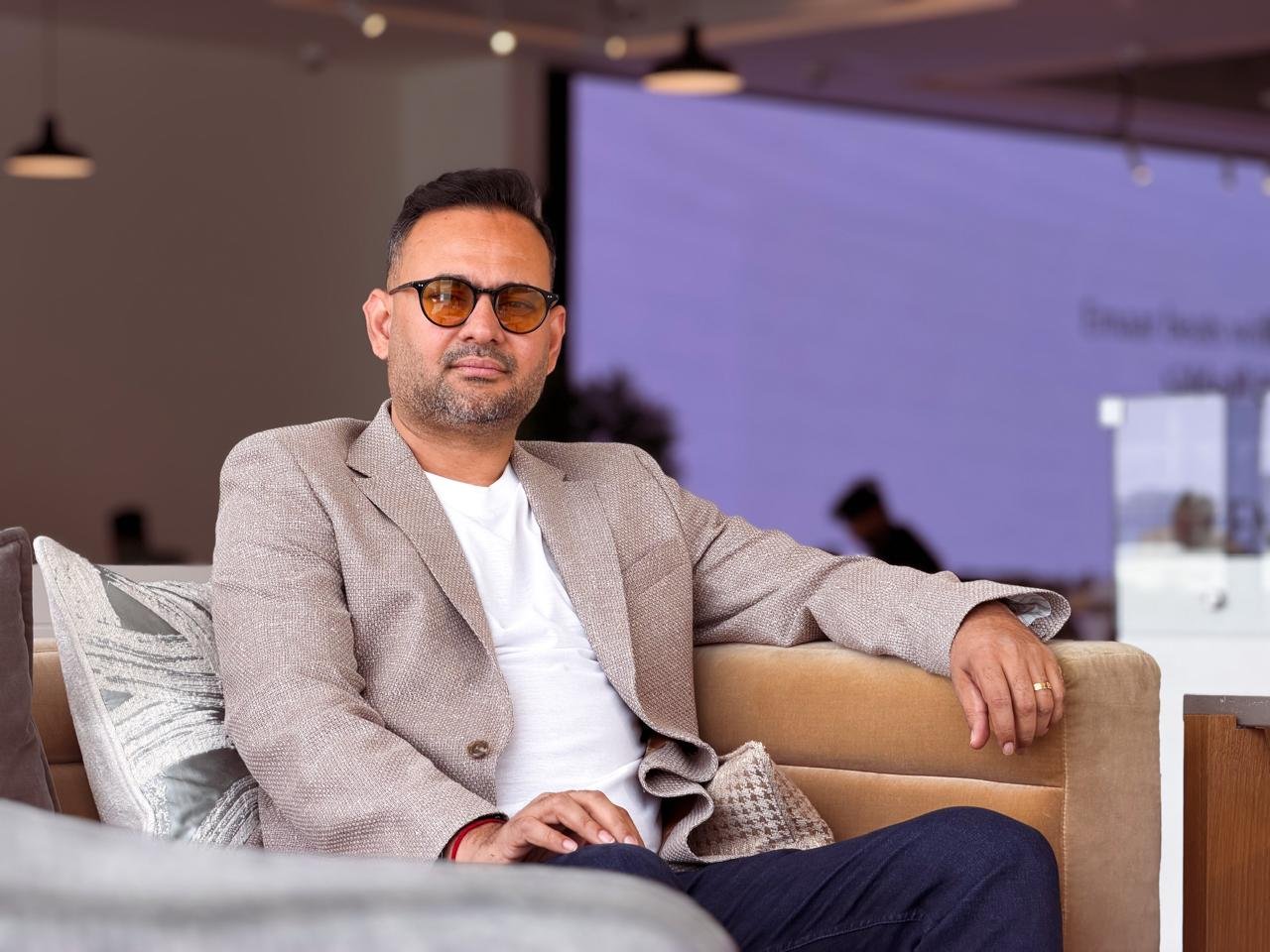
At Aarika’s first Dubai Property Expo in Lucknow, he described finding himself on the other side of that table. He had spent years assessing investments, questioning assumptions and considering risk. Now he was presenting opportunities and working with developers. The event accompanied the opening of a Lucknow office and the business’s expansion into North India.
It is a change of sector with a concrete personal connection. Relocating his own family had given him experience of the decisions international buyers face. Putting his daughter’s name on the business made its reputation a family matter too.
His 2026 recruitment posts show the breadth of his responsibilities. He sought people for Aarika, the Dubai food and beverage business The Fresh Story, and S2W Media in the United States and India. The qualities he asked for were explicit: ownership, accountability, execution and attention to customers. They are expectations for the people who will carry parts of the work without him in every conversation.
The cyber-café beginning is now fourteen years behind him. The relationship between a promise and its delivery remains close at hand. Shukla’s career has involved changing countries, adding colleagues and learning new markets. The next person on the other side of the table still needs a reason to trust what comes next.