In 2009, California had more than a million vehicles capable of running on E85, according to a state energy report. It had fewer than 30 public stations selling it. Consider the absurdity: the cars had arrived before the errand was possible. A driver could own the technology for years and keep buying gasoline. The missing invention was a convenient place to stop.
That gap explains Propel Fuels better than a photograph of a green nozzle ever could. The company sells lower-carbon liquid fuels to people and fleets with compatible vehicles. Its particular skill is arranging the less glamorous parts of a transition: fuel supply, equipment, locations, pricing and the reason somebody comes back next Tuesday.
- Sell E85 and renewable diesel where drivers already refuel.
- Make compatibility, price and convenience part of the product.
- Fund the physical network before promising the next hundred pumps.
A million cars. Almost nowhere to fill them.
Founded by Rob Elam in Seattle in 2004, Propel began expanding into California in 2008. By early 2009, it had moved its headquarters south. California offered a large fuel market, supportive policy and public agencies buying alternatives. Geography was a business decision. The company followed conditions that could turn interest into repeat purchases.
Its Clean Fuel Point approach put renewable-fuel tanks and dispensers at existing gas stations. Those corners already had traffic and a familiar purpose. Propel could introduce a different fuel without asking drivers to adopt a different ritual. For a station operator, the attraction was another product to sell. For a customer, the attraction was being able to buy it at all.
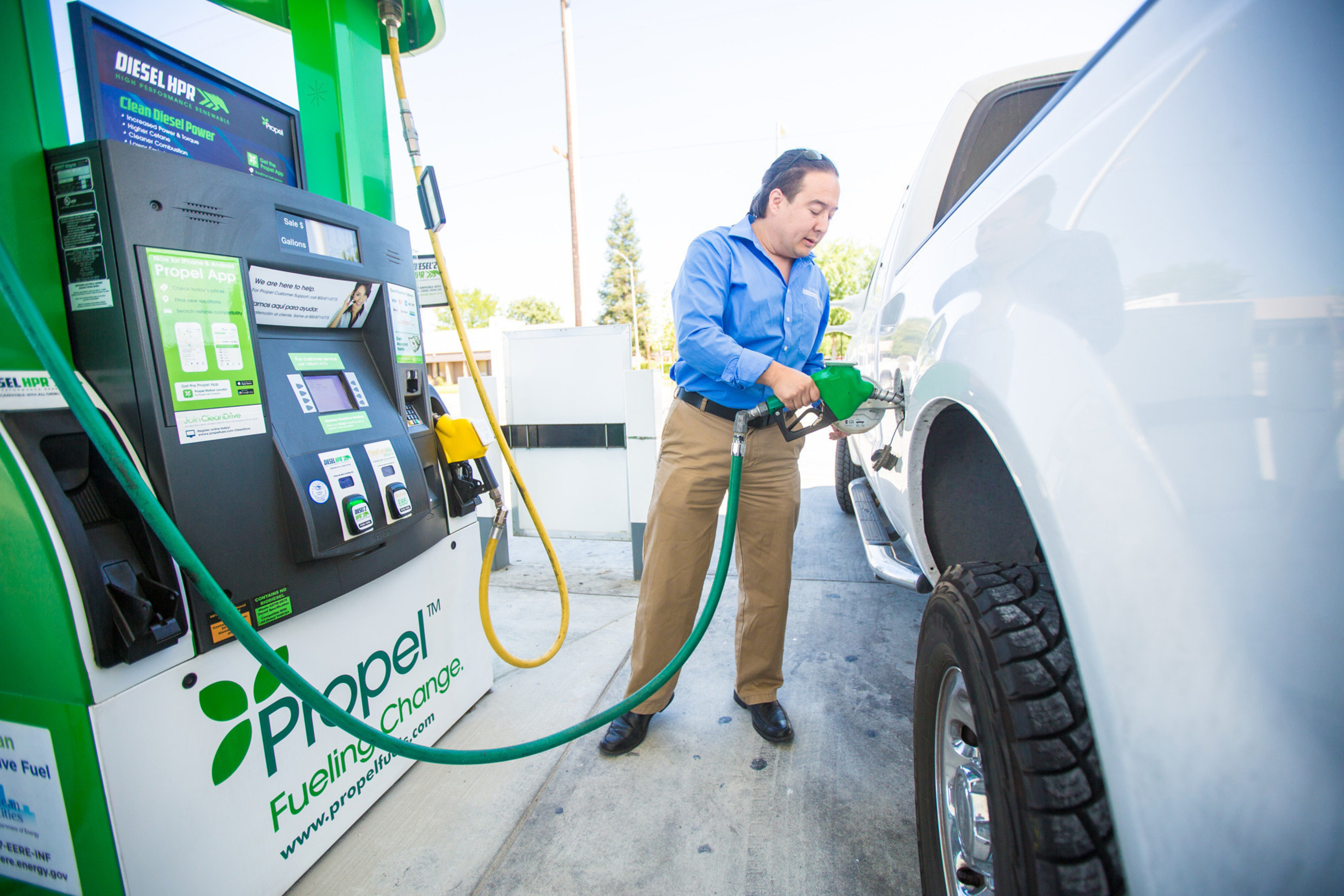
Today its offer includes retail fuels, wholesale supply, fleet services, a station-finding app and CleanDrive emissions tracking. That combination puts Propel between fuel producers and the customer’s tank. A producer such as Neste supplies chemistry at industrial scale; Propel’s work includes making a usable retail proposition out of it. Its customers include individual motorists, businesses and government fleets.
The money ran out before the idea did
Convenience requires capital. In December 2012, Propel announced an initial Series D close of $11 million in equity, alongside $10 million in debt financing from CapX Partners. Investors included Nth Power, Craton Equity Partners, @Ventures and Gentry Venture Partners. These were separate kinds of money with separate obligations. A station network needs equipment before it can collect its first dollar at the pump.
A California Energy Commission report supplies the corrective to any tidy growth story. One project aimed to build ten stations, backed by a $1 million grant award and a $2 million private matching commitment. Only two were built. Grant reimbursement totaled $146,020. Those figures describe the award, commitment and reimbursement; they do not establish the total cost of construction.
stations built
The report describes creditor intervention, management changes and a restructuring period that prevented financing. It also records an approach in which station owners funded equipment and construction themselves, using Propel’s brand and marketing expertise. The operational lesson is uncomfortable and useful: having demand does not settle who pays to reach it.
Elam returned as CEO in 2014, and the following year Propel announced a renewed California focus. The change joined a management reset to a market choice. The company was locating itself near the policies shaping its opportunity, while the station-owner model addressed the immediate question of capital.
A different diesel, the same truck
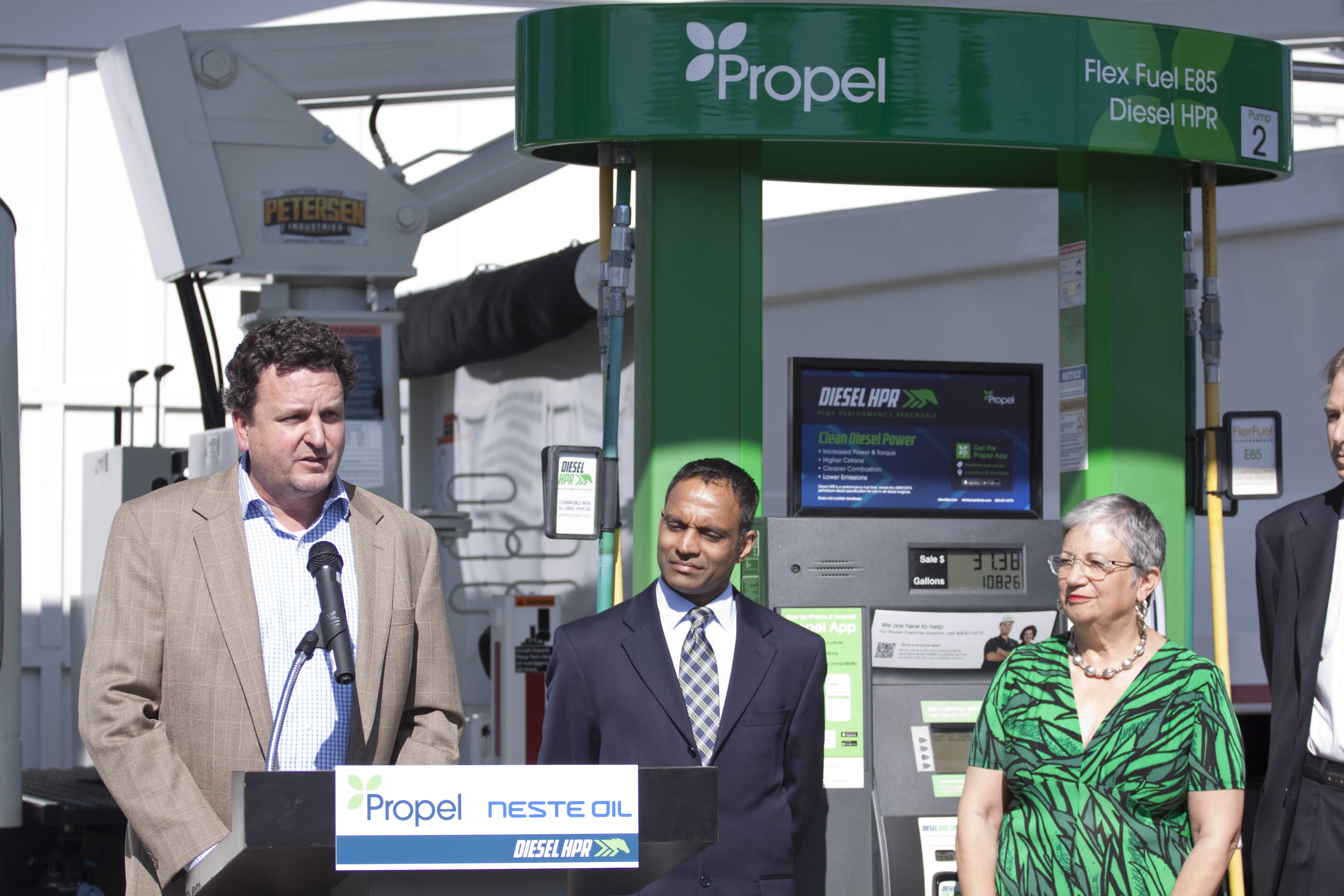
In March 2015, Propel launched Diesel HPR at 18 Northern California locations. The fuel used Neste Oil’s NEXBTL renewable diesel. Unlike conventional biodiesel, renewable diesel is a hydrocarbon fuel that can meet petroleum diesel specifications. Propel was selling a change that could happen inside the tank while the truck stayed in service.
The distinction matters. E85 belongs in flexible-fuel vehicles. HPR addressed diesel drivers. The two products solve different compatibility problems, and neither makes every car a candidate. At the HPR launch, Neste said the fuel’s price was competitive with petroleum diesel. Later that year, Propel reported Northern California gallons sold had increased 300 percent against its previous B20 biodiesel product during HPR’s first six months.
The economics still deserve a calculator. E85 has less energy per gallon than gasoline, so a cheaper gallon can deliver fewer miles. Drivers should compare price divided by their vehicle’s actual miles per gallon. Renewable fuels also burn; lower lifecycle carbon emissions do not mean zero exhaust. Feedstock, production and distribution affect the environmental result.
The network had also been a place to test unfamiliar fuels. In 2012, Propel and Solazyme offered algae-derived B20 in a month-long Bay Area pilot. Customers could try a new ingredient through an existing purchase. A trial demonstrated access and interest; scaling production remained a separate challenge.
The knowledge behind the nozzle
A network accumulates knowledge about locations and customers. That knowledge became the center of Propel’s dispute with Phillips 66. Acquisition discussions began in 2017 and ended in August 2018. Propel sued in 2022, alleging trade-secret misappropriation during and after due diligence. In October 2024, a jury awarded it $604.9 million in compensatory damages.
The trial-court judgment reached $833 million in August 2025, including exemplary damages and prejudgment interest. Phillips 66 denies wrongdoing and appealed. Its August 2026 filing says it submitted its opening appeal brief in July. The dispute remains consequential because retail expertise can be hard to see until someone puts a price on it.
“The low carbon economy is being defined in Sacramento.”Rob Elam / April 2015
Make the next choice easy
The useful lesson travels beyond fuel. Find the point where a working product becomes inconvenient, then build there. Propel chose the space between a compatible engine and an available dispenser. Copying that approach requires enough local customers, reliable supply, workable margins and someone willing to finance the equipment. Weakness in any one can strand the rest.
For drivers, the next step is practical: check the vehicle, find a location, compare the cost per mile. For a fleet manager, it is a supply and operating calculation. Propel’s story is interesting because the purchase is so ordinary. A better fuel has to survive the same test as every other fuel: somebody must pull in, pay, and return.