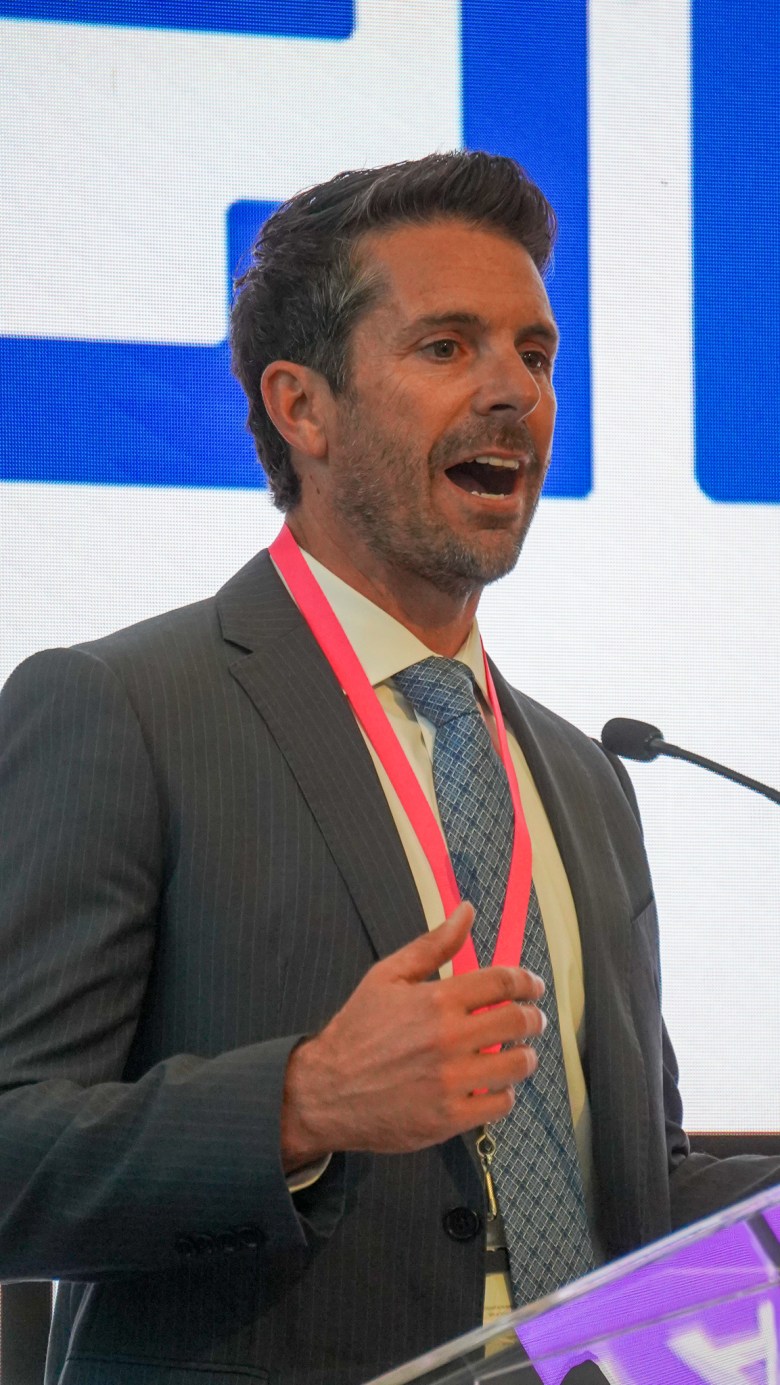
The geographic center of GILLIG's workforce landed in Livermore, a city 35 miles east of San Francisco in the Tri-Valley. GILLIG bought land off Isabel Avenue, broke ground on a 600,000 square-foot solar-powered facility, and kept 900-plus skilled manufacturing jobs in California. The decision was typical of how Maunus operates: find the actual data, follow it wherever it leads, and don't flinch at the answer.
Maunus joined GILLIG in January 2011. Before that, he had spent time as an investment banking analyst at Mesirow Financial and then moved into corporate development at Henry Crown and Company - a Chicago-based holding company with a long history of owning and growing industrial businesses. Henry Crown acquired GILLIG in 2008, and Maunus arrived three years later, starting in aftermarket parts before moving into manufacturing. By 2018 he held the top job.
"We're very pleased with these results which reinforce that we're building an electric bus with industry-leading durability and performance. With each generation of bus, we're building upon capabilities while consistently delivering a reliable, cost-effective product to market."
Derek Maunus — on FTA Altoona Testing Results, 2021What he inherited was not a startup. GILLIG was founded in San Francisco in 1890 by Jacob Gillig, who had trained as a carriage builder. His son Leo entered the business in 1896. The 1906 earthquake leveled the original shop; they rebuilt. The company survived every subsequent disruption - two world wars, the Depression, the entire arc of American industrial history - and when Maunus took the CEO seat, GILLIG had been owned by just three American families across 130 years. That continuity is part of the culture, and Maunus has treated it as an asset rather than a weight.
Mapping the Electric Transition
GILLIG introduced its first battery electric bus in 2016, before Maunus became CEO. But the program accelerated sharply under his watch. In October 2021, GILLIG celebrated the production of its 100th battery electric bus - delivered to Metro Transit in St. Louis, Missouri. The milestone came after the company's BEB had completed Federal Transit Administration testing at the Altoona facility in Pennsylvania, where it posted exceptional scores in durability and performance.
By 2021, more than 50 transit agencies were either operating or ordering GILLIG battery electric buses. Nine had won FTA Low-No Emission Grant awards with GILLIG as their partner. The company wasn't chasing a trend. It was building the infrastructure for a shift that was already underway in American public transit - and doing it with the same relentless focus on reliability that had defined GILLIG's diesels and CNG buses for decades.
In July 2025, GILLIG delivered next-generation battery-electric buses to all four Hawaiian island counties simultaneously - Kaua'i, Maui, Hawai'i Island, and Honolulu. For Maunus, who has overseen GILLIG's relationship with Honolulu's transit system for more than four years, the moment carried specific weight. "For more than 40 years, we've worked alongside Honolulu to support safe, reliable transit," he said. "Now, seeing all four counties come together to drive Hawai'i forward - each with our newest generation battery-electric buses - is incredibly meaningful."
What Ownership Looks Like From the Inside
GILLIG is privately held. It doesn't file quarterly earnings reports, doesn't answer to analysts, and doesn't chase short-term revenue at the expense of product quality. Maunus grew up professionally inside that private equity model - Henry Crown is known for patient capital and long holding periods - and it shows in how he runs the company.
In January 2024, GILLIG secured new five-year collective bargaining agreements with Teamsters Local 853 and District Council 16. The membership endorsed the agreements with 94% approval. Maunus's response was characteristic: he didn't frame it as a negotiation win. He framed it as a partnership.
"This vote reflects not only GILLIG's strong partnership with our dedicated workforce," he said at the time, "but also reinforces our unwavering commitment to the men and women who have contributed to making the company the success it is today." In an industry where labor relations often make headlines for the wrong reasons, a 94% union endorsement is a number worth noticing.
Maunus holds an MBA from the University of Chicago Booth School of Business and a bachelor's degree in Finance from the University of Iowa. The finance background is not incidental. Running a $325 million private manufacturing company requires treating the balance sheet with the same seriousness as the production floor - and Maunus has consistently shown he can do both.
Supply Chain as Strategy
In October 2025, GILLIG and NFI Group - the two largest North American transit bus manufacturers by volume - announced a 50/50 joint venture to acquire the assets of American Seating. American Seating has been a primary supplier of passenger seating to the transit bus industry for over a century. The acquisition secured a critical piece of the North American supply chain that both companies depend on.
"This strategic acquisition shores up a critical piece of the industry's supply chain while reinforcing GILLIG's commitment to our customers' success," Maunus said. The move was unusual - a joint venture between the two largest competitors in a market is not something that happens casually - and it signals that Maunus is thinking about the transit industry as an ecosystem, not just a competitive arena.
GILLIG currently holds a significant share of the North American heavy-duty transit bus market. Its product portfolio covers clean diesel, compressed natural gas, hybrid electric, and battery electric configurations in lengths from 29 to 40 feet. Hydrogen fuel cell options are in development. The company serves transit agencies across 45-plus American communities and employs approximately 1,100 people at its Livermore facility.
"The GILLIG Battery Electric Bus is designed to fit in seamlessly with our customers' existing fleets, and it complements our portfolio of clean-energy vehicles."
Derek Maunus — on the BEB ProgramRecognition and What It Signals
In May 2025, the Innovation Tri-Valley Leadership Group awarded GILLIG its #GameChangers Award for historic business achievement and community commitment. It was the kind of recognition that tends to land differently for a company that has been in California since before the state's population hit a million - a company that stayed when it could have left, invested when it could have retreated, and built something durable in an era that keeps rewarding the disposable.
Maunus has been CEO for seven years. In that time, GILLIG has moved its factory, crossed the 100th electric bus milestone, locked in a five-year union deal with near-unanimous support, partnered with Cummins on electrified power systems, delivered buses to Hawaii, and co-acquired a seating supplier with its largest competitor. He has done this without a public company valuation to track, without a personal Twitter account to maintain, and without any apparent interest in becoming a recognizable name outside the transit industry.
That's either a strategic choice or a personality trait. Probably both. The buses are what matter. They're rolling through 45 American cities right now, carrying people who don't know or care who built them. Maunus seems fine with that.