The shirt was clean. That was the trouble. In the experiments that eventually produced Tide, Procter & Gamble researcher David Byerly could remove the dirt, but one formulation left fabric feeling like sandpaper. Laundry detergent had to do two things at once. Solving half the problem gave him a clean shirt nobody wanted to wear.
Byerly kept experimenting after management had turned its attention elsewhere. His supervisor protected the work. In 1946, fourteen years after the project began, Tide reached shoppers. Behind that familiar orange package sits an unexpectedly useful business question: what, exactly, makes an improvement worth buying?
- The product earns the return visit. P&G turns recurring chores into replenishment businesses.
- The brand gets it noticed. Distinct names sit on shared scientific and commercial capabilities.
- The shelf closes the deal. A good formula still needs reliable manufacturing and distribution.
The shirt had to feel right
The chemistry matters because it complicates the usual story about persistence. Byerly’s breakthrough involved increasing the proportion of a detergent “builder,” sodium tripolyphosphate, relative to the cleaning agent. Earlier thinking had favored less builder to avoid harshness. The successful ratio reversed that expectation: three parts builder to one part detergent.
Then the factory objected. Material accumulated in production towers and clogged feeder valves. Adding a little sodium silicate helped produce workable granules. A laboratory success had acquired an engineering problem.
What changed management’s mind was a demonstration of Project X in 1945. Executives accelerated the normal development schedule, worried competitors would catch up. P&G began test marketing in six cities in October 1946. The opportunity also depended on timing: automatic washing machines were spreading into homes. A better detergent had found a machine that could put it to work.
The tempting lesson is to keep working after being told to stop. But stubbornness alone explains very little. Byerly had experiments, records and a supervisor willing to examine them. The practical question was whether the remaining failures could be solved. The eventual demonstration gave management something concrete to reconsider.
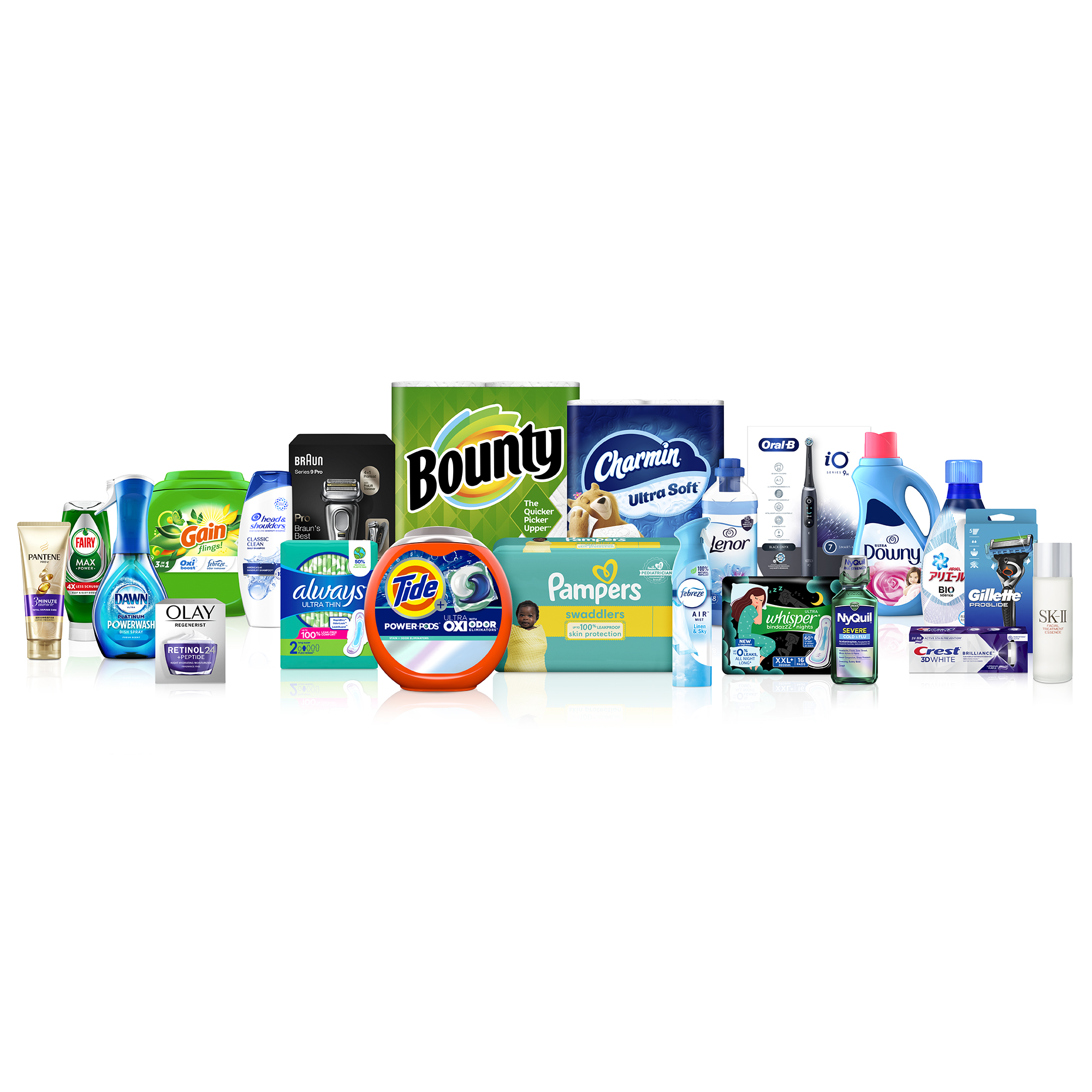
One company. A cupboard full of choices.
P&G began in Cincinnati in 1837 when candlemaker William Procter and soapmaker James Gamble joined forces. They were brothers-in-law, encouraged into partnership by their father-in-law. The resulting company eventually built a portfolio spanning beauty, grooming, health care, fabric and home care, and baby, feminine and family care.
The names do separate jobs. Pampers handles diapers. Crest and Oral-B address oral care. Gillette sells shaving products; Olay sells skin care. Tide, Ariel, Dawn and Fairy work on clothes and dishes. Consumers can buy answers to individual problems without needing to think about the parent company.
P&G also developed a way to make somebody responsible for each answer. Its brand-management system dates to 1931. Neil McElroy’s memo called for close attention to shipments, weak territories, advertising and follow-through. The appeal was accountability: a brand needed an owner who could connect what customers experienced with what the business did next.
That responsibility also appears in P&G’s stated culture. Ownership sits alongside integrity, leadership, trust and a passion for winning in its published values. Its purpose connects better products with better everyday lives. Those declarations describe an ambition; the useful evidence arrives when a product makes an actual task easier.
“It’s easy to say, tough to do.”
Shailesh Jejurikar, on understanding consumer needs · Shoptalk, 2024
The price of being familiar
The business model is refreshingly physical. P&G develops, makes and markets finished products, selling through retailers, distributors and digital channels, with some direct sales. People use the contents, run out and return. Repeat demand gives the company another chance to earn revenue. It also gives the customer another chance to switch.
Keeping those products useful and recognizable is expensive. In fiscal 2026, P&G recorded $2.1 billion in research and development expense and $10.2 billion in advertising expense. Advertising alone was almost five times the research bill. Neither figure measures a single product’s launch cost; both describe the annual upkeep of a large portfolio.
Retailers matter just as much. Walmart and its affiliates accounted for approximately 16% of P&G’s fiscal 2026 sales. A bottle must please the person using it and make commercial sense to the business stocking it. Availability, packaging and price belong in the same conversation as performance.
Competition changes by aisle: Colgate-Palmolive in oral care, Kimberly-Clark in diapers and tissue, Henkel in laundry, and Unilever across personal and household care. Retailers’ own brands offer another alternative. P&G’s advantage is the combination of capabilities. Whether that combination justifies a particular price remains the shopper’s decision.
Watch what happens at the sink
Consider Dawn Powerwash. P&G describes its inspiration as a change in dishwashing behavior: people were washing a few items at a time instead of filling the sink. The useful observation concerned the task itself. That gives a product team a better brief than a vague instruction to invent something new.
The company’s expertise extends beyond formulas. A multiyear Microsoft collaboration announced in 2022 targets digital manufacturing using cloud technology, industrial data, AI and digital twins. Its Connect + Develop program invites outside inventors to submit relevant innovations. Both recognize that the next useful improvement may involve a factory process or somebody else’s invention.

Earn the next load
Scale does not cancel the need to persuade. Fiscal 2026 net sales reached $87.0 billion, up 3%, while organic sales grew 1% and volume was unchanged. Those distinctions matter: a higher dollar total does not necessarily mean more products moving through households.
A smaller company can copy the discipline: watch a recurring chore, define the complete problem, give someone responsibility and test whether users notice the difference. It needs patience and money for experiments. The approach becomes less convincing when buyers cannot perceive a benefit worth the price, or cannot find the product.
Byerly’s shirt supplies the enduring test. It had to come out clean, feel right and emerge from a formula the factory could actually make. The second purchase begins with getting all three right.