In 1873, buying Colgate toothpaste meant buying a jar. Twenty-three years later, the company put it in a collapsible tube. The change sounds almost too small to deserve a place in business history. Yet consider the object at the bathroom sink: something you can squeeze, close, pack and use again. A mundane improvement can travel a very long way when it attaches itself to a daily habit.
- Four businesses: oral care, personal care, home care and pet nutrition.
- Everyday purchases fund research, manufacturing and the next reason to buy.
- The hard part: making premium claims and packaging improvements work outside the laboratory.
That is a useful way to understand Colgate-Palmolive. The company began with William Colgate’s New York soap, starch and candle business in 1806. It now sells across more than 200 countries and territories. Its subject has remained surprisingly consistent: the little jobs that return every morning.
The business at the bathroom sink
Open the cupboard and the corporate family becomes visible. Colgate handles teeth. Palmolive handles dishes and personal care. Fabuloso cleans household surfaces; Softsoap washes hands. EltaMD and Filorga bring skin care into the picture. Hill’s feeds dogs and cats. These products solve different problems, but their commercial appeal has a common rhythm: use, replenish, repeat.
The model is physical and demanding. Formulate the product, manufacture it reliably, get it through retail, online or professional channels, and persuade someone to choose it again. Shoppers are the end users; stores and other sellers are crucial intermediaries. There is no subscription required for a tube to run out. The appeal is repetition; the obligation is consistency. A customer may encounter a brand every day, but that also creates plenty of opportunities to notice when the product disappoints.
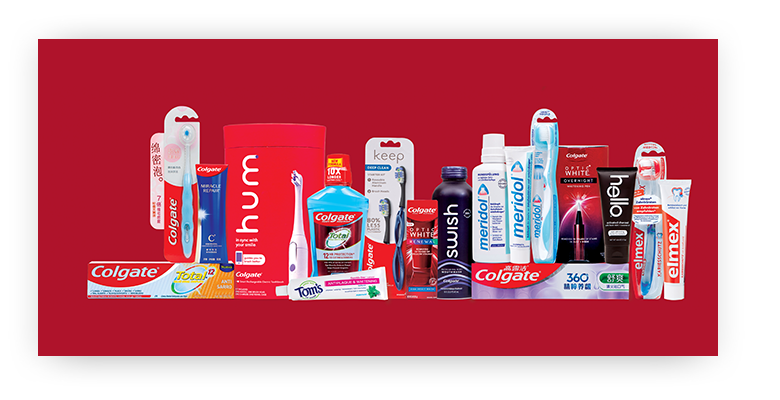
Colgate-Palmolive occupies both everyday and specialist territory. Its oral-care portfolio includes elmex, meridol, hello and Tom’s of Maine alongside Colgate. It competes with P&G’s Crest and Oral-B, and Haleon’s Sensodyne and parodontax. Familiarity helps get a product considered. A specific benefit gives the shopper a reason to select one tube from an entire shelf.
The dog in the toothpaste story
Then there is Buddy. In 1939, Morris Frank’s guide dog was suffering from kidney failure. Frank asked veterinarian Mark Morris Sr. for help. Morris and his wife, Louise, developed a food in their kitchen to address Buddy’s nutritional needs. Hill’s traces its therapeutic-nutrition story to that encounter.
Colgate-Palmolive acquired Hill’s in 1976. Science Diet and Prescription Diet extend the company into everyday feeding and veterinary nutrition. For an owner, the practical distinction matters: choosing food for a healthy animal is a different task from managing a diagnosed condition with a veterinarian.
Hill’s also shows where the company’s expertise can deepen. In 2021, it began a microbiome collaboration with Harvard researcher Curtis Huttenhower. The resulting One Health Microbiome Resource examines microbes in pets and people. It is research infrastructure, with possible future applications. A database alone does not establish that any particular food will deliver a particular health outcome.
“We couldn’t improve the product, so we improved the tube.”
A line preserved in Colgate’s 1906 history
Six years inside a tube
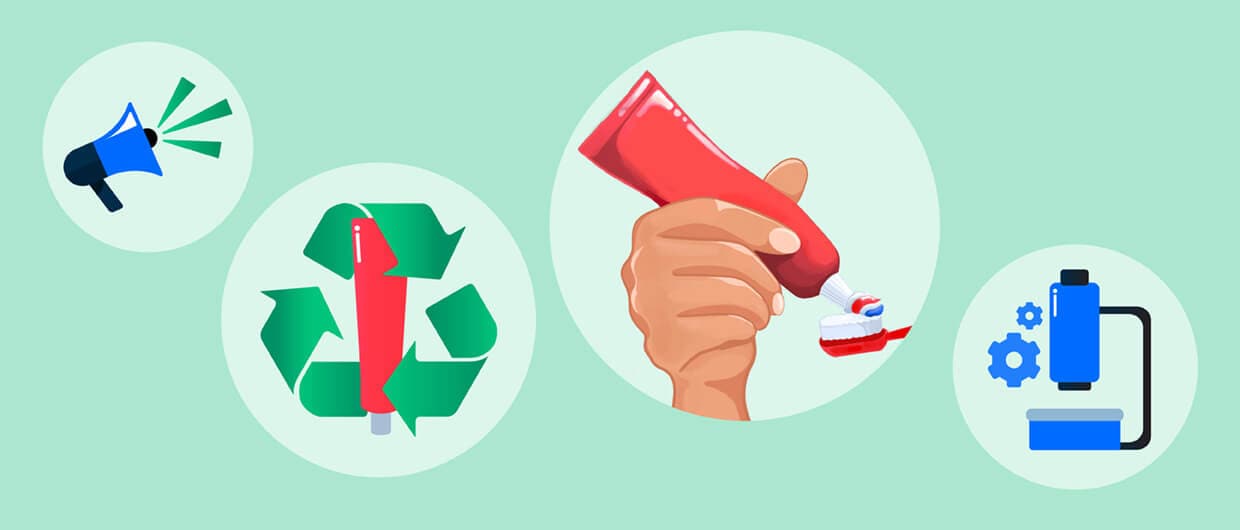
The old packaging lesson returned in 2013. Conventional toothpaste tubes combined materials, often including aluminum, that conventional recycling could not readily process together. Colgate’s engineers worked toward a tube compatible with the high-density polyethylene bottle stream. The awkward question was how to make that material pleasantly squeezable.
Testing involved different plastic grades and between seven and twenty laminate layers. By 2016, the engineers had a soft HDPE tube. In 2019, the Association of Plastic Recyclers recognized its compatibility, and the first tubes reached American stores under Tom’s of Maine. Colgate’s brand transition followed in 2020.
Colgate shared the know-how with other manufacturers, including competitors. My reading: a recycling stream becomes more useful when an industry can participate. Keeping an invention exclusive would not, by itself, make collection systems accept it.
The remaining catch sits outside the tube. Local programs may still decline it. Consumers need to check acceptance where they live. The transferable lesson is to test the receiving system alongside the product. A technically compatible package needs somewhere willing to take it.
The premium had to be earned
Expansion into skin care supplies a less comfortable example. In 2019, Colgate-Palmolive agreed to buy Filorga’s skin-care business at an equity price of approximately $1.69 billion. The appeal was explicit: premium skin care fitted a strategy emphasizing higher-margin businesses. Total purchase consideration ultimately reached $1.712 billion.
The expectations proved too generous. In its January 2026 results, Colgate reported a $794 million non-cash, after-tax charge against skin-health goodwill and intangible assets, primarily Filorga. Slower category growth and weaker performance, particularly in China, led management to lower its outlook. This was an accounting reduction in asset values, separate from the acquisition’s cash cost.
The disclosed sequence tells us what changed management’s assessment: the market and the business performed below expectations. It also sets a boundary on the broader strategy. Scientific positioning and a familiar parent company cannot guarantee demand for an expensive skin-care brand.
Tomorrow is the market
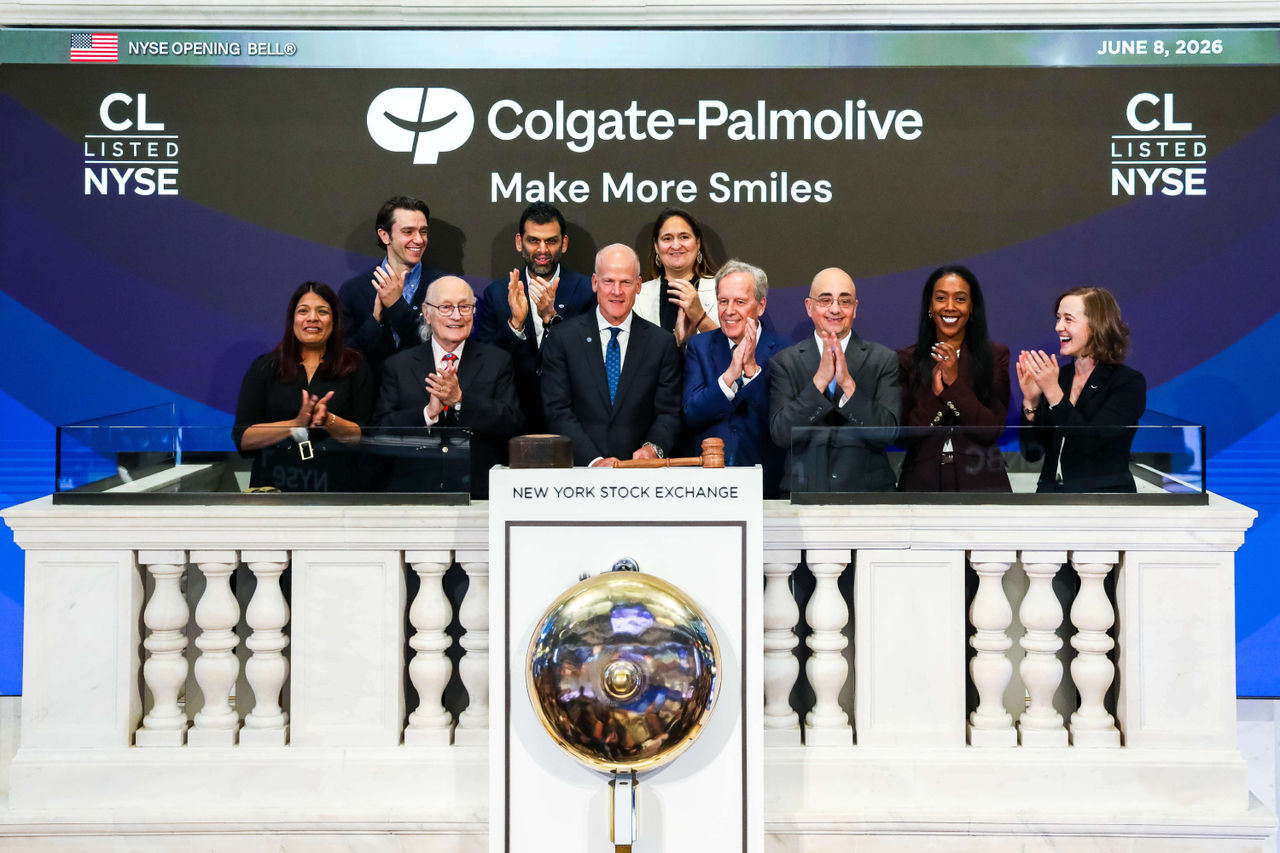
The business kept moving. Second-quarter 2026 sales reached $5.361 billion, up 4.9%; organic growth was 2.4%. In January, a four-year WHO Foundation funding commitment added support for oral-health education and national health systems. In October, Filorga described work simplifying its signature NCEF complex. The skin-care investment remains an active project.
For someone building a smaller business, the useful move is specific: study an existing routine, find its inconvenience, and make the improvement demonstrable. That approach needs reliable distribution, repeat use and a benefit buyers value. Where those conditions disappear, Colgate’s scale offers little instruction. Back at the sink, the next purchase begins with whether the last tube did its job.
Keep exploring
Browse the company website, brand portfolio, news and stories and investor updates.
Follow LinkedIn, X, Instagram or Facebook careers.
Watch the engineeringThe story of the recyclable tube ↗Meet the people who developed it ↗