James Berdigans had bought the inventory. That was the problem. In Printify’s account of its beginnings, the future founder had tried several business ideas, and the latest failure left him confronting a familiar retail predicament: products had to be paid for before anybody had agreed to buy them. He wanted to reverse the sequence. Find the customer first. Make the thing second.
- Design the merchandise; a print partner makes and ships each order.
- Start without finished stock. Budget for fulfillment, samples and selling costs.
- Choose a printer yourself, or let Printify Choice select one.
The trouble with buying first
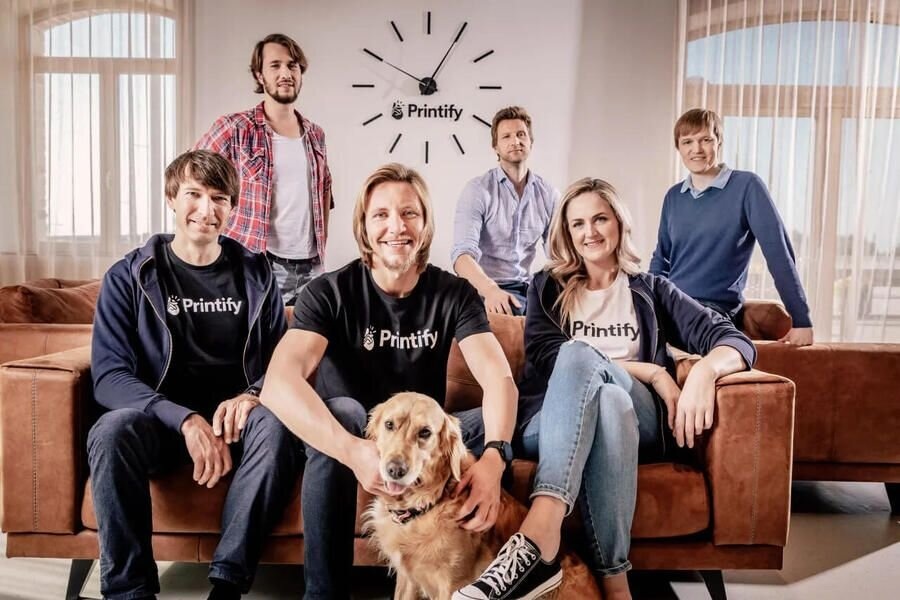
In 2015, Berdigans, Artis Kehris and Gatis Dukurs founded Printify. The proposition was practical: connect people who wanted to sell customized goods with companies already equipped to print them. A merchant could put artwork on a shirt without purchasing a printing machine or filling a spare bedroom with sizes nobody wanted.
Consider what disappears from that arrangement. The seller no longer has to guess how many medium hoodies to order before discovering that everyone wants large. A design can exist as a listing before it exists as a physical product. That makes experimentation cheaper, although it does nothing to guarantee that the experiment will succeed.

A print room made of software
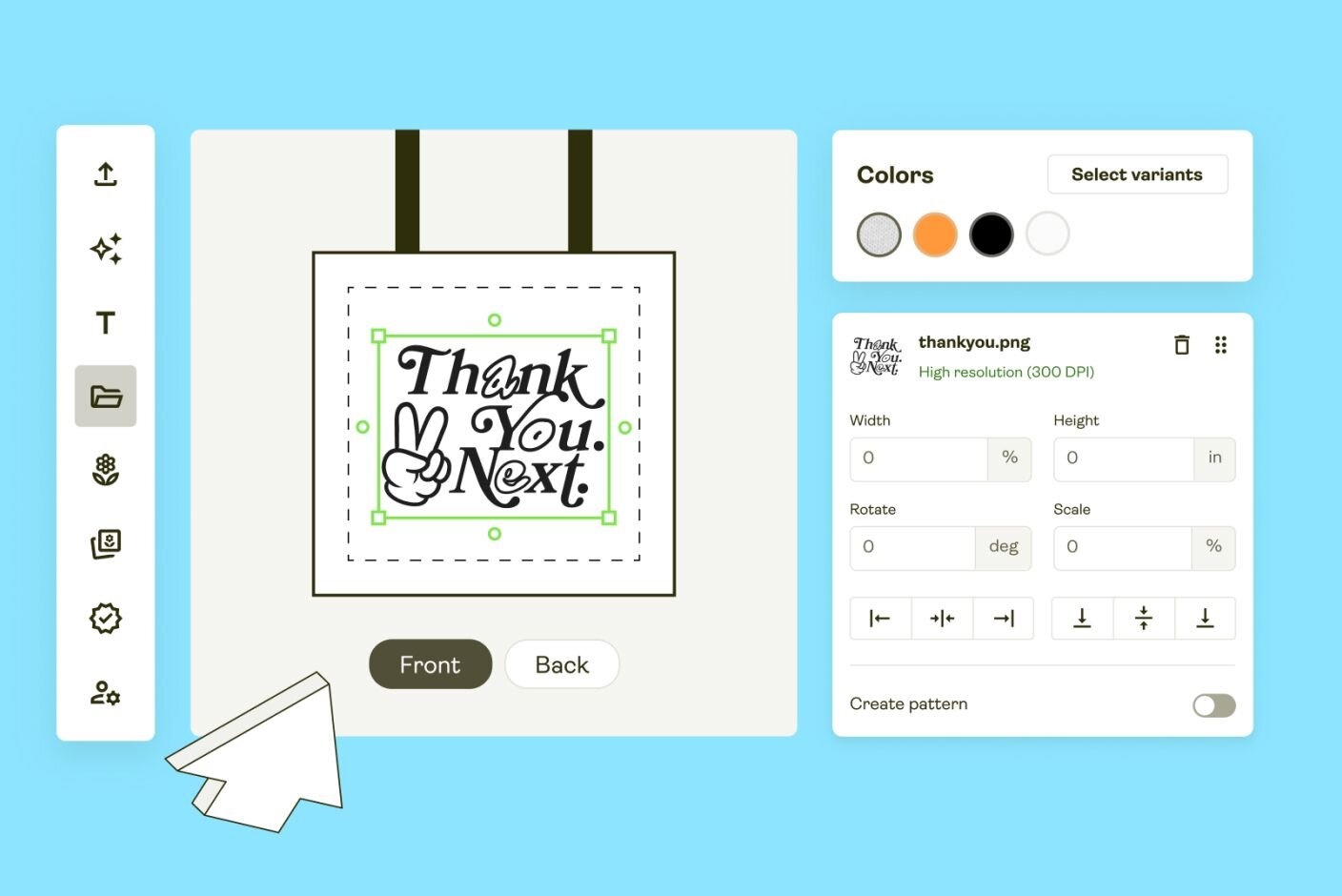
Printify sits between the storefront and the factory. Sellers choose a blank product, add artwork in the free Product Creator, prepare mockups and publish through integrations including Etsy and Shopify. When an order arrives, a print provider handles production and delivery. The merchant concentrates on the design, the listing and the customer relationship.
The range extends beyond shirts to mugs, phone cases, accessories and home goods. Printify’s current pages advertise more than 2,000 customizable products, over 70 print providers and more than 140 facilities. Providers and facilities are different counts: one printing business can operate several locations. The distinction matters when a network starts sounding like a collection of interchangeable dots.
buys
routes
prints
ships
Choosing among those printers is part of the product. Printify publishes provider performance scores using recent quality, production and shipping data. Sellers can select a specific provider. With Printify Choice, the platform selects a suitable provider for eligible products at a flat production price, taking the customer’s location into account. Convenience has a trade-off: Choice does not disclose which provider fulfills the order.
The $39 question
The Free plan carries no monthly subscription charge. Merchants still pay production and shipping when orders go through. Printify earns a margin on fulfillment prices; sellers choose their retail prices. Premium adds discounts and tools. In February 2026, its monthly USD price rose from $29 to $39; the annual option remained $299.
The sensible subscription question is arithmetic. If Premium saves a hypothetical $2 on each item, twenty items save $40 and cover a $39 monthly fee. Ten save $20 and do not. Actual discounts vary. Shipping, taxes, storefront fees, advertising and returns belong in the calculation before anyone calls the remainder profit.
19 items save $38. The twentieth takes savings to $40. Your product’s actual discount decides the threshold.
There is also a timing problem. For connected sales channels, Printify charges fulfillment separately from the customer’s payment to the store. The marketplace’s payout may arrive later. A seller can have orders and still need cash to fund them. Printify’s hosted Pop-Up Store uses a different flow, deducting fulfillment costs from customer payments before paying the seller.
Shipping can be awkward too. Printify documents cases where Etsy’s calculation for a mixed-provider basket collects less than fulfillment actually costs. Separate printers can mean separate parcels. And an October 2026 notice added a temporary $0.40 surcharge to US-destination orders. Small numbers deserve attention when the margin is small.
The rival across the table
Investors backed the model. A $45 million Series A in September 2021 brought in Index Ventures, H&M Group, Virgin Group and others. By the November 2024 merger announcement, Printify had generated more than 60 million orders. Its merger partner was Printful, a familiar alternative with its own production facilities alongside partner capacity.
The combination joined different ways of organizing production: Printify’s marketplace and Printful’s manufacturing operation. Both brands remain distinct services within FYUL. A comparison between them is still useful, but it is now a comparison inside one group. Gelato remains an external alternative; a conventional bulk printer is another option when demand is predictable enough to justify holding stock.
Buy the sample. Keep the spreadsheet.
The revealing customer stories involve patience. In a Printify interview, Brisbane artist James Hillier described keeping his job while building his business. Political artwork found an audience, but he tracked the numbers before committing to the transition. His experience offers a useful counterweight to the suggestion that publishing a few designs creates an income.
“For the first five years, I kept my full-time job while building the business.”James Hillier · Printify merchant interview, 2024
Another company interview describes BookTok creator Ashley testing samples extensively before selling merchandise to her community. That is a tactic worth copying: start with people whose interests you understand, inspect the product, then make a promise you can keep. A mockup cannot tell you how a shirt feels.
Printify is useful when uncertainty about demand makes a stock purchase painful. Its network gives a small seller access to production without running a factory. For a business requiring identical output from one known printer, tightly controlled packaging or fixed delivery dates across every item, the details need closer scrutiny. The platform removes a substantial chore. The work of earning a customer’s trust stays with the person whose name is on the shop.
Printify · Plans & pricing · Product Creator · Company blog · Merger announcement