Brian Ciciora’s trousers were freezing. While he worked in the Colorado mountains, moisture and cold could turn the bottom of a denim leg into an icicle. Builders around him had learned to live with such inconveniences. There were houses to frame and other things to complain about. A stubborn pair of pants hardly qualified as an emergency. But familiarity can give a bad arrangement a remarkably long career.
Ciciora had another wardrobe against which to judge it. He went skiing and climbing in clothing designed for movement and changing weather. On a trip to Europe, he noticed workers wearing technical garments that looked closer to his outdoor gear. Back in Colorado, he began working in softshell ski pants. The comparison was now attached to his own legs.
In 2015, he launched TRUEWERK. The business grew around a question with a certain social awkwardness: why should people spending their working lives outside put up with equipment that their weekend selves would reject? Answering it would require fabrics, customers, money and a different way of talking about skilled work. First, though, Ciciora had to find his way out from behind a desk.
A desk job ends. A table appears.
In 2008, a technology startup laid him off. He had been working in sales. The company’s CEO, who was also a friend, suggested he “build a house or something.” Such career advice has the advantage of leaving considerable room for interpretation. Ciciora took the underlying suggestion seriously: making things might suit him better than the professional route he had been following.
He tested demand for steel-framed tables with wooden tops by placing an advertisement on Craigslist before building one. Responses arrived. He told would-be buyers that the advertised table was gone but that he could make another. Furniture led him toward suppliers and fabrication. After moving to Winter Park, he was making long drives to Denver for steel before an arrangement with a local fabricator brought him into welding staircases, railings and structural work.
That sequence helps explain his resistance to the idea of a trade as a permanent vocational sentence. His own experience involved moving between skills and finding uses for the combinations. There is an entrepreneurial education in that movement: you learn what a buyer wants, then discover what you must know to deliver it. The finished object supplies a fairly unambiguous grade.
The fitting room was a lobby
TRUEWERK began with four winter products. By April 2017, Ciciora had installed a clothing display at Tradecraft Industries, the Adams County coworking space where he kept an office. Founder Bryce Ballew was providing a setting full of people connected to building. Ciciora was putting his proposition within reach of people who could judge it.
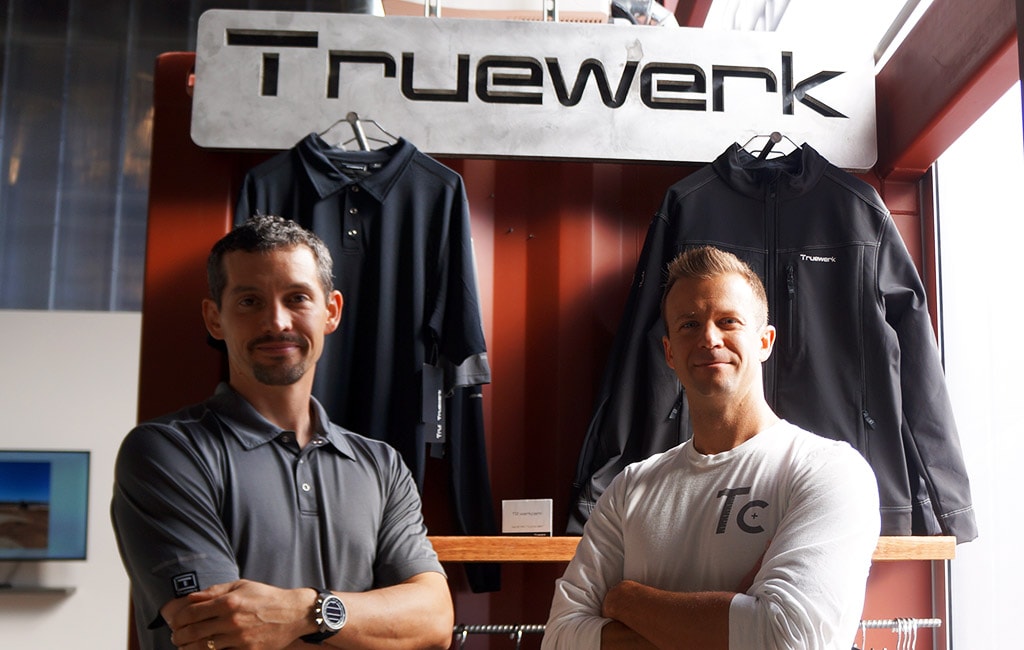
He wanted a customer to “come in and move around.” For clothing sold on the promise of easier movement, this was a sensible sales demonstration. A worker could bend and feel the fabric. The argument did not have to survive entirely on a website, where nearly every garment in existence seems to have been photographed during somebody’s finest afternoon.
Dan Nordstrom, then CEO of Outdoor Research, was among the early investors. The connection placed an outdoor-industry figure beside a founder trying to bring that industry’s material knowledge into workwear. Ciciora was pursuing a translation between two uses of clothing that could involve the same weather, sometimes the same wearer, and rather different expectations.
The route to the customer also mattered. Ciciora explained that selling directly allowed TRUEWERK to put more of a garment’s cost into fabric and construction than a wholesale model would permit. The company sold both to individuals and to businesses outfitting crews. That commercial choice was tied to the product argument: technical materials had to reach the jobsite at a price a working customer could consider.
The weather does not read the schedule
Ask Ciciora about clothing and he quickly gets into the organization of a day. Colorado can require warm layers early, fewer layers during sunny physical work, then insulation again when daylight goes. A single heavy garment has a limited vocabulary for this conversation. A system of pieces gives the wearer more ways to respond.
He has described keeping a small set of base, middle and outer layers in his truck. The appeal included having one fewer decision to make while dealing with clients, tools and crews. For a crew leader, issuing a common set of garments also leaves room for individuals to combine them differently. Everybody can receive the same pieces without having to wear them identically.
Travel makes the case more vivid. He talks about workers packing a duffel for assignments that can span weeks, seasons and places as different as Arizona and North Dakota. Their luggage has to accommodate uncertainty. In his account, good design helps them prepare without packing an entire closet. The truck has other things to carry.
A customer with a tower to climb
The T3 WerkBib offers a more specific example of the way that thinking reached a product. Customers at telecommunications company Vertical Limits wanted a bib suited to tower work. Brian Bicknese, then its vice president of safety and training, pressed for a garment that could meet demanding conditions without the bulk of conventional workwear.
The design considered matters that become quite consequential when someone is already wearing boots or a harness: leg openings, hardware placement, pockets, knee articulation. Full-length leg zippers addressed getting dressed around footwear. These are small details only from a comfortable distance. Once a person is doing the job, the details occupy rather more of the day.
Ciciora’s company describes its intended customer as an industrial athlete. The phrase connects physical skill with equipment designed for performance. It also places the customer’s expertise near the center of the design process. A person climbing a tower has something to contribute to the conversation about clothing. Listening is a practical development method.
A vest with someone else’s name
One late fall, while framing a cabin, Ciciora drove the claw of his hammer into a header to lift it into place. The action reminded him of carpenter and teacher Larry Haun, whose demonstrations had influenced him. “I lived this Larry Haun moment,” he recalled. A technique learned through another builder’s example had arrived in his own hands.
TRUEWERK was developing an insulated vest. With Haun’s family involved, the garment became the S4 Haun Vest in a collaboration with Fine Homebuilding and Keep Craft Alive. At its 2021 launch, 20 percent of each purchase was designated for the Keep Craft Alive scholarship fund with SkillsUSA. The tribute connected a familiar piece of a carpenter’s clothing to the education of future tradespeople.
Of each S4 Haun Vest purchase committed to the scholarship fund at the collaboration’s 2021 launch.
That same year, TRUEWERK supported Trade Academy, the initiative launched by Housecall Pro with WD-40 also participating. Ciciora said the company would supply workwear to scholarship recipients beginning technician careers. These projects gave his concern about the future of the trades a specific destination: people preparing to enter them.
“I’ve always had the aspiration to be capable.”BRIAN CICIORA
The people inside the company
Ciciora’s interest in building extends to the people doing it with him. He has discussed monozukuri and hitozukuri, Japanese ideas he connects to making things and developing people. His description of personal ambition is pleasingly concrete. The examples include operating a truck, wiring a house and repairing a motorcycle clutch.
Long relationships appear in the company’s story. Jason Cloyd publicly recalled first becoming Ciciora’s manager at a small fuel-cell startup more than two decades earlier, then eventually working for him at TRUEWERK. Careers can arrange a quiet reversal of the seating plan. What survives is the relationship and the accumulated knowledge of how another person works.
Growth brought its own material requirements. In June 2021, TRUEWERK raised $2.05 million to increase production and inventory. Ciciora explained that demand concentrated late in the year, requiring stock ahead of fall deliveries. In 2022 came a minority investment led by Stride Consumer Partners, alongside other backers. Making a product customers want creates the next obligation: having it available when they want it.
Another way to hold the reins
On September 26, 2025, TRUEWERK announced Glenn Silbert as CEO. Ciciora moved to chairman, retaining an active role in product and brand. Silbert brought experience from Under Armour and Grunt Style. A company approaching its next stage of growth was adding a different set of operating experiences, while its founder stayed involved in the work that had drawn him into it.
The transition also became a subject of Ciciora’s leadership teaching. His Telluride Leadership Summit biography describes an interest in “Vaquero Leadership,” drawing on the patience and partnership of horsemen. The underlying concern is how a founder can support other leaders and allow an organization to develop beyond him. A company, unlike a table, has opinions about how it should be assembled.
His product interest remained visible in May 2026, when TRUEWERK appointed Matt Snyder to lead product and merchandising. Ciciora’s comments put the customer first and emphasized the responsibility to keep improving the product. Years after the first winter collection, he was still returning to the relationship between the person doing the work and the things supplied to help them.
That is where the frozen trousers belong in this story. They were a recurring annoyance that Ciciora had enough experience to question and enough curiosity to compare with something else. The company that followed has required different skills at different stages. The original test remains usefully ordinary: put the clothes on, move around, and see whether the day gets easier.