BREAKING: HeyMarvin hits 400% revenue growth • YC ALUMNI Prayag Narula backs AI research with $11M+ raised • 4,000+ teams. 13,000+ users. 10 Fortune 100 companies. • FOUNDER LeadGenius co-founder returns to UX research roots with Marvin • Sam Altman backed this one early • RESEARCHER TURNED CEO From Helsinki labs to Oakland startup • BREAKING: HeyMarvin hits 400% revenue growth • YC ALUMNI Prayag Narula backs AI research with $11M+ raised • 4,000+ teams. 13,000+ users. 10 Fortune 100 companies. • FOUNDER LeadGenius co-founder returns to UX research roots with Marvin • Sam Altman backed this one early • RESEARCHER TURNED CEO From Helsinki labs to Oakland startup •
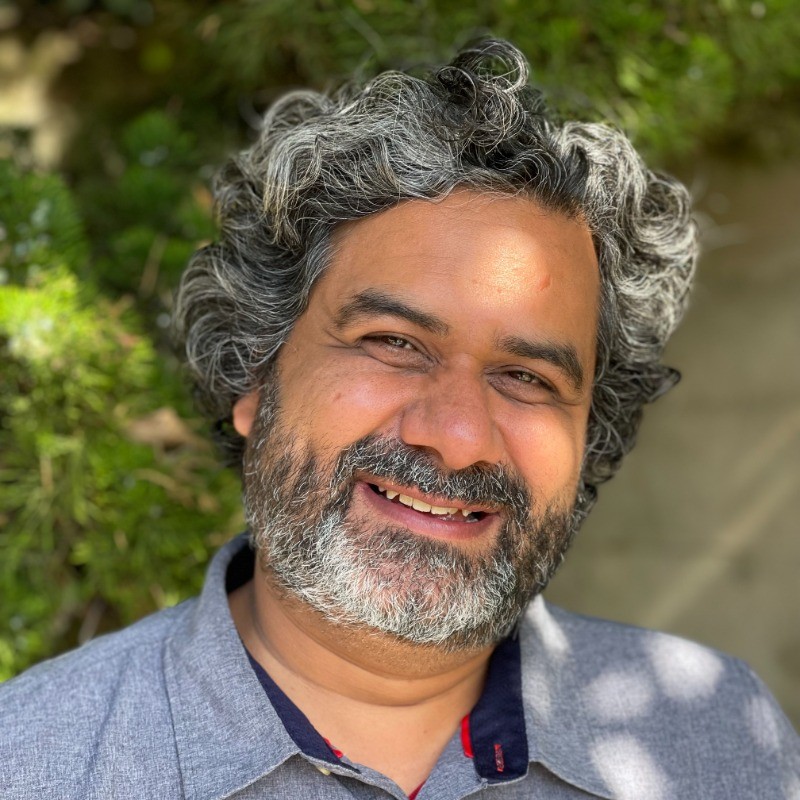
Prayag Narula - Co-Founder and CEO of Marvin
Prayag Narula / Oakland, CA
YC W2011
Co-Founder & CEO / Marvin (HeyMarvin)

Prayag
Narula

The man who left a $30M company to build the research tool he always needed - and put "please talk to your users" in his LinkedIn bio.

Founder YC W2011 AI Research UX Tools Berkeley MIMS Helsinki Researcher
400%
Revenue growth
13K+
Users on Marvin
$11M+
Funding raised
12+
Research papers
"Sales teams talk to customers and want to make a sale. With product and design teams, their only agenda is how to make the customer's life better." - Prayag Narula

The Researcher Who Built Two Startups


His LinkedIn headline does not list awards or board seats. It says: "I would like you to please talk to your users." Eleven words. A worldview, a product philosophy, and a mild rebuke - all in one sentence. That is Prayag Narula, and it tells you almost everything.

Narula is the Co-Founder and CEO of Marvin (now HeyMarvin), the AI-native customer insights platform that lets product teams record, transcribe, tag, search, and synthesize user research - without the usual chaos of scattered notes and half-watched Zoom recordings. It is the kind of tool that product teams have wanted for years but rarely had. Narula built it because he was one of those product teams.

Before Marvin, he co-founded LeadGenius with UC Berkeley classmates Anand Kulkarni and Dave Rolnitzky in 2011, after the three of them went through Y Combinator's Winter 2011 batch. What started as MobileWorks - a managed crowdsourcing platform - evolved into a B2B sales and marketing intelligence company that raised over $30 million in venture funding and grew to hundreds of employees worldwide. By any measure, it worked.

"Marvin is me going back to my roots in user-centric design." - Prayag Narula, Co-Founder & CEO

But the pandemic changed the calculus. Around 2020, Narula stepped back from the CEO role at LeadGenius, handing day-to-day leadership to someone he trusted, while remaining on the board. The startup sprint was not over - it was just redirecting. He and his brother Chirag Narula (formerly head of design at Blinkit) co-founded Marvin that same year, returning to the HCI and user research world he had trained in over a decade earlier.

The founding story has a certain irony: Narula spent years at LeadGenius without the right tools to understand his own customers. The gap he felt personally became the product he built professionally.

From Delhi to Helsinki to Berkeley


Narula earned his Bachelor of Engineering in Information Technology from Netaji Subhas Institute of Technology (NSIT), University of Delhi. After graduating in 2007, he worked as a development engineer at KritiKal Solutions on embedded systems, and did a research internship at the Industrial Technology Research Institute (ITRI) in Taiwan.

Then came Finland. From 2009 to 2010, he was a researcher at the Helsinki Institute for Information Technology's Ubiquitous Interaction (UIx) Group, working on multimodal interfaces for affective interactions - the kind of research that sounds rarefied but is fundamentally about making technology feel human. Helsinki winters, it turns out, are an excellent place to think about human-computer interaction.

He came to the US to study at UC Berkeley's School of Information, where he earned a Master of Information Management and Systems (MIMS) in 2012, also working as a Graduate Student Instructor. His research at Berkeley produced work on crowdsourcing architectures, including his 2012 paper "MobileWorks: Designing for Quality in a Managed Crowdsourcing Architecture" - which directly informed what would become the early version of LeadGenius.

The academic thread - HCI, crowdsourcing, user-centered design, AI - runs through everything Narula has built. He has authored over a dozen peer-reviewed papers across human-computer interaction, artificial intelligence, UX design, computer networks, and crowdsourcing. That is not a hobby. That is a foundation.

What Marvin Actually Does


Marvin's central premise is disarmingly simple: companies collect enormous amounts of qualitative customer data - interviews, support calls, surveys, user sessions - and most of it evaporates. Notes go into personal folders. Recordings sit unwatched. Insights stay locked in the heads of the one researcher who ran the study.

Marvin changes this by acting as a centralized research repository with AI woven throughout. It integrates with Zoom and other video tools to automatically record and transcribe customer interviews, converts recordings into searchable, tagged insights, and lets teams pull themes, patterns, and evidence-backed conclusions without spending days in spreadsheets.

"Think of this as an AI research assistant that helps you conduct research with automatic note taking and synthesis." - Prayag Narula

The 2024-2025 period added a particularly forward-looking feature: the AI Moderated Interviewer, which enables free-flowing qualitative conversations at scale without a human researcher in the room. It is a genuinely new research methodology, not a gimmick layered on top of an old product.

Narula is pointed about the AI-first distinction: "Unlike most platforms that retrofitted AI on top of legacy systems, we built Marvin using AI from day one." This is not marketing copy. The architecture reflects it - AI was not added to Marvin in a 2023 product update. It was the starting assumption.

The result: 4,000+ teams and 13,000+ users across tech, finance, retail, and healthcare, including 10 Fortune 100 companies and half of the Fortune 10 healthcare leaders. Revenue has grown 350-400% year over year. A $3.8 million pre-seed round in February 2022 (co-led by Sam Altman's Apollo Projects and Fuel Capital, with participation from Scrum Ventures, Hack.VC, Global Founders Capital, House Fund, and others) was followed in 2025 by a $10 million debt facility from Triple Point Capital.

The early investor list is notable: Sam Altman, now CEO of OpenAI, was in from the start. So was Scott Banister, PayPal's first board member. These are not random angels.

On Users, Teams, and What Research Is Really For


Narula's view of research is not a UX researcher's view. It is a product leader's view - and that distinction matters. He is not advocating for more research. He is advocating for research that actually changes decisions.

His observation about organizational incentives cuts through the usual framing: sales teams want to close, customer success teams want to upsell. Product and design teams, he argues, have a different agenda - making the customer's life better. The implication is that research should feed the people who are structurally positioned to act on it, not just file it away.

His vision for Marvin extends to a future where "every single business decision is based on real customer feedback - fast, accessible, and actionable." This is an audacious goal for a company of under 100 people. It also has the virtue of being specific enough to test against reality.

On Medium, he lists his personal interests as "history, food, poetry, technology and startups" - in that exact order. Technology comes fourth. It is a small detail that explains a lot about why his software feels unusually thoughtful about actual human behavior. And his Twitter bio has long identified him as "Flora's Dad" before any company title - a choice that says something about his sense of priority.

The Long Arc


2006-2007
Internships at Gemalto and ITRI (Taiwan) while completing B.E. at NSIT, Delhi
2007-2009
Development Engineer at KritiKal Solutions (embedded systems, New Delhi)
2009-2010
Researcher, Helsinki Institute for Information Technology - Ubiquitous Interaction Group
2010-2012
MIMS at UC Berkeley School of Information; Graduate Student Instructor
2011
Co-founded MobileWorks (later LeadGenius) with YC W2011 backing
2011-2018
CEO of LeadGenius; raised $30M+, grew to hundreds of employees globally
2018-2020
Transitioned to Chairman/Board role at LeadGenius; handed CEO to a trusted successor
2020
Co-founded Marvin with his brother Chirag Narula
2022
Launched Marvin publicly with $3.8M pre-seed round; TechCrunch coverage; Forbes Technology Council
2025
HeyMarvin reports 400% growth, $10M debt round from Triple Point Capital; spoke at UXDX USA 2025

Four Acts


2007-2010
The Researcher
NSIT Delhi → ITRI Taiwan → Helsinki UIx Group
2010-2012
The Scholar
UC Berkeley MIMS + YC W2011
2011-2020
The CEO
LeadGenius - $30M raised, hundreds of employees
2020-Present
The Builder
Marvin (HeyMarvin) - AI-native research platform

Prayag Narula on Research, AI & Companies

I wanted to build tools that help companies understand their customers' needs and use it as part of their core decision-making.

On founding Marvin

Unlike most platforms that retrofitted AI on top of legacy systems, we built Marvin using AI from day one.

On AI differentiation

Every single business decision is based on real customer feedback - fast, accessible, and actionable.

On the vision for Marvin

Sales teams talk to customers and want to make a sale, while customer success teams want to upsell. With product and design teams, their only agenda is how to make the customer's life better.

On team incentives

Think of this as an AI research assistant that helps you conduct research with automatic note taking and synthesis.

On Marvin's core capability

Marvin is me going back to my roots in user-centric design.

On the founding arc

What He's Actually Done

🏈
Co-founded LeadGenius through Y Combinator W2011 - raised $30M+ and scaled to hundreds of global employees
🤖
Built Marvin as the first AI-native research repository - AI built in from day one, not retrofitted
💰
Secured $3.8M pre-seed from Sam Altman's Apollo Projects and Fuel Capital at Marvin's launch
📈
HeyMarvin achieved 350-400% revenue growth year over year with $10M additional debt funding in 2025
🏢
10 Fortune 100 companies and half of Fortune 10 healthcare leaders now rely on Marvin
📚
Published 12+ peer-reviewed papers in HCI, UX, AI, crowdsourcing, and computer networks
🌐
Researcher at Helsinki Institute for Information Technology - Ubiquitous Interaction Group
🎯
Forbes Technology Council member and speaker at UXDX USA 2025

Things Worth Knowing

The LinkedIn bio. Eleven words. No titles, no awards. Just: "I would like you to please talk to your users."
Flora's Dad. His Twitter identity leads with fatherhood - every startup credential comes after.
A sibling startup. Marvin is co-founded with his brother Chirag (ex-design lead at Blinkit). Two brothers, one research platform.
Sam Altman, early. OpenAI's CEO backed Marvin through Apollo Projects before the AI boom made AI research tools obvious.
Helsinki to Oakland. Narula went from Finnish research labs to Berkeley to building a startup in California. The cold room for ideas helped.
History first. His listed interests on Medium: "history, food, poetry, technology and startups." Technology is fourth on the list.