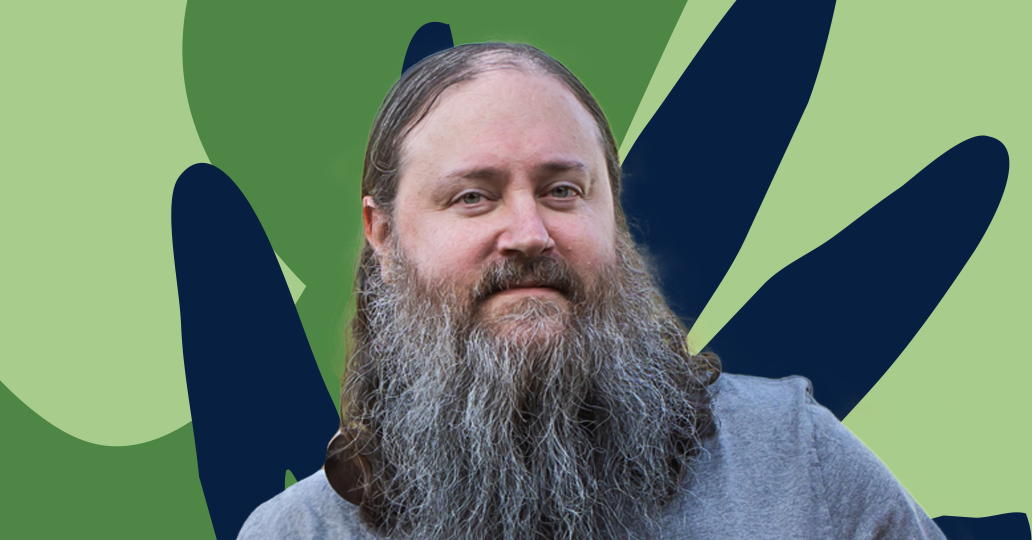
The Profile
The Inventor Nobody Googled
In 1996, a 21-year-old UIUC dropout pitched an idea to a startup accelerator in Pasadena. The idea was simple: let companies bid for placement in search engine results. Pay more, rank higher. The accelerator liked it. They built it. They called it Overture. Yahoo bought Overture for $1.63 billion. Google adapted the model into AdWords. AdWords became the most profitable advertising system in human history.
The guy who pitched that idea was Scott Banister. He received essentially none of the money. But he was already gone - onto the next thing.
This is the career of a man who has been in the room for almost every consequential Silicon Valley moment of the last 30 years, and who has somehow avoided becoming famous for any of them. PayPal's first outside investor. IronPort's co-founder. Seed backer of Uber, SpaceX, and DeepMind before any of those words meant anything to anyone outside a very small group of people who paid close attention.
Flashback: 1995
Banister was working out of the University of Illinois ACM chapter office when a fellow student named Max Levchin walked in. Together, they co-founded SponsorNet New Media - an online advertising auction that predated Google by years. Luke Nosek was also there. Levchin and Nosek would go on to co-found PayPal. Banister would become its first outside investor. Same room. Same era. Completely different public profiles.
Drop Out First, Explain Later
The standard Silicon Valley dropout story goes like this: I had a big idea, the university couldn't contain it, I left to change the world. Banister's version is less tidy. He left because he believed, with the conviction of a 20-year-old who has never been proven wrong before, that building things consumers wanted was more practical than any classroom. He was right. But he was also leaving behind a plan to become a computer science professor - a path that would have made him exactly as well-known as the average CS professor.
Instead he landed in Silicon Valley in 1996 with Submit It! - a free tool that submitted your website URL to 20 search engines at once, back when submitting to search engines was something humans did manually. It was an unglamorous utility that saved webmasters about four hours of copy-paste labor. It turned out four hours of copy-paste labor was worth a lot to a lot of people. LinkExchange acquired it. Microsoft then acquired LinkExchange for around $250 million. Banister was 23.
The Spam Wars and the $830M Exit
In 2000, Scott Banister and Scott Weiss sat down to solve a problem that was making corporate email unusable: spam. Not metaphorical spam - actual waves of bulk email for pharmaceuticals, get-rich-quick schemes, and things that definitely should not have appeared in anyone's inbox at 9am on a Tuesday.
They built IronPort Systems. Not software. Hardware. Physical email security appliances that sat between the internet and a company's mail servers, screening everything. The business took seven years to build properly. In 2007, Cisco acquired IronPort for $830 million.
During those seven years at IronPort, Banister met a woman named Cyan who was managing their blacklist of known spammers. He married her about two years later. She would become, by some measures, the more famous investor - a Founders Fund GP, equally early on SpaceX and Uber - but they operated for years as a single investment unit, each appearing on the other's deal lists, a two-person thesis about what founders could do when left alone to build.
"In order for an act to be a crime, libertarians say, someone must be harmed - there must be a victim. Anything that's peaceful, voluntary, and honest should be tolerated regardless of whether we agree with it. Part of the price of our own freedom is allowing others to be free."
- Scott Banister
The First Phone Call PayPal Got
Before Peter Thiel. Before Elon Musk. Before Roelof Botha or Keith Rabois or any of the men who ended up on the canonical list of PayPal co-founders, Scott Banister wrote the first outside check. He also co-invented the email payments feature that made PayPal actually useful for eBay transactions - the feature that turned a curiosity into a company.
The PayPal Mafia became Silicon Valley's most studied alumni network: the group whose members went on to found or back Tesla, LinkedIn, Palantir, YouTube, Yelp, and dozens of other category-defining businesses. Banister is in the network. He is also, relatively speaking, one of the least publicized members of it - a condition that seems to suit him.
What a Hundred Bets Looks Like
After IronPort closed, Banister had time, capital, and a specific kind of sight - the ability to see what a market would look like in eight years and work backwards. He started writing checks. Small ones, by later VC standards - typically $10,000 to $500,000, targeting $100,000 per deal. The portfolio eventually reached over 100 companies.
Some of those bets: Uber, pre-unicorn, when ride-sharing was a regulatory problem nobody wanted. SpaceX, when reusable rockets were a physics argument people were still having. DeepMind, before the words "large language model" existed outside academic papers. Facebook, early. Affirm, early. Zappos, before anyone thought shoe e-commerce was a real category - Amazon later agreed to the tune of $1.2 billion. Postmates, before delivery apps were infrastructure - Uber later agreed to the tune of $2.65 billion.
The pattern is consistent: find a thing that seems structurally correct but socially premature, write a check before the consensus forms, wait. In 2016, TechCrunch awarded Scott and Cyan Banister the Crunchie for Angel of the Year, citing "prescient bets on SpaceX, Uber, and DeepMind Technologies."
He backed PayPal, Uber, SpaceX, and DeepMind. He is not a household name. This is a choice.
Freedom as a Foundation
Banister's politics have been consistent since his college days as president of the College Libertarians and co-founder of Campus Atheists and Agnostics at UIUC. He believes in voluntary interaction, minimal state coercion, and the right of individuals to make choices that harm no one else. This isn't abstract for him. He donated $125,000 to UCLA Law's First Amendment clinic - which was then renamed the Scott & Cyan Banister First Amendment Clinic, directed by Professor Eugene Volokh. He put $200,000 into Arizona's marijuana legalization ballot initiative in 2016, and roughly $500,000 total across Arizona and Colorado. He donated $3 million to a Rand Paul presidential Super PAC in 2016.
Whether you agree with his politics or not, the consistency is real: these aren't cause-of-the-month donations. They're expressions of a coherent worldview that has barely shifted since he was 19 and arguing about it in a college ACM office.
The Oval Office Problem
In October 2024, a Hillsborough, California mansion sold for $23 million to an LLC called Willowmoss. The property: 24,000 square feet, 11 bedrooms, 3 acres, designed in 1930 by architect Julia Morgan. The curiosity: it was built by the Hearst family to resemble the White House, down to a wood-paneled replica of the Oval Office inside.
Willowmoss LLC traces to Scott Banister. The "Western White House" - listed for $38.9 million in 2023 and purchased for $23 million - now belongs to a man who has spent his career working on the internet, backing companies that operate in the cloud, and holding a political philosophy that is generally skeptical of what happens in the actual Oval Office. The irony appears to be intentional.
Building the AI Version of Himself
In August 2023, Banister co-founded Memyard - a platform with a specific and slightly unsettling premise: gather all of a person's documents, communications, and memories into a structured "data estate" that can be used to train a personal LLM. A digital version of you, trained on everything you've ever written or said.
It's the kind of project that could only come from someone who has been watching the internet accumulate data for 30 years and wondering what it all adds up to. Banister started his career building tools for search engines, moved into security, moved into investing, and is now moving into the architecture of personal AI. The throughline is the same: find the infrastructure play before the infrastructure exists.
He's also now a Venture Partner at Long Journey Ventures, the San Francisco-based early-stage fund co-founded by Cyan in 2020. Fund IV closed at $181.8 million in March 2025. The team includes Arielle Zuckerberg and Pascal Levy-Garboua. Scott, characteristically, is listed on the team page without a title that would tell you anything about what he actually does.
"If entrepreneurs were running schools, instead of bureaucrats, schools would be teaching a lot more of the skills and mindsets found in this book."
- Scott Banister on education and the entrepreneurial mindset
The Quiet Player
Here is what is strange about Scott Banister's career: he has been in the right room at almost every critical inflection point of Silicon Valley's last three decades. He was with Levchin before PayPal. He was the first outside money into PayPal itself. He conceived the search advertising model that now generates hundreds of billions annually. He co-founded a company Cisco paid $830 million for. He wrote early checks into Uber and SpaceX when both were still considered bets that reasonable people might decline.
And yet he is not on the shortlist of Silicon Valley names that appear in business school case studies. He doesn't give keynotes. He is not quoted regularly in the tech press. His Wikipedia page exists, which is a low bar by Silicon Valley standards.
The most charitable explanation is the correct one: he doesn't need the attention. The investments worked. The companies got built. The ideas got realized - mostly by other people, with other people's names on them. He seems to regard this outcome as acceptable, possibly even preferable.
This is a rarer disposition in Silicon Valley than it appears. Most people who help build something want credit for helping build it. Banister seems to care more about whether the thing got built correctly. For someone with a libertarian philosophy, this makes a certain kind of sense: outcomes matter; attribution is a political question.
He is still writing checks. He is still building. The next company he backs, you will probably hear about eventually - just without his name attached to it in the headline.