In July 2026, Pravin Jadhav found himself on the wrong side of a financial product. He said a private bank had rejected his home-loan application because it classified him, a founder, as a high-risk borrower. His company, Raise Financial Services, had secured a $1.2 billion valuation the previous October. The bank, apparently, required a different sort of reassurance.
Jadhav described a relationship of more than 25 years, a credit score around 800 and assets several times the requested loan. These were his account of the application, rather than the bank’s explanation. He observed that the institution could lend to people his company employed while declining to lend to him. Then he joked about spending the rest of his life in the office.
It was an unusually tidy encounter between a fintech founder and the friction he spends his working life trying to remove. Jadhav has built products for people sending messages, buying things, making payments and putting money to work. In this instance, the customer waiting for a better experience was PJ himself.
Sixty days became 180
Long before Dhan, Jadhav wrote a post with the cheerfully unvarnished title “475 Days of Unemployment (Read Entrepreneurship).” Published in October 2012, it described the expensive education behind his first venture. Immediately after leaving his job, he had outsourced product development. A task estimated at 60 days stretched beyond 180. Money went out; control did not come back with it.
By the time he wrote the post, the product’s code was being rewritten for the fourth time. Early iterations of Tyched had given way to Wishberg, and the team was rebuilding on its own framework. His lesson was practical: keep the ability to change the product inside the company. A young business that cannot revise its software quickly is negotiating with its own past.
He also described helping other founders test their products and gathering early adopters for his own. Entrepreneurship, in this telling, involved reciprocal favours and awkward revisions. The public account contained mistakes while they were still fresh, before a later success could make them seem inevitable.
A shopping cart for a life
Wishberg, which Jadhav founded with Kulin Shah, let people assemble and share things they wanted to buy, own or experience. It began as Tyche’d in 2011 and was renamed in 2012. The proposition was personal and expansive: a place for wishes that did not have to become a purchase immediately. In a world of checkout buttons, somebody had built a place to linger.
The business closed in 2014. Its founding team joined Freecharge, where Jadhav took responsibility for product and growth while Shah worked on partnerships and alliances. Kunal Shah welcomed them publicly. The distinction matters: the wishlist service stopped, while the people who had built it moved into another company. A startup’s ending and a founder’s next beginning can share a date.
At Freecharge, Jadhav worked on the less dreamy arithmetic of acquisition, transactions and retention. He later became chief of product and growth at Servify, dealing with device service and after-sales experiences. Different businesses kept bringing him back to the same question: what actually happens after a customer decides to use this thing?
- 2011WishbergWishes, discovery and a first venture
- 2017Paytm MoneyA conversation becomes an investment business
- 2021Raise / DhanExperience becomes the starting point
A missed call, then an investment company
His route into wealth management began with a conversation in 2017. After spending about four hours with a wealth-management company, Jadhav returned home and saw a missed call from Vijay Shekhar Sharma. They had known each other since the earlier One97 days. It was late, so Jadhav sent a message about the opportunity to build an investment and wealth business in India.
Sharma wanted to talk. The exchange became part of the origin of Paytm Money. For Jadhav, the attraction was the gap between what technology could make possible and the experience investors were receiving. Payments had already become a familiar digital habit. Investing presented another set of arrangements, intermediaries and small frustrations to examine.
The career behind that message was already varied. Jadhav describes having moved from mechanical engineering into human resources, product management and entrepreneurship. Earlier, he had worked on mobile Rediffmail and Rediff’s ecommerce products. His working life had crossed several versions of the Indian internet before arriving at the investment account.
The six people and the 50,000 reviews
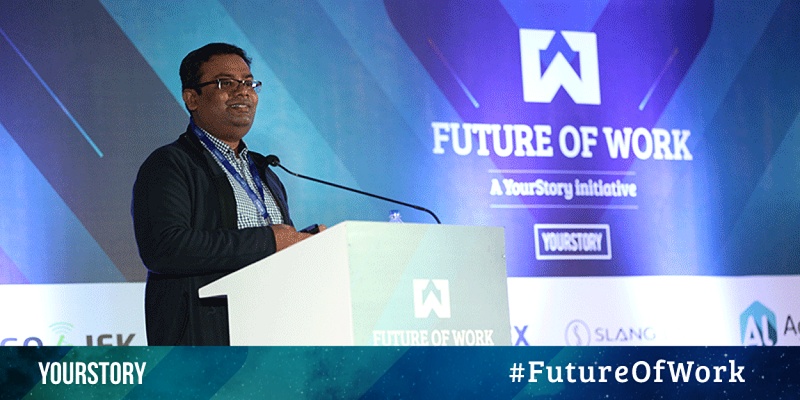
In February 2019, onstage at a Future of Work event in Bengaluru, Jadhav recalled Paytm Money’s modest early team. Recruiting six people had taken 45 days. Only one was an engineer, whose specialism was Windows. While waiting for the engineering team, he said, they watched YouTube videos. Even the beginnings of financial infrastructure can involve a little buffering.
They also did the homework. The team examined about 50,000 reviews of 30 investment apps. Complaints exposed loading problems, crashes, inaccurate information and weak customer service. The unglamorous comments beneath other people’s products became a catalogue of work worth doing.
Launch supplied its own correction. The team expected roughly 200 KYC requests a day and received more than 2,000 in the first few hours. The app crashed. Jadhav included that failure when recounting the launch, along with the lesson about building for scale. An investment app could make onboarding look simple while requiring considerable machinery underneath.
Starting from experience
After leaving Paytm Money in 2020, Jadhav announced Raise Financial Services in February 2021. His account of the new beginning contained a useful adjustment to the usual startup vocabulary: he was beginning with experience. The ambition extended across investments, payments, financing, insurance and wealth, with consumer products and infrastructure for partners.
He also invested personally in the first round. Early backing came from Mirae Asset Venture Investments, Multi-Act, Blume’s Founder’s Fund and Social Leverage, alongside individual founders and operators. Kunal Shah, Amrish Rau and Girish Mathrubootham were among the people he thanked. Earlier working relationships had become part of the new company’s support system.
The founding group included Alok Pandey, Jay Prakash Gupta and Raunak Rathi. Dhan launched in November 2021. Its proposition centred on trading and investing, with particular attention to users who wanted capable tools. Jadhav’s public description of his own work included customer service. For a founder with several executive titles behind him, it was a telling choice of introduction.
The unfashionable case for charging
In September 2022, Jadhav explained why he resisted advice to make brokerage free. With funding available, the suggested playbook was familiar: remove the charge, acquire customers and raise more money. He preferred to concentrate on product, technology and service, and to make the economics of running them work.
His argument had room for the slow beginning. Dhan’s first three or four months had brought little traction, he wrote, because it offered too little differentiation. Customer feedback and faster shipping subsequently helped it find direction. That admission gives the strategy some weight. Focus was something the team had to develop after meeting the market.
He described a broker’s many moving parts and the resources required to keep them functioning. A charge had to support engineering, operations and customer experience. The reasoning connected price to the institution behind the screen. A low fee is visible immediately; the consequences of an underfunded system tend to introduce themselves at a less convenient moment.
“A Good Product is the best Growth Hack.”
Pravin Jadhav · January 2014
What twenty milliseconds stands for
Dhan built its own trading engine, DEXT, bringing order management, risk management and execution into an in-house system. By October 2025, the company reported that more than 95% of orders were processed in under 20 milliseconds. That is a system-processing claim, rather than a promise about the return a customer will earn.
For Jadhav, this work continues an old preoccupation with owning the parts that determine the experience. The outsourced code that delayed Wishberg and the infrastructure built for Dhan belong to different periods and different markets. Put together, they suggest a consistent concern: a product team needs the power to repair what its customers depend on.
Around the brokerage, Raise added research through ScanX, learning through Upsurge and financial media through Filter Coffee. The latter, founded by Tanvi Raut Dessai, joined the group in January 2025. Learning about markets, following businesses and placing an order were becoming neighbouring activities within the same group.
The numbers after the funding headline
Raise’s $120 million Series B, announced in October 2025, was led by Hornbill Capital with participation from MUFG and BEENEXT. The round valued the company at $1.2 billion. It was a significant marker for a founder who had spent years warning against treating a fundraise as the business’s purpose.
By March 31, 2026, the Dhan brokerage operator, Raise Securities, ranked ninth by NSE active clients and held 2.3% of that market. Its provisional FY2026 net operating income was ₹904.9 crore, with profit after tax of ₹325.8 crore. Those figures describe the operating company and a defined financial year, rather than a founder’s personal wealth.
The next task was broadening the business. In October 2025, Jadhav spoke about developing other revenue lines and entering insurance distribution. The June 2026 operating picture still carried substantial dependence on futures and options, which accounted for about 70% of net operating income. Expansion had a concrete commercial reason: the group needed earnings from more places.
The small print is where PJ lives
There is a lighter Jadhav alongside the operating detail. His old collection of short posts pokes fun at venture capital rituals, startup philosophising and the peculiar rewards of writing about technology. The jokes coexist with an enduring emphasis on the product itself.
His own biographical writing remembers dial-up internet, IRC and an early ICQ number. He invites product conversations over tea and makes fun of his ability to help with business-plan projections. These details place him in a particular generation of internet builders: people who remember the connection dropping when the telephone rang, and have spent years making digital experiences less cumbersome.
The latest company is larger than the wishlist venture. The recurring work is still recognisable: read the complaints, understand the machinery, change the product, stay around for the consequences. Even July’s loan rejection fits this career rather well. After years of building financial interfaces, Jadhav had acquired another firsthand reminder of how they can feel from the customer’s chair.
Continue the conversation
His writing, public profiles and conversations about building financial products.