Prasanth Chilukuri had helped build a business that kept asking for more of him. In 2022, the Tekmetric co-founder made a decision that rarely earns a celebratory funding announcement: he would give more of his attention to his wife and daughter. His instruction to himself was brief. “Be intentional.” For someone accustomed to company growth, it was a rather personal reallocation of resources.
He was stepping away from daily leadership at the automotive software company he had helped create with Sunil Patel. He remained proud of the work and enthusiastic about its future. But his family had borne the cost of his divided attention. The ambition had been real; so had the hours. His next chapter would have to make room for both the businessman and the father.
The business that began after business hours
Before Tekmetric, there was finance, and before finance there was Texas A&M. Chilukuri graduated from the university in 2007 and later earned a finance master’s degree at the University of Houston. His professional vocabulary would come to include forecasts, funding and treasury work. None of those words sounds particularly romantic. Then again, romance has seldom been required to reconcile a balance sheet.
In 2012, he joined Talos Energy while it was still a small enterprise. Here was an opportunity to see a company being assembled at close range, with decisions that could visibly change its course. Talos went public in 2018 through a reverse merger. For Chilukuri, being with the team at the New York Stock Exchange was a memorable reward for the years of work that preceded it.
Meanwhile, his friend Patel had a problem much closer to the ground. Patel had run an auto repair shop for more than a decade and found its management software wanting. Reporting was inadequate; tools were unreliable. A repair business could possess considerable mechanical expertise and still struggle to get a useful account of its own operations. The car might be perfectly intelligible. The business around it was another matter.
Patel began developing the idea in 2015. Chilukuri dates their co-founding of Tekmetric to 2016, and the first version launched in 2017. Those dates describe different stages of the same undertaking: an observed problem, a company taking shape, and software finally reaching users. An origin story becomes more interesting when it is allowed a little development time.
The early team worked around full-time jobs. A prototype emerged from evenings spent on the project, and Chilukuri eventually left his previous position to concentrate on Tekmetric. His work there included finance and operations, followed by the co-CEO role. The point of departure was specific enough to be useful: help repair shops manage the business surrounding the repair.
- 2012Joins Talos Energy
- 2016Co-founds Tekmetric
- 2021Tekmetric takes growth investment
- 2023Co-founds Soul Street Ventures
A repair shop has its own arithmetic
Tekmetric’s territory was the ordinary working day: repair orders, inspections, parts, communication and payment. These are modest nouns for a software pitch, but rather consequential ones for a shop owner. A delayed part or an unanswered customer question has a way of becoming everybody’s problem. Software earns its place here by making the next decision easier to make.
By August 2021, the company was adding between 80 and 100 shops a month, according to its business development director. Most were independent businesses. That detail matters. Growth was coming from individual owners choosing a system for the place where they worked, employed people and dealt with customers. Each new account represented a business with habits, preferences and very little reason to enjoy disruption for its own sake.
Chilukuri’s public advice reflected that daily reality. He argued for combining an owner’s intuition with timely reporting. Relationships could tell a proprietor a great deal; figures could reveal something the conversations missed. Parts usage, labor activity, customer history and financial results each supplied a different view of the same shop. The useful question was what an owner could do with that information before another week disappeared.
There is an appealing lack of glamour in this. Consider the practical choices: change a price, revise a promotion, hire another person, consider another location. They are decisions with consequences for the people who have to live with them. A dashboard need not be admired. It needs to help someone decide whether the business can afford its next move.
A check comes with a relationship
Tekmetric initially drew support from the founders’ personal networks. In 2021, it brought in Susquehanna Growth Equity. Institutional funding opened room for hiring, marketing and product work. It also brought a familiar founder’s question into sharper focus: who should be invited into a business that has taken years to build?
Chilukuri’s advice on that question was unusually domestic. Treat the relationship seriously. Work out whether goals align, establish trust and discuss the degree of involvement both sides expect. Money has a number attached to it, which makes comparison wonderfully easy. Temperament and expectations require a longer conversation, and can prove considerably harder to renegotiate.
Susquehanna’s account of its Tekmetric work describes help with senior hiring, payments and pricing, as well as the later ShopGenie acquisition. Those are operating matters, the kind that change a company’s working arrangements. Chilukuri’s career would eventually carry him across this table, from accepting outside investment to helping decide how an investor ought to behave.
“Be intentional.”Prasanth Chilukuri, announcing his 2022 transition
Learning to leave the keyboard alone
In 2023, Chilukuri and Scott Adams co-founded Soul Street Ventures. The firm would invest in young businesses, particularly software companies, and help their founders with the work of growing them. Its name supplied a compact expression of the approach: “scale with soul.” It is an amiable phrase. The test, naturally, arrives when somebody has to make an awkward decision.
For Chilukuri, the awkward decision could be his own impulse to intervene. He has described the move from operator to investor as a difficult adjustment. An operator can solve a problem directly. An adviser has to help another person develop the judgment to solve it. Experience is useful; insisting on personally using it at every opportunity would rather defeat the arrangement.
That distinction gives his second act its tension. Having learned to build a company, he now has to allow other founders to build theirs. Advice must leave room for the recipient to act. There is a certain discipline in resisting the pleasure of taking over, especially when taking over used to be part of the job.
Soul Street’s first fund closed at $22.5 million, with a stated plan for a concentrated portfolio of about 10 to 12 companies. Its interests stretched from business software into hospitality, sports technology and other operating niches. The common attraction was a product important to a customer’s recurring work. A small portfolio also makes the promised attention a concrete demand on the partners’ calendars.
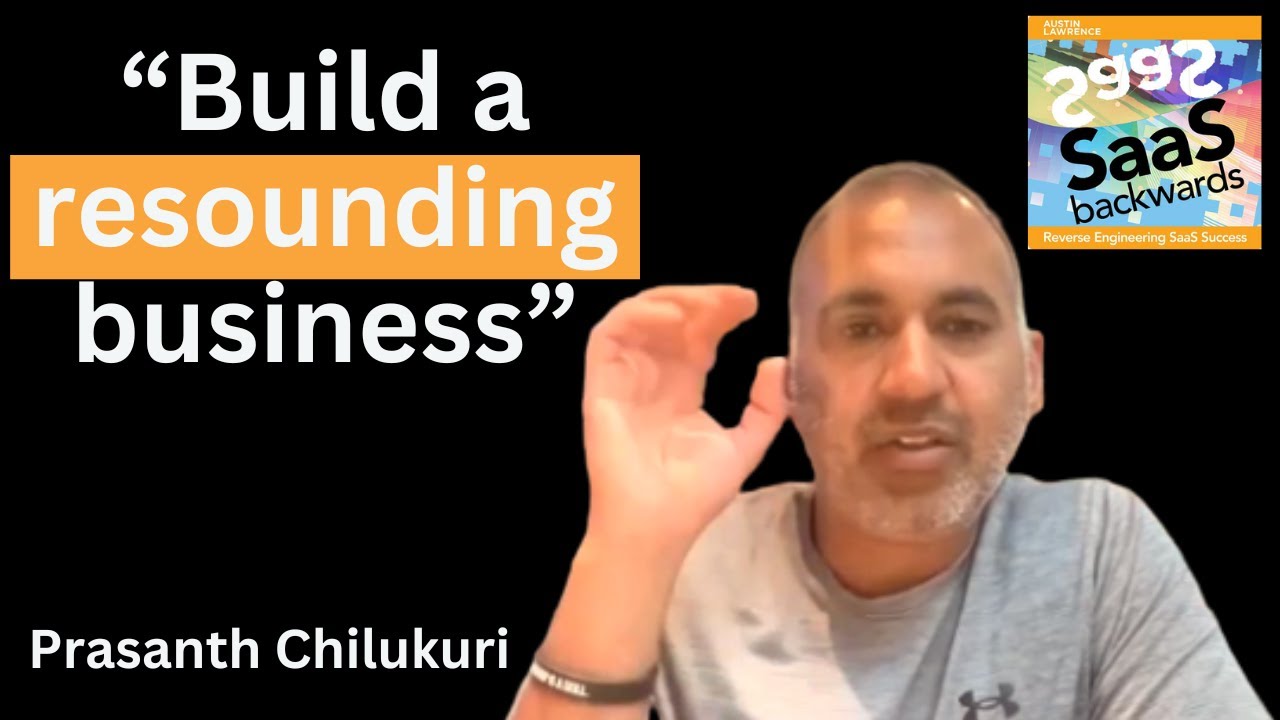
The person behind the forecast
Houston remains his base. His firm’s biography includes an enthusiasm for Porsches, a fondness that fits rather neatly beside an automotive software company in the family album. It also describes his devotion to being a father. These details give the public business profile a little welcome texture: cars, children and the practical challenge of distributing one person’s time.
His 2022 departure announcement makes that challenge unusually visible. He could value what he had built and still change his daily relationship with it. Entrepreneurs are frequently praised for giving a company everything. Chilukuri’s decision invites a less automatic definition of success, one that permits a founder to take stock of the people waiting outside the office.
That concern also belongs beside his leadership advice. In discussing Tekmetric, he emphasized kindness toward employees, investors and customers. It was a working preference for how people should be treated across a business. Civility is inexpensive to recommend. Practicing it while a company grows requires rather more attention than putting it on a wall.
A builder, still tinkering
By August 2026, Chilukuri was discussing a new set of experiments: AI tools, the changing habits of work and an attempted tutor for his daughter. He had started building something tailored to her interests, then paused it. The unfinished project is a pleasingly ordinary detail in a conversation about technology that promises to do practically everything.
He also described working with eight Soul Street portfolio companies as they explored AI in their products and operations. Here, his position was candid: he was learning alongside them. The experienced founder had encountered a subject that required him to be a student again. That admission gives his advisory role a useful boundary.
Family commitments still influenced the schedule. A child’s practice or event could interrupt the tinkering, leaving him to return later. The old question of attention had followed him into the new chapter. There were more tools available, more experiments to try, and still only so many hours.
For Chilukuri, the continuing work is to choose where those hours belong. A repair shop, a young software business and a family each make their own claims on the calendar. He has helped build systems for the first, now backs people building the second, and has publicly made more room for the third. Even a very good spreadsheet needs someone to decide what counts.