David Little learned an expensive lesson about growth before he bought the company. After he became president of the Houston industrial supplier then known as SEPCO, an oil downturn forced him to reduce its workforce from 250 people to 150. A business could have customers, products and a long history, and still find itself at the mercy of a market it could not control.
He remembered the experience in unusually plain language. There was no elaborate management vocabulary to soften it. His response was to build a business with more ways to earn its living: more products, more services, more reasons for a customer to call.
“I knew I never wanted to do it again.”
David Little, recalling the early workforce cuts, 2014
Four decades after Little acquired control of SEPCO, he remains chairman, president and chief executive of its successor, DXP Enterprises. In 2025, the company reported approximately $2 billion in sales. The distance between those two moments is the story of an accountant who became an owner and kept enlarging the job.
A ledger before a leadership title
Little graduated from Texas A&M University in 1974 with a business administration degree in accounting. He began at Price Waterhouse as a staff accountant, then joined Southern Engine and Pump Company in 1975. His route upward passed through the controller’s office and the finance vice presidency before he became president in 1983.
Those early jobs place an interesting emphasis on his career. Before he was responsible for selling a vision, he was responsible for recording what the business actually did. An invoice has little patience for charisma. Money tied up in inventory remains tied up, however stirring the speech at the sales meeting.
Accounting experience does not explain every subsequent decision. It does give the story a useful starting point: Little came to leadership through the machinery of the business itself. He had worked inside the organization for eight years before becoming president. By the time he acquired a controlling interest in 1986, he had spent eleven years there.
The company itself was older by several generations. Charles A. Levins had founded Southern Engine and Pump in Houston in 1908, serving farmers. George Allen, Levins’s grandson, later led its expansion. Little therefore inherited an operating business and a history of adaptation. His task was to decide which parts of that inheritance could carry a much larger enterprise.
What else does the customer need?
When Little led the 1986 leveraged buyout, annual sales were about $20 million. The distinction between running a company and owning it had become personal. Decisions about debt, product lines and expansion would now carry a different weight.
During the following years, the company moved further into bearings and power transmission and developed supply chain services. These additions changed the scope of a customer relationship. A supplier already trusted with one industrial requirement could ask to handle another. Growth could come from understanding more of the same customer’s operation.
It is an unglamorous proposition with considerable practical appeal. A purchasing department has to coordinate orders, invoices, specifications and deliveries. Each additional supplier brings another relationship to administer. A distributor that can take on more of that work offers something beyond another item on a shelf: fewer separate arrangements to keep straight.
There is a limit, of course. A wider catalogue is useful only when the company can support what it sells. Knowing a product number and knowing how a product behaves in a plant are different accomplishments. Little’s expansion raised the burden on the organization along with the opportunity. Every new category required the company to earn credibility again.
In 1996, the business became publicly traded under the DXP Enterprises name. The initials stood for Distribution Experts. The broader name matched a company whose work had spread beyond its original pump identity. A business card is a small piece of paper; changing the promise printed on it can be a substantial undertaking.
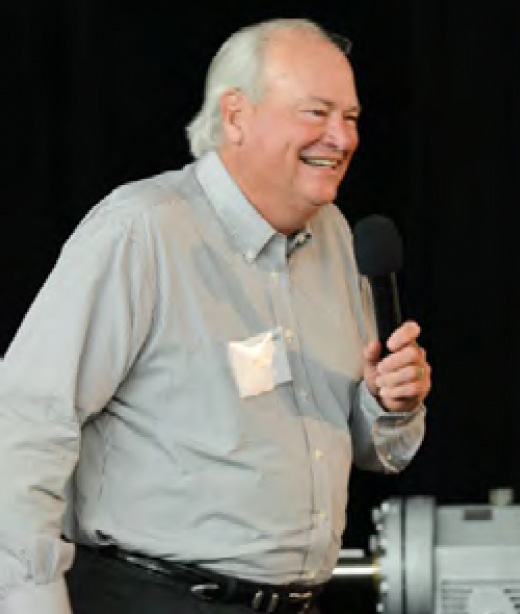
The appeal of an orderly storeroom
Supply chain management sounds remote until somebody needs a part. Then questions become immediate. Is it in stock? Who ordered it? Is there another one at a different facility? How long will replacement take? A storeroom can turn into a surprisingly expensive guessing game.
DXP’s supply chain services cover inventory and storeroom management, procurement and analytics. The offering includes a single corporate point of contact with local support, product standardization and performance tracking. These are the administrative details that turn the idea of supplier consolidation into something a customer can use.
This side of the business helps explain the logic of Little’s broader approach. The customer has a continuing operation to run. Equipment purchases are one part of it; replenishment, maintenance and purchasing decisions keep arriving afterward. Helping manage that recurring work gives the distributor a role that lasts beyond a transaction.
The attraction is easy to describe. Delivering it consistently is harder. A company can centralize purchasing and still create new complications if its local response deteriorates. The tension between scale and proximity runs through Little’s business: accumulate enough resources to handle more work, while remaining useful to the person waiting for an answer.
A family connection, a public obligation
Little’s tenure has also created a company with visible family connections. His son, Nick Little, is chief operating officer. Nick’s career at DXP began as an application engineer and progressed through sales and operations roles before his appointment as COO in January 2021.
That path puts a second Little in the daily work of execution. Nick’s responsibilities include sales, operations, inventory management and procurement. These are precisely the areas where an acquisition strategy has to become a functioning business.
Family continuity sits alongside public accountability. David Little combines the chairman and chief executive roles. DXP’s 2026 proxy describes a six-member board, with four independent directors and two employee directors: Little and chief financial officer Kent Yee. The board’s committees consist of independent directors.
For a reader assessing his record, both arrangements matter. Long tenure brings experience and concentrated authority. Independent oversight provides a formal structure for reviewing management. Neither fact cancels the other. They belong in the same account of how Little’s enterprise is governed.
Three businesses, one continuing test
By 2025, DXP employed 3,286 people, including teams in the United States and Canada and smaller groups elsewhere. Little’s organization had become far more geographically dispersed than the business he joined. The modern challenge is keeping the parts coordinated while they serve different customers and markets.
The company reports through three segments: Service Centers, Innovative Pumping Solutions and Supply Chain Services. Their second-quarter 2026 sales show how the work is distributed. Service Centers remains the largest, while pumping systems and supply chain work contribute distinct streams of revenue.
Where the work turns into revenue
The latest reported quarter produced $576.5 million in sales, up 15.6 percent from a year earlier. Acquired businesses contributed $49.8 million. That distinction matters because buying revenue and generating growth within an existing business pose different management tests. Little’s strategy requires attention to both.
Size also brings financial obligations. At June 30, 2026, DXP reported $842.5 million of total debt and $226.6 million in cash. A growing distributor still has to finance inventory, absorb acquisitions and collect what customers owe. Little’s first profession remains relevant to his present one. The ledger has followed him all the way upstairs.
For the full year 2025, DXP earned $88.7 million in net income and generated $54 million in free cash flow, defined as operating cash flow less capital expenditure. These figures describe different things. Profit measures earnings after expenses; free cash flow shows what remains from operating cash after investment in the business. Reading them together gives a fuller picture of the demands placed on Little’s expanding organization.
That is the less theatrical part of a long acquisition career. Announcing a transaction takes a day. Turning a collection of businesses into dependable earnings and cash requires work across many reporting periods. The customer, meanwhile, continues to expect the right part.
Water, and the next place to grow
In August 2026, DXP acquired Mequipco, a Calgary-based representative for mechanical equipment used in municipal and industrial water and wastewater systems. The business operates from three locations serving Western Canada. Little described the deal as a base from which to expand DXP Water in Canada and the United States.
It is a small acquisition beside the parent company’s scale, which makes it revealing. The attraction includes technical sales knowledge, established supplier relationships and access to a particular geography. Those capabilities are difficult to reproduce simply by opening an office and hanging a sign.
The water business also gives an old story a new setting. Southern Engine and Pump began by helping move water for agriculture. DXP’s present expansion addresses municipal and industrial systems across a wider territory. The applications and ownership have changed; the need for equipment knowledge remains familiar.
Little’s more recent public commitments extend to helping customers reduce their environmental footprint through more efficient solutions. His stated ambition continues to concern the business around him: serve more requirements, improve operations and find places where DXP’s technical capabilities can travel.
There is no tidy finish to that work. Each acquisition adds another set of promises to keep. Each new market asks whether the organization can deliver as well as it can expand. For David Little, who arrived to work on the accounts in 1975, the question has grown considerably. It still comes down to whether the business works when a customer needs it.
Follow the work
Career reading, company updates and public profiles.