A pump is an oddly revealing purchase. On a quotation, it is equipment with a price and a delivery date. Inside a plant, it belongs to a system of pipes, motors, controls, spare parts and people who will eventually have to repair it. The invoice captures one event. The customer has to live with everything that follows.
DXP Enterprises has spent much of its history expanding into that “everything.” It sells industrial equipment, designs pumping packages, repairs machinery and helps customers manage the supplies that maintenance crews need. The business becomes easier to understand when you stop looking at the catalog and start looking at the interruptions.
- Three ways in: local parts and service, engineered pumping systems, and outsourced maintenance supply chains.
- The customer: industrial operators and municipal water businesses with equipment to keep working.
- The tradeoff: broader capabilities bring acquisition costs and potential friction with suppliers.
The part is only the beginning
In 1908, Charles A. Levins founded Southern Engine and Pump Company to bring pumping technology to farmers around Houston. His grandson, George Allen, took over in 1957. The company expanded beyond agriculture into oil and gas, manufacturing and municipal utilities. David Little became president and CEO in 1983.
A more revealing turn came in 1990. According to DXP’s history, customers wanted greater supply-chain efficiency and a consolidated supplier. The company added bearings and power transmission through acquisitions and launched Supply Chain Services. Customers were asking it to handle more of the purchasing problem. In 1996, it went public and adopted DXP, short for “The Distribution Experts.”
Today, its Service Centers sell the everyday machinery of industrial work: pumps, bearings, hoses, metalworking supplies and safety equipment. Innovative Pumping Solutions handles custom pump packages, remanufacturing and water-related equipment. Supply Chain Services reaches into procurement and storeroom operations. These are different routes into the same customer’s working day.
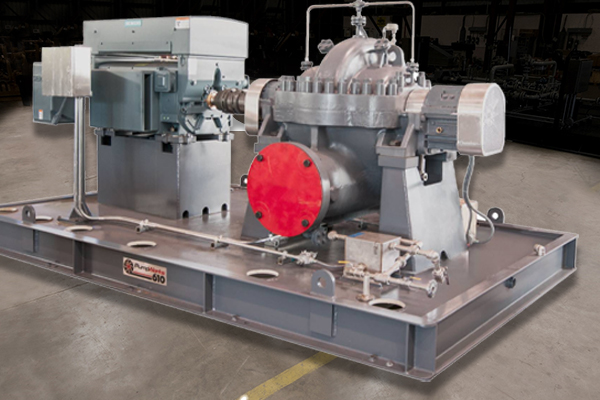
The expertise matters because a pump order can require more than matching a part number. DXP’s engineering operation integrates equipment, piping and controls. Its Katy facility performs fabrication, assembly and testing in-house. Repair continues the relationship: the company says it services equipment regardless of where it was purchased. It also advertises a foundry for replacement parts no longer made by the original manufacturer.
When the distributor moves into the storeroom
Consider the difference between delivering a bearing and managing the room where bearings are kept. The first is a transaction. The second involves quantities, replenishment, records and responsibility. DXP’s integrated supply offering combines storeroom and inventory management, procurement, and MRO analytics. MRO means maintenance, repair and operations: the supplies that support production.
Its programs include inventory tied to work orders, procedures for critical spares and point-of-use vending. The intended shift is from reacting to shortages toward planning maintenance supplies. That is an operating proposition, rather than a promise that every customer will achieve the same savings.
There is software here, too. Chase CMMS began as a client/server application in 1999 and later became a hosted maintenance-management service. DXP offers it independently or within a supply-chain implementation. This is a useful detail: an industrial distributor can develop software because maintenance creates information problems as well as mechanical ones.
DXP describes its employees as “DXPeople” and stresses technical problem-solving. That company language fits the proposition: someone must understand both the component and its application. Against local specialists, catalog sellers and equipment manufacturers, DXP offers a combination of product breadth, engineering and ongoing support. Which combination matters depends on the job.
The supplier breakup
Getting closer to customers can create distance from suppliers. DXP’s history contains a particularly sharp example. It acquired B27, a pump and integrated flow-control business, in January 2014. In September 2015, DXP announced that arbitration with ITT Goulds had ended with notice to terminate distribution agreements.
DXP said the dispute involved its B27 acquisition and disagreements about products covered by the agreements. It also said deteriorating relations had preceded the purchase. This is DXP’s account of the conflict, but the business tension is plain: a distributor expanding its manufacturing capabilities can unsettle the companies whose products it sells.
“We build deep, solution oriented relationships with our customers.”DXP’s stated approach, investor relations website
The period had measurable costs. For 2015, DXP reported $12.3 million in B27 working-capital dispute payments and associated legal fees. Separately, it recorded a $67.6 million noncash goodwill impairment tied to B27, primarily blaming deteriorating oil-and-gas conditions. Those are different things: cash spent resolving disputes, and an accounting reduction in acquisition value. Neither belongs in a frictionless growth story.
Buying the next set of skills
Acquisitions remain part of the strategy. In January 2026, DXP announced purchases of PREMIERflow and Mid Atlantic Storage Systems, adding integrated fluid-handling and liquid-storage capabilities. In August, it announced Mequipco, a Canadian representative for municipal and industrial water and wastewater equipment. That deal added three Western Canadian locations.
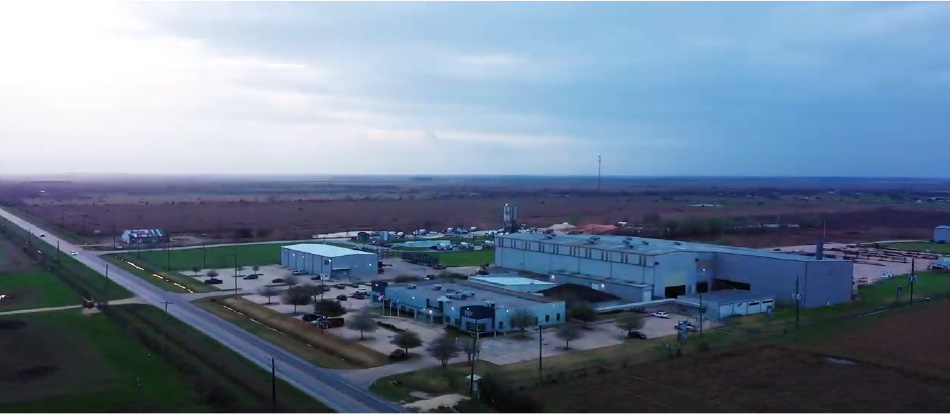
The scale has changed considerably. DXP reported $2.016 billion in 2025 sales. Second-quarter 2026 sales reached $576.5 million, up 15.6% year over year. Growth includes acquired businesses, so these numbers measure the expanding group rather than an unchanged collection of branches.
Start with the interruption
The useful lesson is to examine what happens around a purchase. Who selects the equipment? Who repairs it? Who knows whether the spare is available? DXP has built businesses around those adjacent questions. A buyer can use the same questions to decide what help to seek.
That approach has limits. A simple, infrequent order may need little coordination. Embedded supply programs need sufficient complexity to justify them; acquisitions need integration and capital. The attraction of DXP is clearest where equipment, expertise and availability are entangled. In that setting, the person selling the part has a reason to stay interested after it arrives.