The revealing moment in Postscript’s story is a sale it recommended undoing. In a published Dr. Squatch case study, a browse-abandonment experiment failed to produce a statistically significant lift over the control. Postscript suggested returning that flow to marketing alone, saving the soap company money. “We’re never pushed towards something that we don’t really need,” said lifecycle marketer Andy Hamm.
That is an unusual detail to find in a software sales pitch. It also gets to the central problem of selling through a phone: a purchase after a text does not necessarily mean a purchase because of a text. Postscript’s business increasingly depends on making that distinction useful.
- The customer: ecommerce brands, with deep roots in Shopify.
- The job: turn subscriber permission into purchases and repeat business.
- The wager: customer conversations give AI better material than clicks alone.
01 First, own a very small room
Postscript was founded in 2018 by Adam Turner, his brother Colin Turner, and Alex Beller. Adam and Beller had worked together at StackCommerce, where they saw email engagement weakening while mobile engagement grew. Their opening was specific: help Shopify merchants reach customers through text.
A narrow market gave the company something useful to learn. A store already knows what someone ordered, browsed or left behind. Connect that information to messaging and the same software can welcome a subscriber, recover an abandoned cart, announce a product or suggest another purchase. The expertise sits in connecting those moments, then measuring what follows.
It joined Y Combinator’s Winter 2019 batch. A $35 million Series B followed in March 2021; a $65 million Series C, led by 01 Advisors, arrived in June 2022. Today, Postscript says its SMS product serves more than 20,000 brands. Its customers range from Dr. Squatch and Caraway to Ruggable and Jones Road.
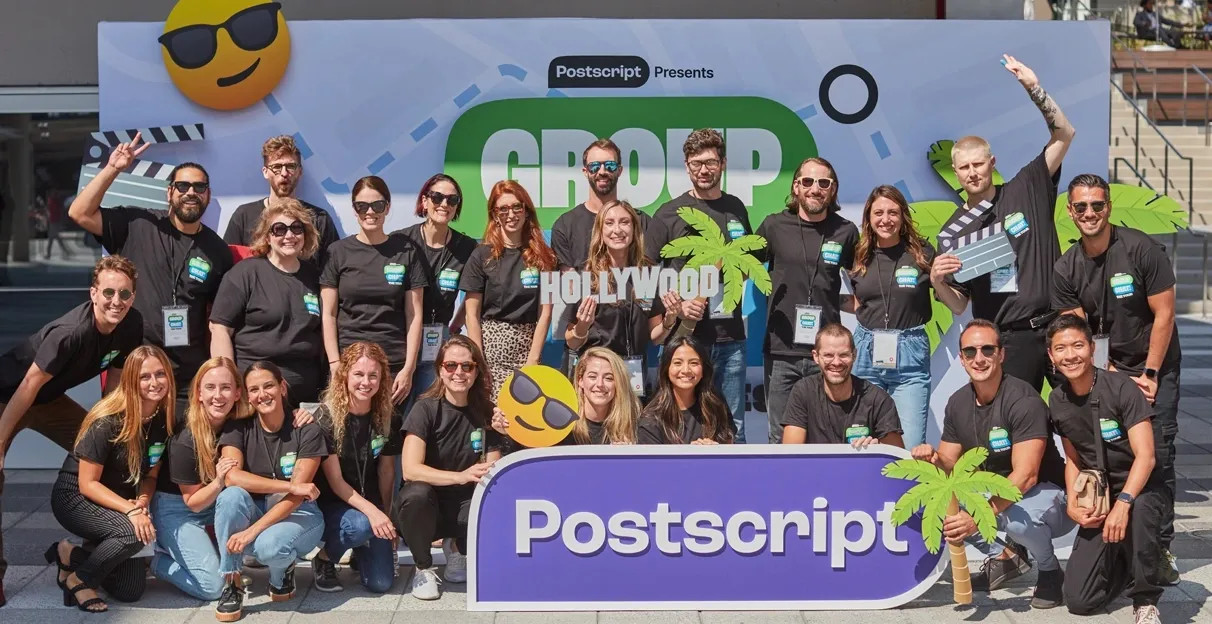
The team works remotely. Its values spell FEACH: Fearless, 80/20, Animal, Customer First and Humility. The memorable bit is 80/20: get most of the value with a fraction of the effort, ship, then learn. It is an approach that suits messaging, where an experiment can be smaller than a paragraph.
02 The reply is the interesting part
Sending an announcement is the straightforward job. Handling the reply is where Postscript has expanded. Its SMS Sales offering puts trained associates into customer conversations, assisted by AI. In the company’s Caraway example, adding sales conversations produced a reported 11% increase in total store revenue. That is a customer result, not a promise for the next cookware brand.
Shopper takes the idea further. Its AI agents use browsing, purchase history and conversations to choose messages and respond to questions. Brand Center supplies the instructions: voice, product information, approved offers and language to avoid. Difficult service issues can become tickets in Gorgias or Zendesk, carrying recent conversation context with them.
Infinity Testing tackles a different bottleneck: the marketer can only write and compare so many messages. It generates variants, tests them and updates its model as results arrive. The practical attraction is less time spent setting up another tiny copy experiment. A control still matters. More alternatives create more opportunities to learn, provided enough customers pass through the test.
A purchase after a text does not necessarily mean a purchase because of a text.THE MEASUREMENT PROBLEM
The onboarding work matters as much as the generated sentence. A brand has to decide what its assistant knows, which offers it may make and when a human should take over. That makes Postscript partly a tool for expressing operating judgment. A useful product recommendation requires an accurate catalogue; an appealing discount still needs permission from the person responsible for margin.
03 The bill has a second line
Postscript sells subscriptions and message usage. Its published Growth plan costs $100 a month, with SMS at $0.008 each before carrier fees. Professional costs $500, with a lower SMS rate. The separate AI plan is listed at $699 monthly plus usage. The subscription buys access; sending creates another bill.
Illustration using published rates on October 26, 2026. Longer messages can use multiple billable SMS segments.
That cost structure rewards restraint. Before adding another campaign, ask what extra gross profit it can plausibly produce. Carrier charges, discounts and optional services belong in that calculation. A healthy-looking revenue chart can conceal expensive purchases. The sensible unit of judgment is the customer relationship over time, including unsubscribes and repeat orders.
Postscript also sells help doing the work. Postscript Plus supplies managed strategy and execution. Fondue, acquired in 2023, adds cashback as an alternative to coupon incentives. Its integration lets merchants put cashback offers into signup forms and message flows. The proposition reaches beyond copywriting into the economics of getting someone to buy again.
04 A bigger inbox. A bigger contest.
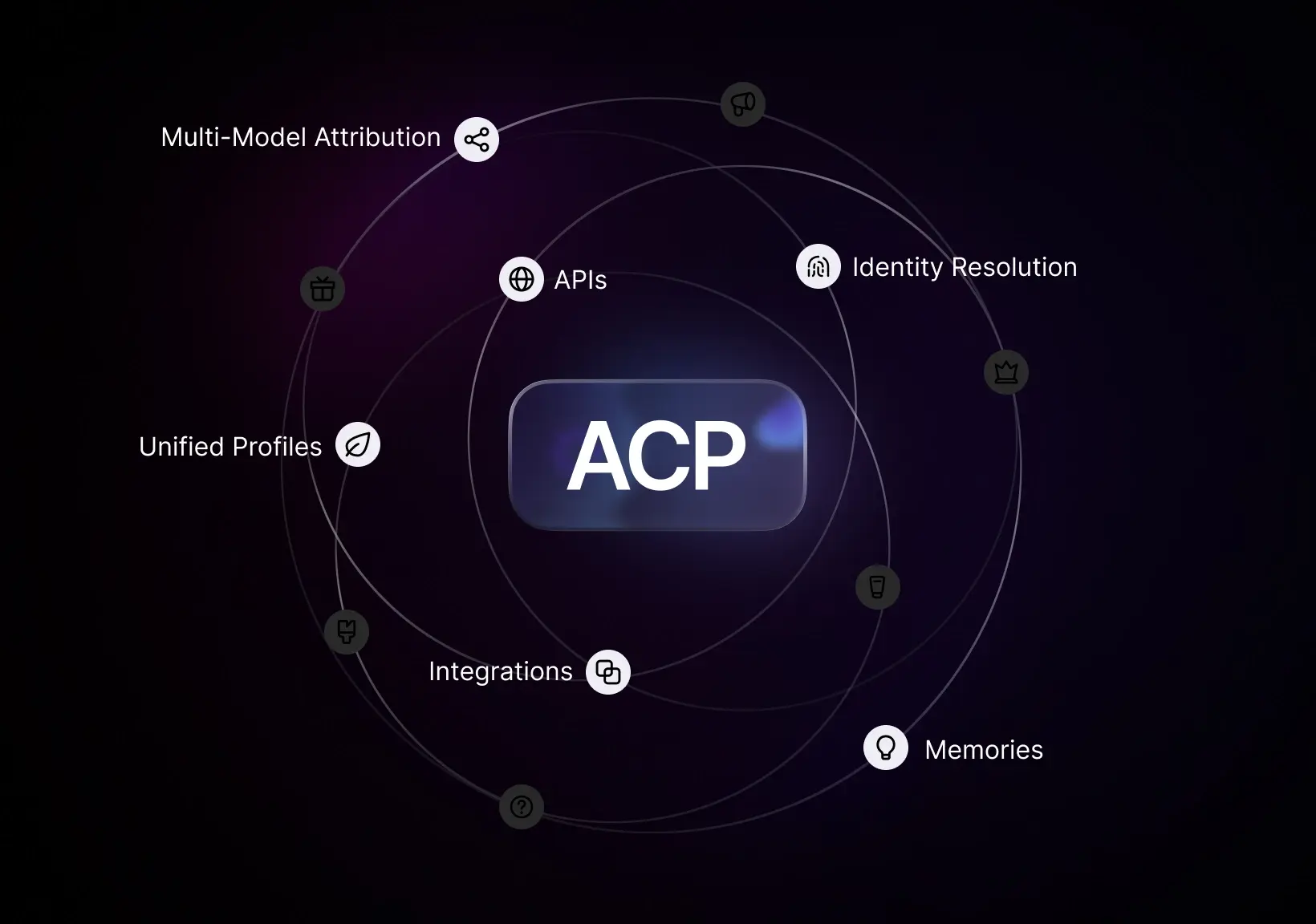
The current website describes a broader retention platform spanning SMS, RCS and email. Underneath sits the Agentic Context Platform, or ACP, which brings brand and customer information together. The email pitch is that a conversation over text should inform the next email. Its rollout deserves precision: Postscript promotes Email, while its pricing page still directs visitors to a waitlist.
This expansion puts it into a wider contest with retention providers such as Attentive and Klaviyo. Postscript’s case rests on its commerce experience, testing tools and accumulated customer context. A buyer should evaluate those against existing workflows and the cost of moving them. More channels are useful when they share useful knowledge.
There is also a quieter customer-acquisition business here. Postscript offers website popups, checkout collection and Onsite Opt-in, which keeps shoppers on the merchant’s site during signup. Getting permission is an early hurdle, before any message can earn its keep. For an established store, improving that step may be a more concrete project than rewriting every campaign. The company’s published tools span both jobs: building the audience and making better use of it.
Compare revenue per subscriber, costs and unsubscribes before expanding.
For a merchant, the portable lesson is modest. Start with a customer moment you understand. Preserve a comparison group. Count the added cost. A small audience may make differences hard to detect; weak product demand or poor margins can overwhelm clever messaging. The failed test near the beginning offers a useful ending: sometimes the profitable next message is the one you decide against sending.
Keep the conversation going
Explore Postscript, pricing, the blog and product updates.
Follow on LinkedIn, X, Instagram and Facebook. Watch the YouTube channel or the AI launch and demo.