Piyush Gupta’s first export to India through a government trade mission came to about $1,000. A modest number, by Silicon Valley’s preferred units of measurement. You could put it on a presentation slide, though you might need to resist adding three imaginary zeroes. Gupta had a more useful response. He thanked the person who had helped arrange the introduction.
“Thanks Daniel! You are a great help,” he wrote. His company, Ambrosia Systems, had found a distributor. There was a purchase, a conversation, and the possibility of more business. In the machinery of international expansion, someone had finally turned a cog.
That little exchange is a good place to meet Gupta. He is a San Francisco founder with an engineering background and a public commitment to affordability. His working life stretches from technical roles and product management to running a company he started in 2016. Across that history, the interesting question is how an idea becomes something another person can actually use, buy, and obtain.
A purchase order with a passport
The Indian introduction began with practical assistance. In 2022, the U.S. Commercial Service connected Ambrosia with specialists in India. Advice on entering the market preceded participation in a virtual trade mission, alongside nine other companies. Meetings with potential business partners followed. Collateral Medical Pvt. Ltd. bought approximately $1,000 worth of devices.
There was also discussion of a larger partnership that might generate another $50,000 in exports. Gupta’s own account preserved the conditional: “if all goes well.” Those four words deserve their place in any business biography. They leave room for the awkward interval between a promising conversation and money arriving.
A small first order has a particular narrative advantage. It makes the work visible. There is a buyer at the other end, an introduction that mattered, and a transaction with an amount attached. “International expansion” can sound suspiciously like a place one visits on a slide deck. Here, it had a receipt.
The years before the founder title
Gupta studied for a B.Tech at the Indian Institute of Technology, Roorkee. His career history begins with a system specialist role at ZEISS in 2001, followed by engineering work at ScImage from 2004 to 2011. The next moves brought different kinds of responsibility: founding member and chief technology officer at PatientKey, founder of InsideLook Corporation, and senior director of product management at Kaiser Permanente.
A consulting stint at Abbott followed in 2016. In September of that year, his career record places the start of his role as Ambrosia’s founder and CEO. The sequence matters because it gives the eventual company a working prehistory. Before the chief executive title came systems, engineering, technical leadership, and product decisions.
These are jobs with different vantage points. An engineer looks closely at the thing being built. A product manager has to consider the person expected to use it. A founder takes responsibility for the business around it. Gupta’s résumé moves through all three. It is an unusually useful route for someone whose company has to join electronics, software, and distribution.
By the time Ambrosia appeared, entrepreneurship was already on his employment history. InsideLook preceded it. So did a CTO position at an earlier venture. The 2016 departure was a new company, but the founder role had an antecedent. Gupta had already spent time on both sides of the line between building a product and being responsible for the organization that builds it.
He is also a co-inventor, with Manish Dinkarrao Kulkarni, of a mobile location and time-sensitive messaging platform granted a U.S. patent in August 2015. The idea involved screens on vehicles displaying information appropriate to a location, including traffic information and advertisements. A moving vehicle could carry a message whose usefulness changed with its surroundings. It is an unexpected stop on the way to wrist-worn technology, and another example of his interest in where information appears.
The phone could stay behind
One of Gupta’s early design ambitions at Ambrosia concerned the smartphone. He wanted information to travel directly to a watch, without requiring the phone to sit in the middle. The technical problem involved putting NFC and Bluetooth capabilities into a small space. Former colleagues had considered that impractical, he recalled.
Ambrosia’s BluCon device provided the connection. The company built an electronic bridge that could pass information from an existing sensor to a smartwatch. That choice offers a compact illustration of Gupta’s engineering approach: work on the connection between things people already have, then make the resulting experience easier to live with.
The appeal of a watch is easy to understand without a technical diagram. A phone asks for a pocket, a bag, or a hand. A watch asks for a wrist. Moving a function between them can change the amount of attention a person has to give it. Much of consumer technology involves adding another screen to someone’s day. This particular design problem involved making one screen less necessary.
There is a certain satisfaction in this kind of engineering story. The dramatic object is a connection. The achievement is partly measured in something the user can leave behind. It gives the founder’s larger ambitions a physical scale: a small enclosure, a wireless link, and a wrist.
The price belongs in the design brief
Gupta describes affordability as one of the harder parts of making a product. It is a clear statement of priorities. Affordability arrives inside the definition of the problem, where it can complicate every elegant technical answer.
“Making expensive products is easy, making a product which people can afford is tough.”
Piyush Gupta
For a founder, a price is also a decision about the audience. It determines who can enter the conversation before any advertisement has done its work. Gupta’s insistence on affordability therefore gives the company’s international ambitions a practical test. Reaching a market requires a product people can obtain at a price they can consider.
That is why the distributor episode belongs beside the engineering. The wireless link addresses one distance, between a device and a watch. A business relationship addresses another, between a company in San Francisco and a buyer elsewhere. Both require an actual connection. An aspiration can travel the world without once encountering a customs form; a product has a less glamorous itinerary.
Other founders, other questions
Gupta also appears in the rooms where founders discuss the business of being founders. TiE Silicon Valley listed him among the entrepreneurs in an October edition of Funding Fridays. The program paired startups with Jyotika Gupta and Raj Shekhar Singh of z21 Ventures for individual meetings.
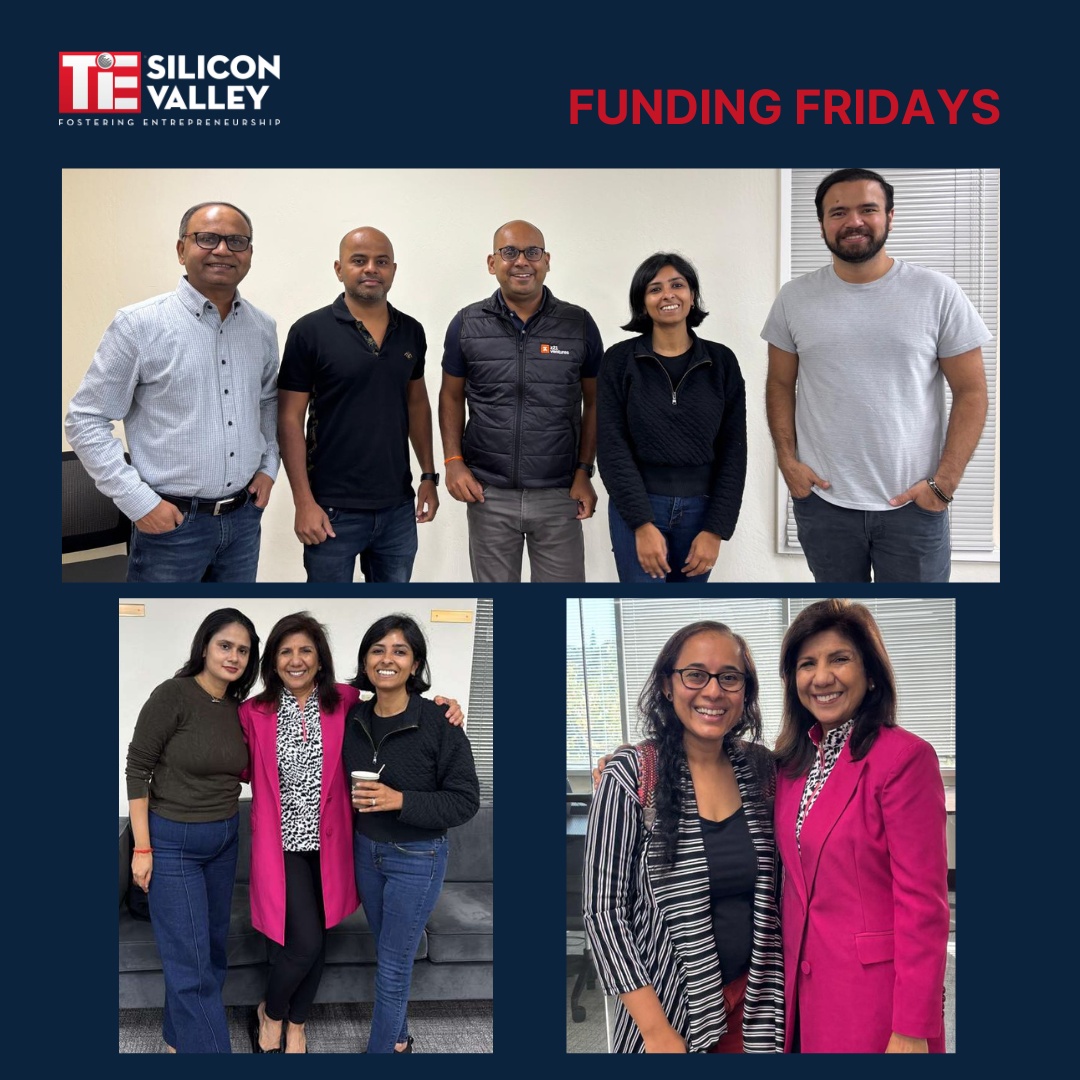
Other participants represented businesses including ElectricFish, Digitalapi.ai, Verbal, and Turiya AI. For Gupta, this places Ambrosia within a wider entrepreneurial community rather than a solitary-founder fable. The event centered on fundraising conversations and the way companies explain their plans to investors.
In a separate crowdfunding discussion, Gupta asked about the relative merits of platforms, what founders should watch out for, and how to market a campaign better. The questions were practical. They concerned choices, pitfalls, and execution. A founder with a technical background still has to investigate the machinery that finances the work.
His public writing adds another dimension. In an essay about Ambrosia’s business collaborations, he described an increased emphasis on partnerships beginning in 2023. He presented the platform as a way for other organizations to build services without starting their own development work from scratch. The argument extended his interest in connections from devices to businesses.
A booth, a conversation, another introduction
In September 2025, Gupta thanked visitors to Ambrosia’s booth at the IIT Bay Area Leadership Conference. His message was brief and outward-facing: appreciation for the people who stopped, looked, and talked. A conference booth is a very different setting from a product roadmap. Visitors can walk away while you are still explaining the second feature.
That is part of the texture of his story. The work appears in a succession of ordinary places: an engineering role, a product team, a distributor introduction, a fundraising meeting, a conference floor. Each asks for a different explanation of the same enterprise. Each puts another person in a position to say yes, ask a question, or keep walking.
Gupta’s career makes room for all of them. He has carried the founder title at Ambrosia since 2016, but the small episodes give it shape. There is the effort to simplify a device connection. There is the insistence that affordability is difficult work. And there is the note of thanks after an introduction produced an order.
The $1,000 transaction remains a fitting detail to keep. It has none of the decorative grandeur of a vast projected market. It gives us something firmer: a founder, a buyer, a purchase, and an opening for whatever comes next.