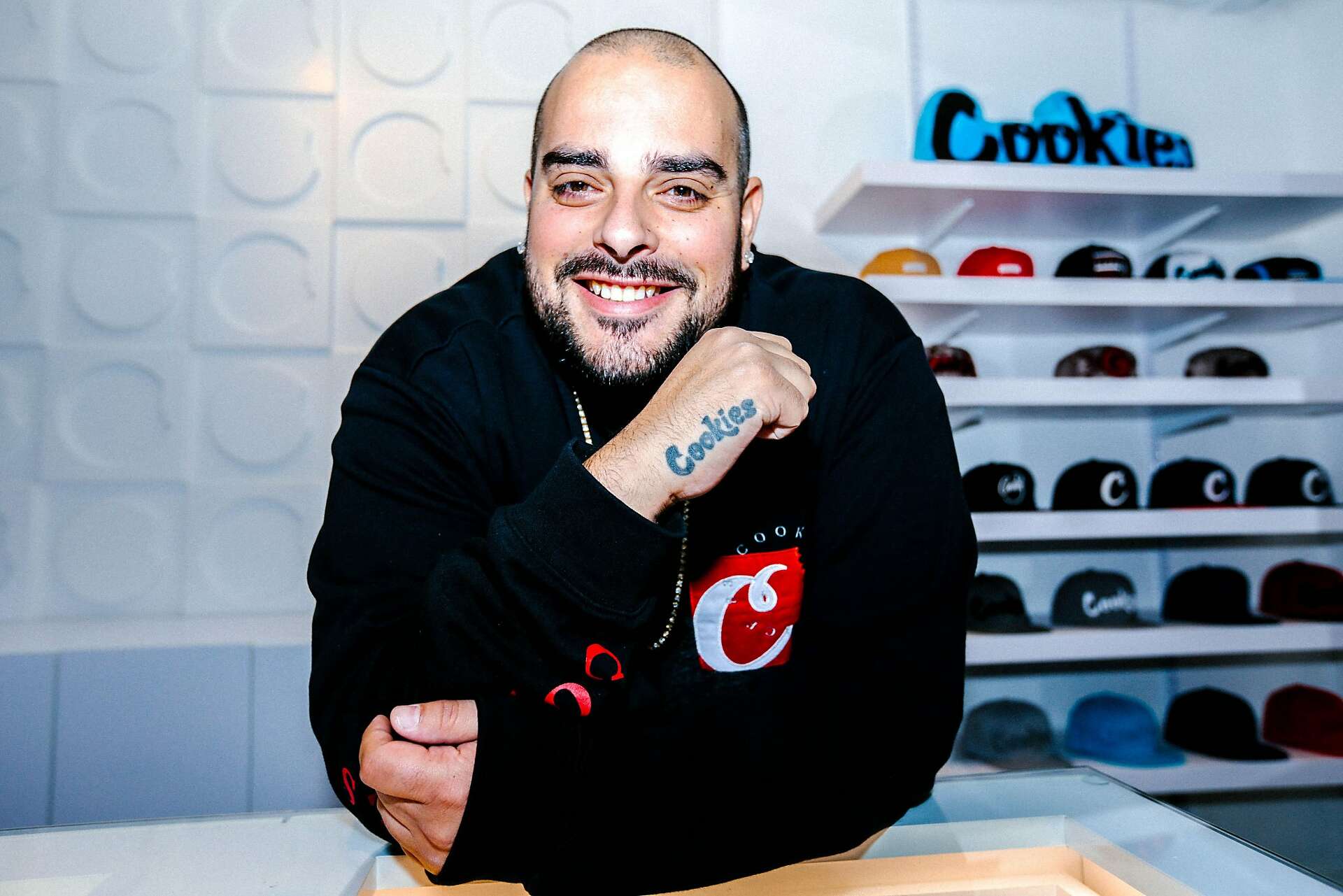
Before Berner had a company name tattooed on his hand, he had an early shift at Tully’s Coffee. He remembers getting up around five, taking San Francisco’s N Judah to work, then finding his friends after closing out the day to make music. Coffee paid for studio time and beats. There was also cannabis changing hands at the coffee shop, a detail he now recounts with a cheerful concession: “Sorry, Tully’s.” Customer acquisition was already occupying his attention, even if the job description said otherwise.
Years later, Gilbert Anthony Milam Jr. would put the same name on records, hoodies, storefronts and that hand. Cookies became the meeting point for pursuits that other people might have kept in separate folders. His listeners could wear the clothes. People buying the clothes could discover the music. A reputation built around cannabis could travel somewhere a bag of it could not. The connections were personal before they became a business strategy.
A neighborhood with two kinds of expertise
Born in San Francisco on October 27, 1983, Berner grew up in the Sunset District and attended Galileo Academy of Science and Technology before leaving school. His father worked in the restaurant business; his mother worked in recruitment. He credits his parents with teaching him to work for himself. In a city that supplied both an independent rap scene and an established cannabis culture, the ambition had several possible outlets.
He also did graffiti. The name Berner dates to those high-school days, when burning hash dropped from his joints and left holes in his clothes. It is a pleasingly unpolished origin for a name that would eventually appear on a business-magazine cover. Before he was choosing packaging, he was choosing a tag. His account of his artwork is modest: quick throw-ups, a practiced style, pencil and paper rather than grand murals.
Work at the Hemp Center dispensary gave him another education. He encountered customers, learned what they asked for and saw a market where recognizable branding was scarce. Nearby was Jai Chang, known as Jigga, whose expertise lay in cultivation and genetics. Their partnership joined two different abilities: producing something people wanted and making sure people knew whose product they were asking for.
The distinction matters to Berner. In describing the origins of Cookies, he has explicitly credited the growers rather than claiming to have personally bred everything carrying its name. His contribution was the naming, packaging, marketing and business. The early Girl Scout Cookies strain supplied a memorable introduction. The shorter Cookies name gave that reputation room to spread.
The hoodie could travel
In 2011, Cookies clothing appeared in the music video for “Yoko,” alongside a cast that included Wiz Khalifa, Chris Brown and Big K.R.I.T. A small clothing project had found a distribution channel with sound. The logo did not need a shop on every corner to start becoming familiar. It needed people who wanted to be seen wearing it.
There was a practical reason for making clothes, too. Berner was frustrated that other labels did not offer his size. Making his own answered a personal irritation and opened another business. He started shipping orders from his house. Eventually, the arriving UPS trucks were filling up with outgoing merchandise. A warehouse became the sensible response to a house that had acquired an unexpected career in fulfillment.
Clothing taught him lessons that rarely make it onto inspirational posters: deliver on time, fulfill orders properly and pay attention to the customer. A desirable logo is useful; a package that actually arrives is useful every day. Those habits crossed into cannabis retail as the businesses grew. His audience could admire the image, but the operation still had to keep its appointments.
A diagram of Berner’s own explanation: each part promotes the others.
A rapper who kept making records
Music was already a working life, not simply an advertising budget. His releases date to 2007, and the catalog grew through solo projects and collaborations. Working with Equipto connected him to the Bay Area’s independent tradition. Later records brought partnerships with B-Real, Cam’ron, Styles P, Young Dolph and Mozzy. These were sustained musical relationships, with joint projects rather than a collection of celebrity photographs.
Wiz Khalifa became a friend and an important connection through Taylor Gang. Berner’s music reached the Billboard 200 with projects including 20 Lights, Hempire, Gotti and From Seed to Sale. The titles make little effort to conceal the other occupation. For someone moving between studio sessions and product discussions, a neat separation would have been more artificial than the overlap.
The 2021 album Gotti offers a glimpse of how he approaches a project. He sought permission from John Gotti Jr. to use his father’s name; the resulting album incorporated previously unreleased audio connected to the federal case against Gotti Sr. Producer Cozmo helped shape the record, whose guests included Nas, Future and Rick Ross. Berner was still finding material and assembling collaborators while running a growing company.
Blue storefronts, local partners
By 2020, the Cookies tour bus was doing double duty. It carried a performer to shows and delivered the founder to store openings, wrapped in the same conspicuous blue as the brand. Customers lined up ahead of his arrival. He worked those lines, shook hands and sometimes invited people to breakfast. That is a labor-intensive approach to a ribbon cutting. It also explains why he talks about access in terms of people he actually meets.
The business could expand through partners rather than requiring Berner to own every building behind a Cookies sign. A network of licensed operators put the name into new markets, combining a recognizable identity with local facilities and retail operations. The founder supplied creative direction and product expectations while partners supplied their own capabilities. Each new location asked whether the reputation could survive being delivered by another team.
In 2022, he appeared on the cover of Forbes, becoming the first cannabis executive to do so. The photograph marked an arrival in a different kind of cultural room. The blue storefronts and the magazine cover were expressions of the same ambition: make the name recognizable enough that people would seek it out, then keep enough influence over what they found.
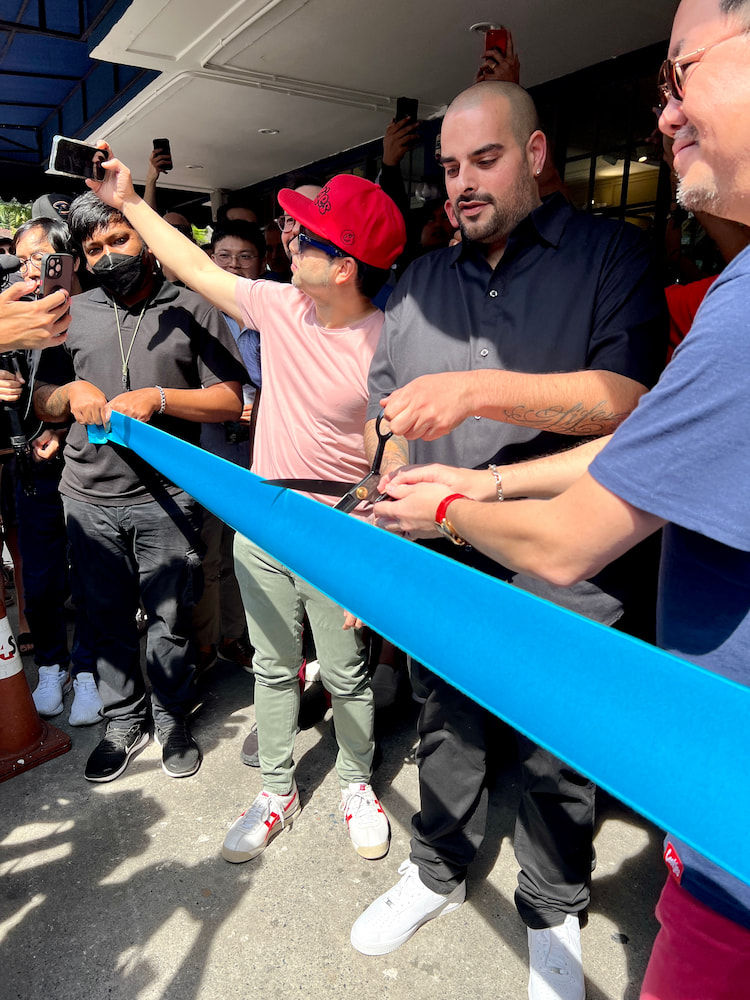
Bangkok made the partner model especially visible. At the opening of Cookies’ first Asian store in 2023, the festivities included dancers, drums and Muay Thai demonstrations. Josh Schmidt, a longtime friend with experience and connections in Thailand, helped bring the venture together with local partners. Berner credited Schmidt with imagining the opportunity before he did. Even a founder associated with relentless expansion sometimes needs a friend to say where the bus should go next.
Who gets to come along?
Access also carries a question of obligation. Berner has supported the Last Prisoner Project and spoken about helping people incarcerated for cannabis enter the legal business after release. In the case of Richard DeLisi, he described providing financial help and sitting down to discuss building a brand. The point, in his telling, was an ongoing place in the industry rather than a moment of publicity.
He has also described working with Shawn Richards on Berner’s on Haight, including training his partner and hiring staff together. His argument about social equity is concrete: a license alone does not supply operating knowledge or money. Teaching someone the business matters because that person can then create opportunities for others. The explanation sounds like a founder describing the useful parts of an apprenticeship he never formally had.
There is a protective streak in his view of growers. He talks about giving smaller cultivators and breeders a platform, and warns traditional operators about investors whose terms they may not understand. That concern sits alongside his own insistence on keeping a hand in Cookies. “Because no one could execute your vision like you,” he has said. For Berner, delegation seems to come with a long list of things he still wants to inspect.
“I’m never late. I’m always early.”
Berner, on showing up
The sample that almost went in the bin
One recent decision captures that habit. Blueberry Caviar, a collaboration with Jason Gellman of Ridgeline Farms, began with a selection that initially failed to impress the team. Berner went back through the samples in Los Angeles and picked it out. Gellman had bred the plant; Berner saw a product worth naming and releasing. The partnership echoed the division of work that had helped start Cookies years earlier.
By July 2026, he was recounting the disagreement with an extremely economical prediction: “Watch.” Blueberry Caviar had become a featured strain and reached markets including California and New Mexico. The anecdote reveals the pleasure he still takes in choosing something himself. A company can acquire more locations without making that little argument over a sample any less interesting to its founder.
His book Becoming Legend: The Billion-Dollar Blueprint to Be a Whale in a Sea of Sharks, published in March 2026, puts the accumulated business lessons into 272 pages. One chapter title supplies his preferred instruction: “Put Your Fingerprints on Everything.” There are risks in a company relying so closely on one person’s taste. There is also a reason his audience recognizes that taste in the first place.
He has talked about wanting to produce films and about planning a cannabis menu that could outlast him by generations. Yet the ambition he returns to is closer to home: leaving a business to his children. He has joked about his daughter becoming CEO, praising her ability to connect with people. After years spent getting the name into other people’s hands, he wants it to remain in his family’s. The tattoo, at least, presents no succession problem.
Keep following the thread
- Cookies · Cookies SF clothing
- Instagram · X · Facebook · TikTok
- Berner’s YouTube channel · Watch the 2026 High Times interview
- Spotify · SoundCloud
- Becoming Legend · The book conversation
- Berner at the Cookies compound, May 2026
- Inside the Bangkok opening · The graffiti name and the people behind the brand