At Figma, the company whose software lets designers work together, finance had a familiar collaboration problem. People outside the department needed numbers. Finance sent them manually. Headcount had to be reconciled. Someone did the collecting and cross-checking. The company could design together, yet planning still depended on a queue of requests.
- Pigment connects budgets, hiring, sales and supply-chain plans through shared models.
- Its customers include Figma, Unilever, Snowflake and Danone.
- AI agents now help analyze data and build models; people still own the assumptions.
Figma chose Pigment, replacing siloed Excel models and automating headcount reconciliation. That detail explains the appeal better than a page of software adjectives. A finance team that spends less time distributing information has more time to consider what the information means. The bottleneck was the handoff.
01 A company is a collection of connected bets
Consider a hypothetical sales target. Reaching it might require ten more account executives. Those hires need recruiting time, salaries and a period before they become productive. Revenue, headcount and cash now depend on the same assumptions. Put each plan in a separate file and the connections become somebody’s administrative job.
Pigment gives those connections a home. Its cloud platform imports business data, organizes it into models and lets teams adjust assumptions, compare scenarios and build reports. Finance can budget and forecast; HR can plan staffing; sales operations can allocate capacity and territories; supply-chain teams can test demand and inventory decisions. A change can travel across the model.
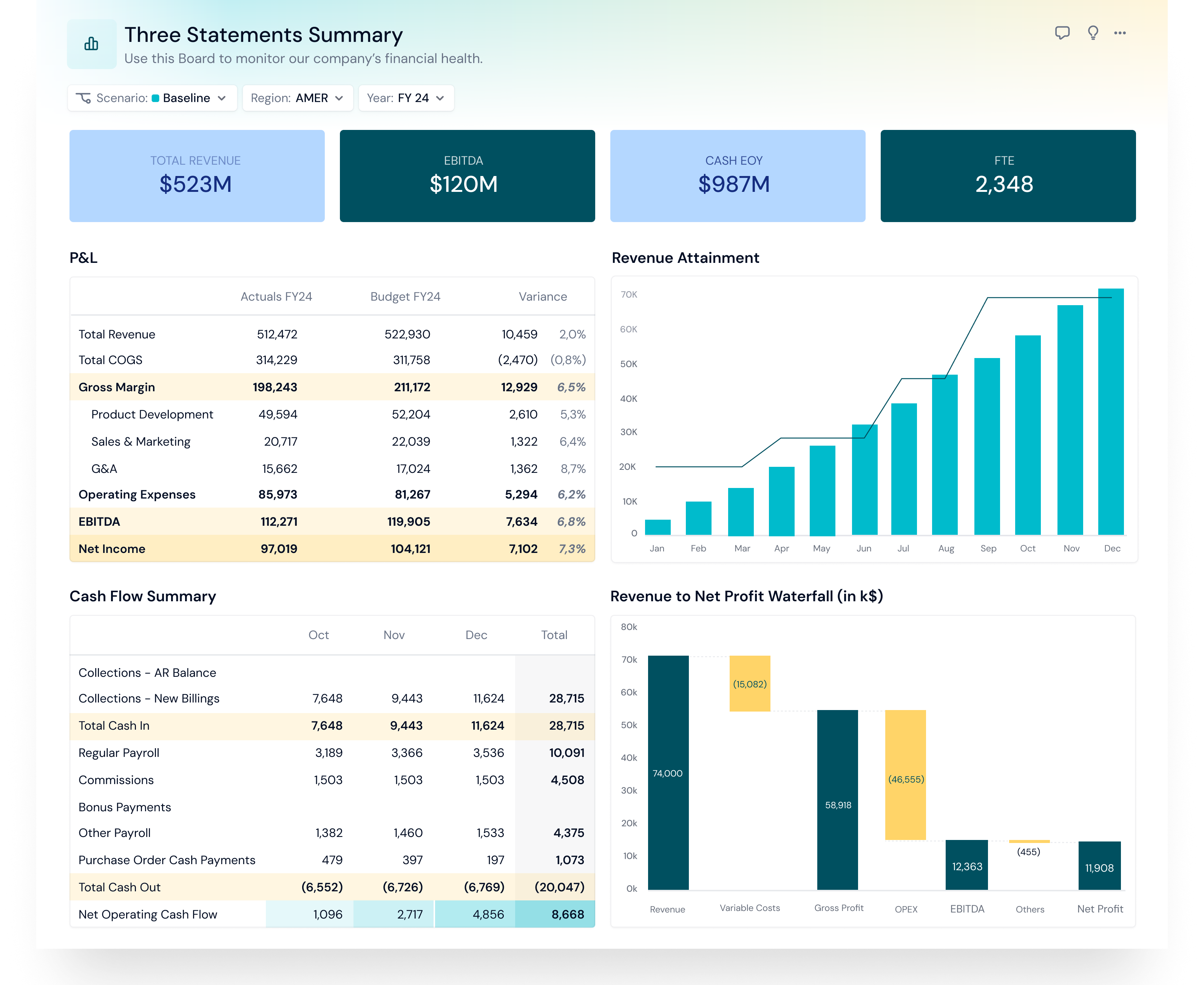
This puts Pigment in enterprise performance management, alongside alternatives such as Anaplan, Workday Adaptive Planning and Planful. Its pitch emphasizes flexible modeling, collaboration and governed AI. Accounting and ERP systems supply records; Pigment helps teams work through what might happen next. A dashboard becomes more useful when its audience can test the plan behind it.
02 The model has to bend
Eléonore Crespo and Romain Niccoli founded Pigment in 2019. Crespo brought experience at Google and Index Ventures; Niccoli had co-founded Criteo and served as its CTO. They describe the starting problem as a gap between ease of use and the power required by a complex business. Their ambition was to bring both into one planning platform.

Danone provides a useful test. Its existing setup supported an 18-month rolling horizon, but strategic decisions about factories and production lines stretched three to five years out. Spreadsheet inputs were too coarse, and collaboration was awkward. The team wanted control over the structure, calculations and presentation.
Working with Statera Consulting and Pigment, the team built a customized model over three months, including research, testing and rollout. The process sometimes involved testing ten versions in a day. This was hands-on organizational work: interfaces, training and persuading colleagues to use the system.
Strategic-plan preparation, provided everyone submits inputs on time. This describes one workflow, not a universal implementation result.
That condition does a lot of work. A faster model cannot make a colleague submit a missing assumption. Software can shorten the distance between inputs and an answer; the organization still has to supply the inputs.
03 Give the machine the model
Pigment’s AI strategy builds on that shared structure. The Analyst Agent examines business data and supports reports. The Modeler Agent, launched in March 2026, translates plain-language requests into models and applications. Custom Agents let organizations configure behavior and internal knowledge. The distinction is context: metrics, relationships and permissions already exist inside the planning environment.
“It’s like having a sparring partner in your back pocket.”Jack Silvert, Figma, on the Modeler Agent
September’s Frames announcement extended the idea to interfaces. Teams can describe a form, scenario planner or executive presentation while keeping it attached to live data and existing access rights. Pigment announced open beta for September 28. It also introduced an AI-guided free trial, giving prospective users a way to try a starter model.
There is an awkward wrinkle in the AI promise. Pigment’s October 2026 survey of 2,000 finance executives found that 83% said consumption-based AI spending had exceeded expectations. It also found that the most AI-mature organizations spent longer preparing executive reporting. This is vendor-sponsored research, but the tension is useful: generating more analysis can create more material to explain. The practical test is whether a team reaches a useful decision sooner.
Speed changes the economics of experimentation. If the first model takes less effort, teams can consider questions they previously postponed. But a quickly generated model still deserves inspection. A plausible formula with the wrong business assumption can produce a very polished mistake.
04 The price includes the people
Pigment sells subscriptions built from a platform fee, licenses and features. License categories depend on permissions: viewing, contributing data and editing model logic carry different roles. AI has its own credits, with agent consumption tied to task complexity. Buyers should scope the people, workflows and expected usage before comparing proposals.
Implementation belongs in that calculation. In August 2026, Pigment said partners led close to 90% of customer implementations. Deloitte, PwC and specialist consultancies sit in its ecosystem; Google Cloud supports infrastructure and distribution. Planning expertise and change management remain part of the purchase.
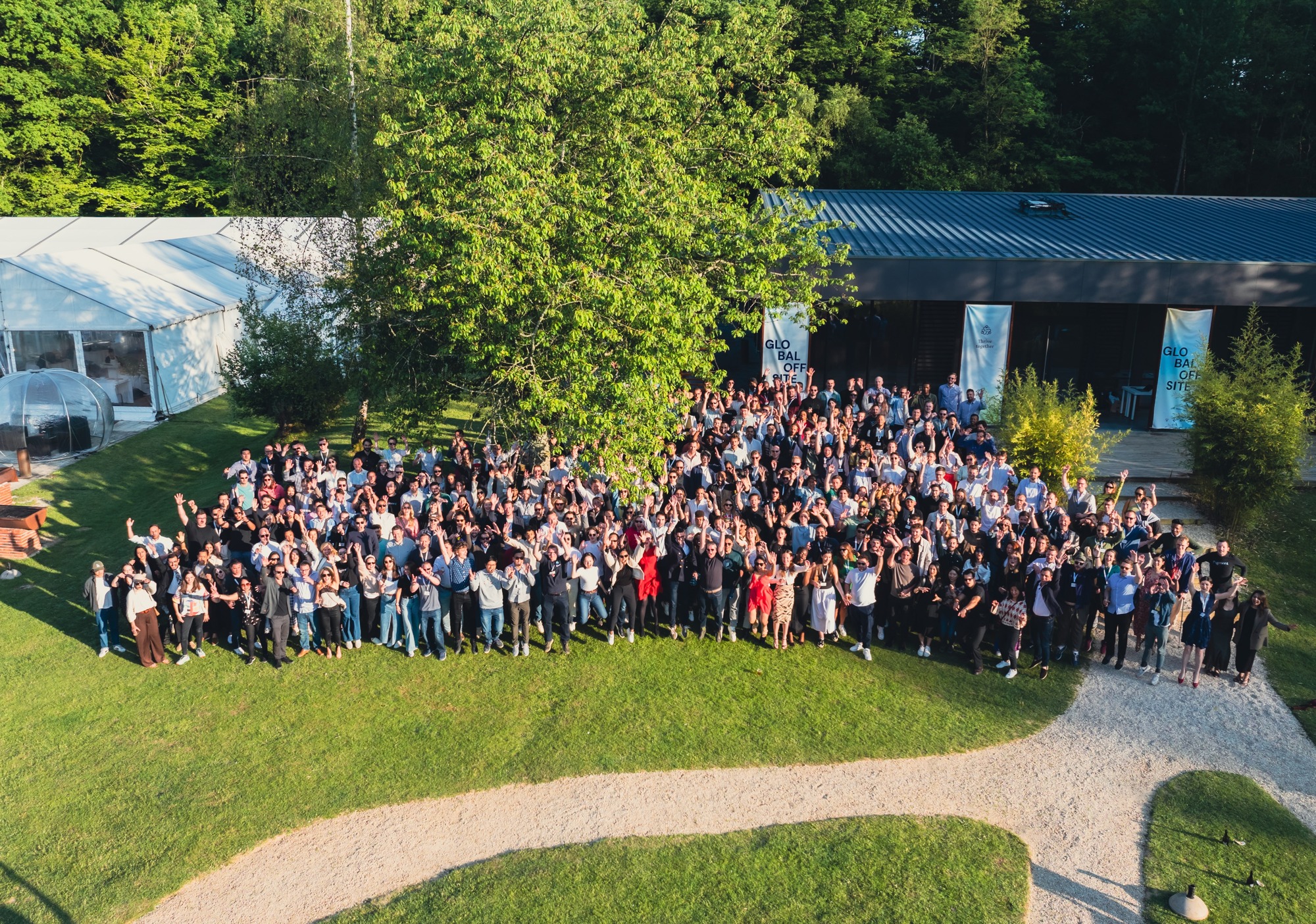
The company’s public culture makes a similar demand on people. Its values pair action and rigor with candid feedback. Employees are called Pigmenauts, and annual offsites bring them together. The cheerful name sits beside a serious operating problem: helping customers agree how a business works takes patience as well as technical skill. A shared model is also a negotiated account of reality.
Investors have financed the expansion, including a $145 million Series D led by ICONIQ Growth in April 2024. By March 2026, Pigment said it was approaching $100 million in annual recurring revenue. That is a subscription run rate, rather than an audited annual revenue figure.
A useful buying exercise is to bring finance, HR and sales into the same demonstration. Change a hiring date, then ask each team to trace the effect on its own numbers. Check who can see compensation data, who can change an assumption and how a change is recorded. The point is to test a real disagreement with real dependencies. A system earns its place when those colleagues can explain the result together and know which person is responsible for keeping each input current.
The useful lesson travels beyond software procurement. Pick one recurring reconciliation. Agree on definitions, name the owners and connect the inputs. Measure the time spent before and after. For a small, simple plan, a spreadsheet may remain sufficient. For a business whose departments keep repairing one another’s forecasts, the cost of those repairs is the place to start.