A root is a rather uncooperative business partner. It follows its own timetable, takes instructions from its surroundings and has little interest in a founder’s presentation. Pierre-Antoine Mariage has spent years building a company around the possibility of making that relationship more predictable. At Botalys, rare plants grow indoors, in a controlled cultivation system. Getting the plants to grow was one task. Getting a business to grow around them required a different assortment of skills.
The attraction of his story lies in the distance between those two tasks. An agronomic engineer can understand a plant and still face a factory bill. A promising method can attract interest and still need years of development. Mariage’s career follows those practical difficulties closely enough to give the word “innovation” some weight: equipment, research, financing, colleagues and customers, all needing attention at once.
His approach has a compact formula: “Collective intelligence + Bold action.” The order is appealing. First comes the intelligence of other people. Then comes the decision to do something with it. Botalys’ development gives that sequence a longer and more interesting history than a founder’s slogan ordinarily gets.
Two engineers, one stubborn plant
Mariage’s route into entrepreneurship began with technical work. He trained in agronomic engineering at UCL and added studies at AgroParisTech and Reims Management School. His early career took him to Galactic in Escanaffles, where he led research and development. There he met Paul-Evence Coppée, a physicist. The two colleagues shared an interest in botany and went on to become Botalys’ co-founders.
That pairing helps explain the company. Agronomy asks how a plant behaves. Physics brings another way of thinking about the conditions around it. Their venture would eventually depend on making a growing environment controllable enough for industrial use. It was an undertaking with room for both disciplines, and rather less room for improvising the result every time a customer placed an order.
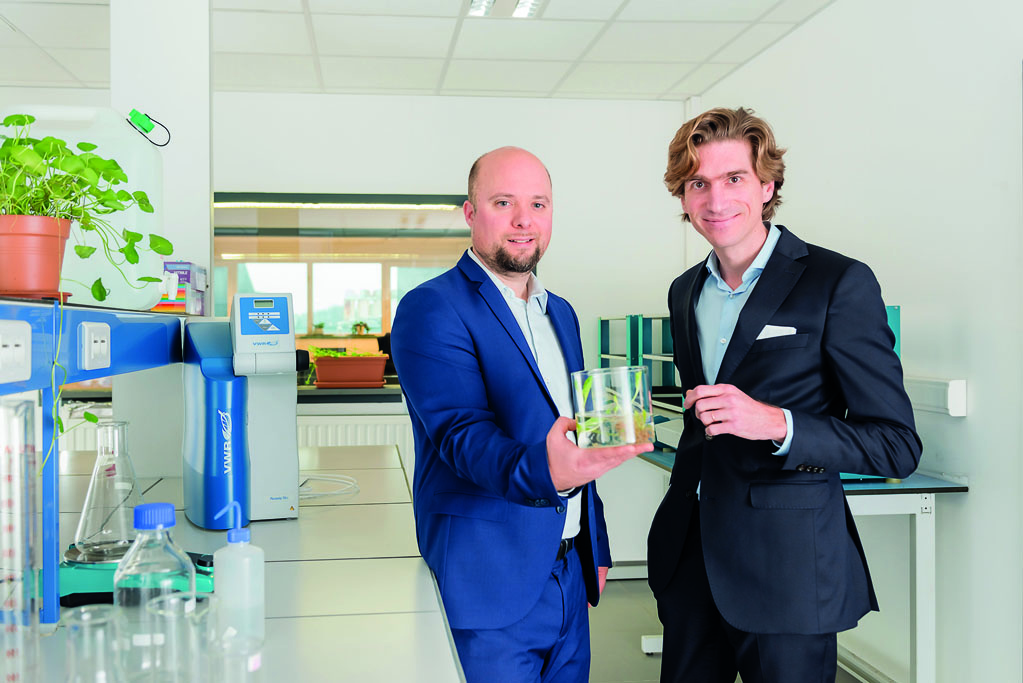
The division of responsibilities extended beyond scientific training. In 2019, Mariage described his concentration on science, technology and production, with Coppée bringing financial, administrative, sales and marketing strengths. That is a useful corrective to the photograph of two founders holding a plant. Somebody also had to think about the invoice, the next customer and the paperwork that would make the next experiment possible.
The early development involved the University of Mons and Haute École Condorcet in Ath. The work was rooted in a local network even as its intended customers lay abroad. This was a botanical business being assembled through laboratories, educational institutions and an industrial partnership, with Mariage responsible for helping those pieces become a production process.
The years before the sales team
Botalys dates the launch of its predecessor, Green2Chem, to 2011. Its chronology records the completion of its Biomimetic Indoor Farming technology development in 2017 and the commercial launch of its first Korean ginseng ingredient in 2019. Those three dates are easy to skim. Read them slowly and the waiting becomes visible. There were years in which the undertaking’s chief output was knowledge rather than a finished commercial ingredient.
Early on, Mariage supported research with green-chemistry consulting. He also taught brewing at Condorcet for three years. It is a pleasingly practical detail: while one project needed time to develop, other work helped finance that time. The later factory has an earlier chapter in which a founder was carrying several responsibilities, and a botanical venture shared his working life with brewing lessons.
project launch
development completed
commercial launch
European funding brought its own timetable. In 2017, Botalys secured €50,000 for a feasibility study under the SME Instrument. A subsequent application earned a Seal of Excellence in 2018, yet the available budget did not cover it. Recognition arrived before the money. The company applied again and secured the larger award in 2019.
That episode deserves more attention than the usual sentence announcing a grant. A favorable assessment can be encouraging without paying for a piece of machinery. Botalys had to keep working through that distinction. The successful application followed an earlier attempt, with advice from NCP Wallonie and specialist support in preparing the case. Persistence included the ordinary discipline of finding people who knew how the process worked.
The funded project, Rhizomia, ran from March 2019 to May 2021. Its objective addressed a manufacturing problem: growing plant roots at economically useful speeds. The project budget totaled €3.15 million, with an EU contribution of €2.205 million. The distinction matters. The grant was one part of the resources committed to the work, rather than the price of the entire undertaking.
Mariage later described European assistance as helping Botalys cross the gap between an innovative prototype and a commercially viable unit. His account returns repeatedly to material requirements: a technology needs specific equipment and financial resources. A successful experiment carries the next obligation with it. Somebody has to build the conditions under which it can work again, at a useful scale.
“Nous avons continué notre croissance et engagé 3 commerciaux”
Pierre-Antoine Mariage, on continued growth after European support
He also described a decision at the end of 2021 to build a new production site in Ghislenghien. After the subsidy ended, the team continued growing, including three hires to reinforce commercial departments. That is the part of the funding story he chose to emphasize: the company was still adding people. The grant’s practical significance extended into the business that continued after it.
A factory needs customers, too
The roots could grow. The company now had to make its commercial relationships grow as well. Wapinvest’s account gives one early measure of that transition: Botalys went from four jobs in 2017 to eighteen in 2019. Its support included long-term treasury credits. Behind the scientific development sat a less photogenic requirement, working capital, which tends to become interesting very quickly when it is needed.
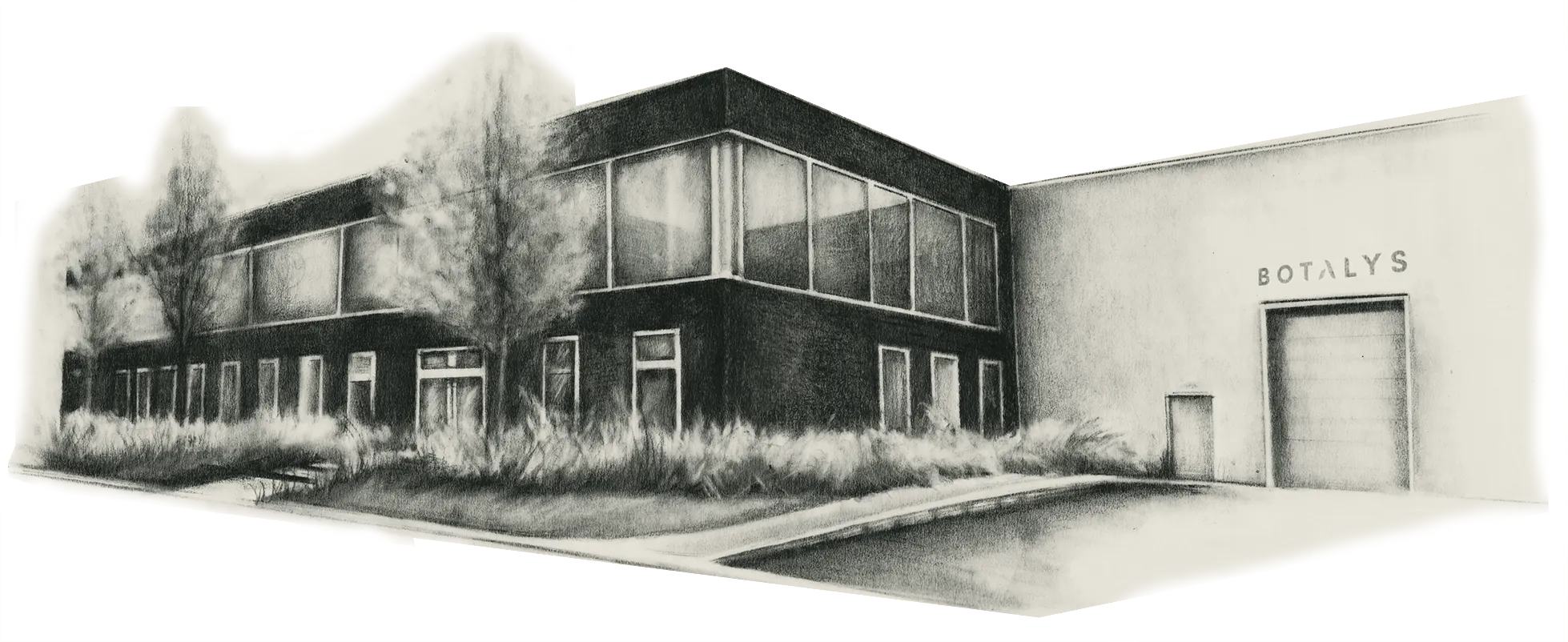
The early production arrangement used premises rented from Flaurea in Ath. A business does not acquire its eventual industrial shape in one motion. It occupies available space, hires the next person and arranges the next source of financing. For Mariage, scaling meant carrying the growing method into an organization capable of delivering it.
In 2022, Botalys raised a €6.6 million Series B, with ALIAD, Air Liquide’s venture investment arm, as lead investor. Yield Lab Europe joined the investor group. Mariage described the financing as a step toward international expansion and applying the platform to additional plants. The business was developing beyond a single cultivation problem.
The relationship also had a commercial consequence. In March 2023, Seppic and Botalys announced a co-development and distribution partnership. Distribution contracts covered Botalys’ ginseng-based products in various markets and geographies. A factory can produce an ingredient; a distribution relationship helps connect that ingredient to buyers. The distinction is fundamental to the work of running the company.
Mariage welcomed the combination of scientific and commercial work. The Seppic agreement brought development and distribution into the same relationship, joining work on new ingredients with access to a wider network. For a founder whose responsibilities had long included technology and production, that link gave the growing platform another way to travel.
Rome, a swallow and room for distraction
There is a more personal version of Mariage in a 2019 questionnaire. Asked to name the quality that had helped him progress, he chose perseverance. He expected respect and excellence from colleagues. He picked Rome as the city he would be, drawn by its history and the things there were to learn. Asked about an animal, he chose the swallow, his Scout totem.
He was indulgent toward distraction, which he associated with creativity. And he identified with the Cheval Bayard of Ath’s festival because it carries four children; he was himself a father of four. These answers give the engineer a life beyond the production schedule. There is curiosity, an attachment to a local tradition and some tolerance for a wandering mind.
The answers make an agreeable companion to the company formula about collective intelligence. Respect is a workable condition for learning from colleagues. A little indulgence toward distraction leaves room for an unexpected idea. Neither sentiment builds a factory on its own. Together, they suggest why Mariage’s account of building one keeps returning to the people around him.
A different kind of growing season
Botalys’ subsequent partnerships continued to extend the platform’s reach. In March 2024, the company announced an incubation program with L’Oréal’s Green Sciences Incubator. The work focused on exploring rare botanicals for cosmetic ingredients, using the company’s controlled growing approach. A technology developed around plants was becoming a starting point for new development projects with other organizations.
The structure of that relationship is telling. An incubation program creates space to explore what a method might make possible. It is a further stage of development, with the question shifting from whether the cultivation system can work to which new ingredients it can help produce. Mariage’s long research period had yielded a platform on which others could begin their own questions.
In October 2025, Botalys announced a strategic collaboration with Haleon, following a September kickoff. The announced work moved through multiple development phases, from cultivar optimization to pilot-scale production. Even after international partnerships and financing rounds, the business still involved the careful sequence of choosing, growing, testing and scaling. The original discipline remained visible.
Mariage’s public professional profile now lists Austin, Texas, while Botalys retains its Belgian production base and records the opening of a US subsidiary in 2023. The geography has widened. The business started with colleagues and experiments in Belgium; its relationships now extend across borders. For the person running it, international expansion is another set of people and practical arrangements to bring together.
A founder’s story often gets its pace from a sudden breakthrough. Mariage’s gets its shape from duration. Research needed support. Production needed equipment. A team needed complementary skills. Ingredients needed customers. The work kept changing while the underlying project remained recognizable. Somewhere inside that sequence, a root followed its growing conditions, and a company learned how to keep up.