Profile / Agtech & Biotech
Pierre-Antoine Mariage
The Belgian engineer growing Korean ginseng indoors, without a grain of Korean soil.
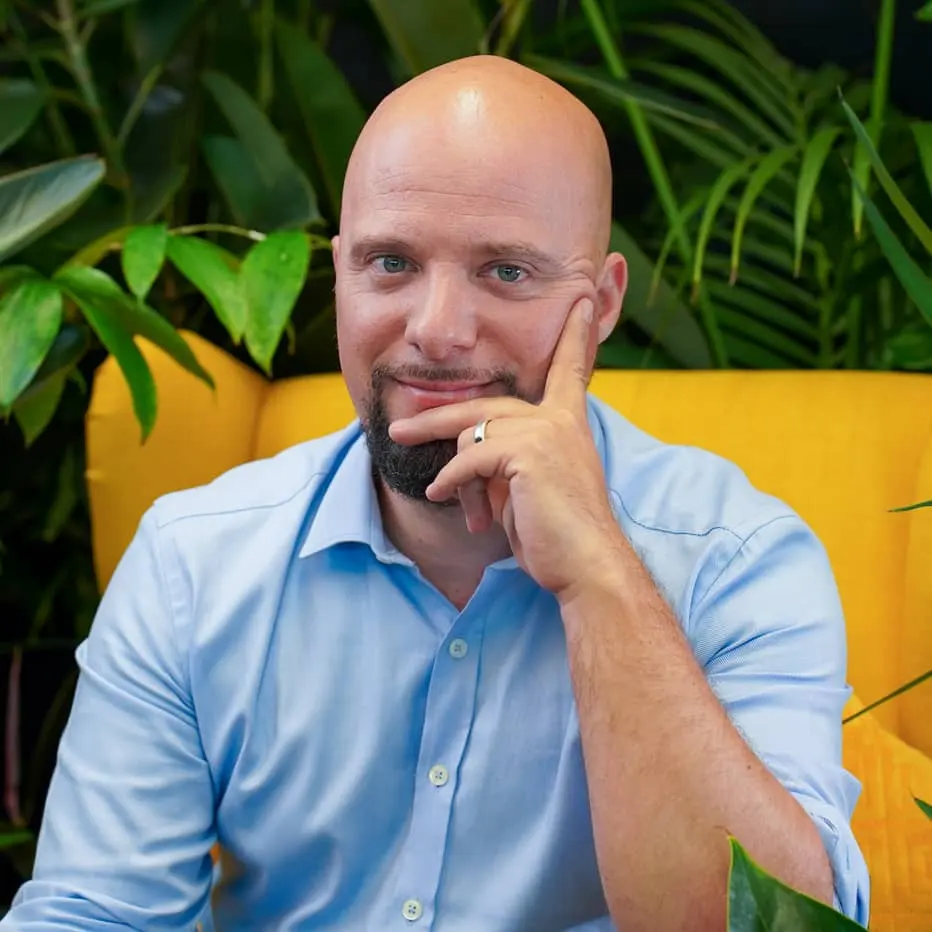
The Belgian engineer growing Korean ginseng indoors, without a grain of Korean soil.
Inside a production facility in Ath, in Belgium's Walloon Region, rows of Korean ginseng grow under controlled light, in nutrient-rich water, thousands of kilometers from the mountain soil where the plant has traditionally been cultivated for centuries. There is no pesticide involved, no fungicide, no solvent. The man who built this system, Pierre-Antoine Mariage, runs the company as CEO and co-founder, and he describes what happens there in plain terms: reproducing a plant's natural growth cycle indoors, at a pace and purity that field cultivation cannot match.
Botalys is the name of the company today. It started in 2011 under a different one, Green2Chem, a modest label for what was then an experimental idea: could rare, high-value medicinal plants be grown hydroponically, indoors, at industrial scale, and still meet the purity standards required by pharmaceutical and cosmetic buyers? Mariage spent the better part of a decade answering that question, first with prototypes, then with a proprietary technology the company calls Biomimetic Indoor Farming, finalized in 2017.
The pitch is straightforward once you hear it. Rare medicinal plants like Korean ginseng or Rhodiola rosea are slow to grow, often wild-harvested, and dependent on land and climate conditions that are becoming less predictable and less available. Botalys grows the plant's roots directly, using hairy root culture techniques developed with European research funding, in an environment engineered to mimic the plant's natural biotope. The result, according to Mariage, is an ingredient with a traceable, resilient supply chain and a consistent chemical profile - qualities that matter a great deal to a pharmaceutical buyer who cannot tolerate batch-to-batch variation.
Getting there was not automatic. Mariage has spoken candidly about the gap that swallows many deep-tech startups - the point where a working prototype has to become a commercially viable production unit, a stage sometimes called the "valley of death" because so few companies survive the capital demands of scaling up. European subsidies, he has said, were what let Botalys cross it.
"The development of a technology like ours requires many financial resources," he explained in comments to Wallonia's NCP network. "It requires investment in specific equipment. And European aid allowed us to pass the threshold of the death valley, which in the development of a company is the passage from the innovative prototype to the commercially viable unit." His advice to other founders chasing the same kind of funding was equally direct: try it, but only if you're well accompanied by people who know the process.
That accompaniment came, in part, from early investors like the VIVES fund, which backed Botalys before its technology had proven itself commercially. Mariage has credited that relationship for more than the capital it provided. "VIVES trusted us at an early stage," he said. "In addition to their financial investment, they offer us a regular and wise coaching from their experts while respecting our values and our strategic vision. VIVES is a key player in our entrepreneurial success."
By 2019, Botalys had a commercial Korean ginseng ingredient ready for market. The bigger validation came in 2022, when the company closed a Series B round worth roughly 7.26 million euros, bringing its total funding above 7.8 million euros. The round was led by ALIAD, Air Liquide's venture capital arm - a name that carries weight in industrial gas and healthcare circles - and it opened a door to Seppic, an Air Liquide Healthcare subsidiary that develops ingredients for the cosmetic, nutraceutical, pharmaceutical and veterinary industries. Yield Lab Europe, an impact fund focused on agtech, joined the round as well.
The money went where founders in this sector tend to spend it: international commercial expansion, particularly toward American and Asian markets, and further build-out of the company's R&D center in Ghislenghien, dedicated to developing new and rare medicinal plants and their derivatives. A US subsidiary followed in 2023, positioning Botalys closer to a nutraceutical and supplement market that has shown a growing appetite for adaptogens, nootropics and plant-based functional ingredients.
In 2024, the product line grew again with the launch of Fjord Rhodiola, a Nordic-sourced complement to the company's ginseng offering. It's a pattern that says something about how Mariage thinks about the business: not a single-ingredient company betting everything on ginseng, but a platform for cultivating whichever rare, high-value botanical the market and the science point toward next.
Internally, Botalys leans into a kind of institutional playfulness about what the company actually does. Mariage's title on the company's own team page isn't just CEO - it's "Chief Exploration Officer." His background is listed as agronomic engineering, his experience as more than twenty years in biotech, and his personal formula, spelled out in the company's own words, is "Collective intelligence plus bold action." The company describes its leadership as a group of "botanical explorers," a phrase that sits somewhere between marketing copy and an accurate description of what it takes to commercialize a plant most consumers have only encountered in a supplement capsule.
What Botalys is ultimately selling isn't romance about ginseng roots grown under Belgian rain. It's supply chain security, dressed in agronomy. Rare medicinal plants are difficult and often ecologically damaging to source at scale through wild harvesting, and traditional farming ties a company to geography and climate it cannot control. Growing the plant indoors, on demand, closer to the customer, is Mariage's answer to that fragility - and it's a bet that Air Liquide, Seppic, Yield Lab Europe and VIVES have all been willing to back.
He is the founder and CEO of Botalys, a Belgian company that grows rare medicinal plants indoors for the nutraceutical, cosmetic and pharmaceutical industries.
Botalys is known for cultivating Korean ginseng and Nordic Rhodiola rosea using a proprietary biomimetic indoor hydroponic farming technology, without pesticides, fungicides or solvents.
He founded the company in 2011 under the name Green2Chem, which later became Botalys.
Botalys has raised a total of approximately €7.87 million, including a Series B round of about €7.26 million backed by Air Liquide's venture fund ALIAD.
Botalys is headquartered in Ath, in the Walloon Region of Belgium, with an R&D center in Ghislenghien and a US subsidiary opened in 2023.