Phil Chambers gave his employees a speech. Results had been disappointing; he wanted everyone to put in more effort. By Monday morning, Peakon, the employee feedback company he had helped create, was delivering an uncomfortable verdict on his performance. His team had taken the message badly. The boss had spoken. Now his own software was answering back.
Chambers later conceded that the method of delivery was terrible
. It is a useful admission from somebody who sold organisations a way to understand their people. Even with the right intention, even with the product running in your own company, you could still misjudge the room. The difference was that he had given the room somewhere to reply.
That episode offers a better introduction to Chambers than the acquisition price usually attached to his name. Workday bought Peakon for approximately $700 million in 2021. The price explains the attention. The Monday morning explains the problem he had chosen to spend years working on: how to get useful information past the person who is certain he already understands.
An apprenticeship with several postcodes
Chambers’s route into employee software began with computers, rather than an ambition to run a human resources company. As a child he had his own computer. Later came building PCs and websites, then computer science at the University of Manchester. In an early account of his career, he recalled wanting to work for Airbus. The eventual route to aerospace would take considerably longer than a graduate application.
First there was a series of businesses spread across Europe. He worked at Gumtree in Britain, then Qype, the local reviews company in Hamburg. At Podio in Copenhagen, he became chief technology officer. Citrix acquired Podio in 2012; Chambers subsequently led its GoToMeeting product line in Santa Barbara. His working life had crossed marketplaces, reviews, collaboration tools and online meetings before Peakon existed.
There is a practical education in that itinerary. A product can attract users and still be difficult to run as a company. A company can grow and change the daily experience of the people who joined it. Chambers had worked through different versions of both questions. By the time he became a co-founder, he had spent years close to the machinery.
What does a company know about its customers that it never bothers to learn about its own employees?
Peakon’s starting premise borrowed from customer analytics. Businesses were becoming accustomed to using timely data to understand customers and improve their experience. Chambers and his colleagues wanted to apply that attention inside the workplace. Employees would have a meaningful say in how they were managed; managers would have something more useful than an occasional impression of how everyone was doing.
He described the founding ambition as building a company the founders themselves wanted to work for. That gives the idea a pleasantly personal scale. Before the dashboards, benchmarks and enterprise contracts, there was the ordinary wish to spend a working day somewhere that made sense.
Four founders, then a very large buyer
Chambers founded Peakon with Kasper Hulthin, Christian Holm and Dan Rogers. Its founding team brought experience from Podio and Songkick. By January 2016, the business was publicly launching its analytics service and announcing €4 million in funding. A familiar collection of startup nouns had acquired the beginnings of a company behind it.
The early finances were more modest. Recalling the start in a funding discussion, Chambers said the four founders each put in 25,000. There was enough to cover rent and get going. Hiring a technical team created a more immediate requirement for outside money. He described moving from an initial presentation to closing a seed round within roughly the first three months.
He also recalled the importance of getting 20 new companies using Peakon before its Series A. That is a useful detail in a story so often told backwards from the sale. Before an enterprise buyer could value the company, customers had to find a reason to use its product. The next fundraising milestone depended on the small, repetitive work of making that happen.
- 2015Four founders start building
- 2016Public launch of the analytics service
- 2021Workday completes the acquisition
A company’s milestones. Plenty of working days between them.
Workday completed its acquisition on March 9, 2021. Its announcement described a continuous listening platform that could turn employee feedback into decisions. Chambers stayed with the business, becoming general manager for Peakon within Workday. Later that year, the product acquired the name Workday Peakon Employee Voice.
The change of owner gave the original proposition a different setting. A product built to help companies hear their employees was now operating inside a much larger software company. Its usefulness would be judged beyond the agreement that brought it there, in the work of managers and employees who still needed to decide what to do next.
The survey has to go somewhere
Employee feedback comes with an administrative trap. Asking a question is straightforward. Choosing the questions, deciding whom to ask, compiling responses, reviewing the findings and distributing the results can become an industry within the company. By the time the answer arrives, everyone may have moved on to a fresh problem.
Chambers argued for automating much of that machinery and sending insights directly to managers. Peakon also kept open comments attached to questions, so a score could carry an explanation. In his view, a manager needed enough context to act. A number on its own could tell you something had changed while leaving you to guess why.
The design also had to account for who was answering. A manager overseeing a long-established team might face different circumstances from someone leading new recruits. Comparing them without context could produce a very confident misunderstanding. The ambition was to make the feedback more useful without turning every response into another administrative assignment.
Conceptual illustration, not a performance measurement.
There is a limit to what even well-designed software can accomplish here. An answer does not implement itself. Someone has to read it, consider the implication and make a decision. Chambers’s bruising all-hands experience makes that obligation unusually tangible. The feedback was useful precisely because it reached somebody with the power to change his own behaviour.
His public discussions of employee retention also resisted treating every person alike. Onboarding, communication, autonomy and the relationship with a manager all deserved attention. A departure has a date on a spreadsheet. The experience that produces it can have a much longer history.
A rocket changes the arithmetic
In January 2024, Chambers became CEO of Orbex, the launch company developing the Prime rocket. He had already invested in its Series C. The appointment brought him alongside executive chair Miguel Belló Mora, formerly director general of the Spanish Space Agency. The software operator was taking responsibility for a business with factories, testing facilities and a vehicle intended to carry satellites into orbit.
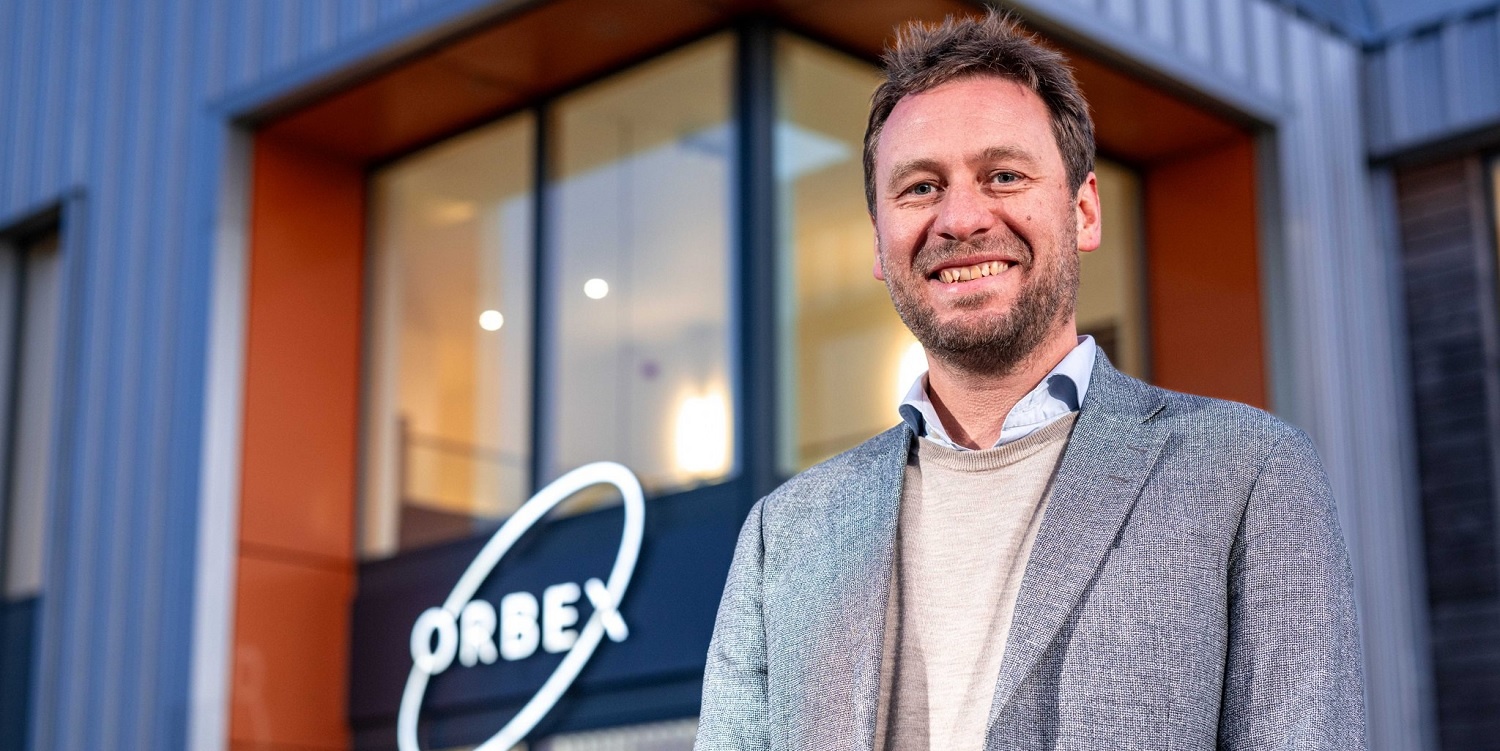
At the time of his appointment, Prime was described as a 19-metre, two-stage rocket designed for small satellites. The scale of the task was visible in the object itself. An employee software company and a launch provider both need customers, funding and a team. A rocket adds a rather exacting requirement about what happens when the product leaves the building.
Chambers spoke about developing a British launch capability and creating manufacturing jobs. It was an ambition with a public dimension: government support, industrial policy and the question of where the work would be done. His earlier interest in aerospace had returned in a form that required far more than an enthusiasm for aircraft.
The outcome was difficult. Orbex could not secure the private investment it needed and entered administration in February 2026. That belongs in the account alongside the Peakon sale. A previous exit does not supply a new company with the money, timing or technical progress it needs. Different businesses impose different conditions, however experienced the person in charge.
“Start yesterday would be my advice.”
Phil Chambers, 2024
His advice to founders during the Orbex period was practical: get started, avoid hiring ahead of a proven market, and define company values through actual behaviour. He also recalled Peakon’s determination to take the work seriously while having fun. A business can make room for both, although the calendar will not necessarily cooperate.
Back at the other side of the table
In April 2026, Chambers joined Balderton as a partner focused on early-stage investments. The relationship had history. Bernard Liautaud had worked with him through Peakon, and Balderton had backed the company. Chambers was joining people who had seen his decisions at close quarters. He also arrived with more than 100 angel investments behind him.
By September, his board work included Spott, the recruitment software company whose $21 million Series A was led by Balderton. Its product brings together work that recruitment agencies often spread across older systems and separate tools. The subject is familiar territory: how technology changes the time people have for the human part of their jobs.
There is a life beyond those jobs, too. Chambers is a pilot, a photographer and a birdwatcher. He has described the appeal of birding as something that can accompany an ordinary walk. You can be observing more than your companions realise. It is an agreeable hobby for someone whose career has repeatedly involved discovering what a room, a workforce or a market was quietly doing.
The story now has him listening from another seat: an investor’s. A founder will bring a product, an ambition and an account of what happens next. Chambers has occupied that chair himself. Somewhere in his experience sits a Monday morning when the people he managed supplied an answer he had not expected. It remains a useful thing to bring to a meeting.