Dorothy Yiu was presenting her business when someone asked why she was not taking notes. She was a co-founder. The person asking appeared surprised that she knew so much about people analytics. A meeting intended to explain a company had exposed, rather efficiently, one of the problems that company existed to address: people can be sitting right in front of you and still go unseen.
She later described how attention in meetings often drifted toward her male co-founder, Leong Chee Tung. In the early years, she said, they had equal responsibilities and holdings, but different titles: he was CEO; she was COO. People sometimes assumed she reported to him even after the introductions. A title, it seems, can do an astonishing amount of talking before its owner gets a word in.
Today, Yiu is EngageRocket’s co-founder and CEO (International). Her work concerns the space between what employees experience and what managers understand. The incident with the imaginary notebook gives that work a personal edge. She knows how easily a room can assign someone a role without asking. Her company is built around asking, then doing something with the answer.
Hong Kong, Singapore, and a tested partnership
Yiu was born in Hong Kong. In 1994, her father expanded his business to Singapore and moved the family there; she was seven. Both parents ran businesses, so founding a company was a possibility she had grown up seeing at close range. Singapore became home. Entrepreneurship arrived without the romance of an unfamiliar profession: it was something people in her family actually did.
At Singapore Management University, she earned degrees in accountancy and business management under the Lee Kong Chian Scholarship. The university lists her in its class of 2010. Her subsequent career took her through banking and into consulting, where she became Gallup’s head of operations for Southeast Asia. Her responsibilities included large consulting projects across markets ranging from Indonesia and Vietnam to Australia and Dubai.
The eventual leap was preceded by a working relationship. Yiu and Leong spent about five years managing the regional consulting business together. They discovered shared values and complementary skills in the course of getting work done. In early 2016 they left consulting and founded EngageRocket. Their partnership had already faced the unglamorous test that matters: could they work together, repeatedly, when there was work to finish?
Her later advice to aspiring founders reflected that experience. Choose a trusted partner whose abilities complement your own, and keep the reason for starting close enough to remember when progress falters. The company grew out of professional familiarity as much as ambition. Before they shared a startup, they shared an understanding of a problem.
- 1994Hong Kong → Singapore
A family business brings a new home. - 2010Two degrees at SMU
Accountancy + business management. - 2016Consulting → founding
Yiu and Leong start EngageRocket.
A report can arrive after the problem has moved
At Gallup, the founders had seen how much effort went into the machinery around employee surveys. Administration, analysis and the delivery of findings could take three or four months. By the time a manager received useful information, the situation described by employees could already have changed. The paperwork had completed its journey. The people had continued theirs.
EngageRocket’s initial answer was to automate the process and make feedback available quickly. Yiu’s early operating remit covered product design, development, technology and customer success. That mix brought her close to the practical question behind the software: could a manager understand the findings and use them? A sophisticated analysis has limited value if its intended reader needs another consultant to explain it.
The founders also wanted a less expensive route to insights than traditional consulting. In Yiu’s account, software could collect feedback at different points in an employee’s time with a company and turn it into recommendations. The ambition was concrete: help leaders retain people, develop them and make better decisions while there was still time to act.
It is easy to admire a dashboard. It is harder to decide who must change their behaviour because of it. Yiu’s business has had to concern itself with both. Making feedback faster removes one obstacle; it also exposes the next one. Once the information is available, a manager has fewer places to hide.
The second survey is a verdict on the first
Yiu has a concise explanation for the familiar complaint that employees are tired of surveys: “survey fatigue is actually just a lack of action fatigue.” People who answer questions and see nothing change have learned something about the organisation. The next questionnaire arrives carrying the reputation of the last one.
That observation moved EngageRocket beyond delivering information toward helping managers respond. In her description, closing the feedback loop means connecting what employees say with actions they can see. The product’s job includes prompting managers to follow through. Listening creates an obligation, however politely the invitation to participate is worded.
There is a commercial version of the same lesson. Yiu has described regularly speaking with customers and bringing their needs into conversations among sales, customer success and product teams. Consultancies that might once have looked like competitors became potential partners, combining their expertise with EngageRocket’s technology. Feedback matters inside the business as well as inside the businesses it serves.
A partnership with a consultant makes sense when software handles repeated administration and the consultant helps interpret a difficult situation. It also reflects the founders’ own history. They had come from consulting; they understood the work that an automated process could speed up and the judgement that still required a person.
Asking creates an obligation.An editorial observation on Yiu’s approach
Flexibility had to apply at home, too
Yiu’s arguments about workplaces eventually encountered a particularly demanding customer: her own life. As a founder and mother, she has spoken about learning to balance responsibilities and creating room for colleagues to do the same. By 2021, women made up half of EngageRocket’s senior management team, and all those women were working mothers. Flexibility had an immediate audience.
That year, EngageRocket was among ten graduates of Google for Startups’ APAC Women Founders Academy. The 12-week programme offered mentoring and leadership training, including support around funding. The company was five years old. Yiu was still learning, alongside founders from other businesses, rather than treating experience as a reason to stop asking for help.
Her position on equal opportunity reaches beyond recruitment. She has argued that men should have more opportunity to take an active caregiving role, allowing both parents to participate. There is a useful specificity to that view. A flexible policy has to survive the calendar, the school run and the division of responsibilities. Otherwise it remains an agreeable sentence in a company handbook.
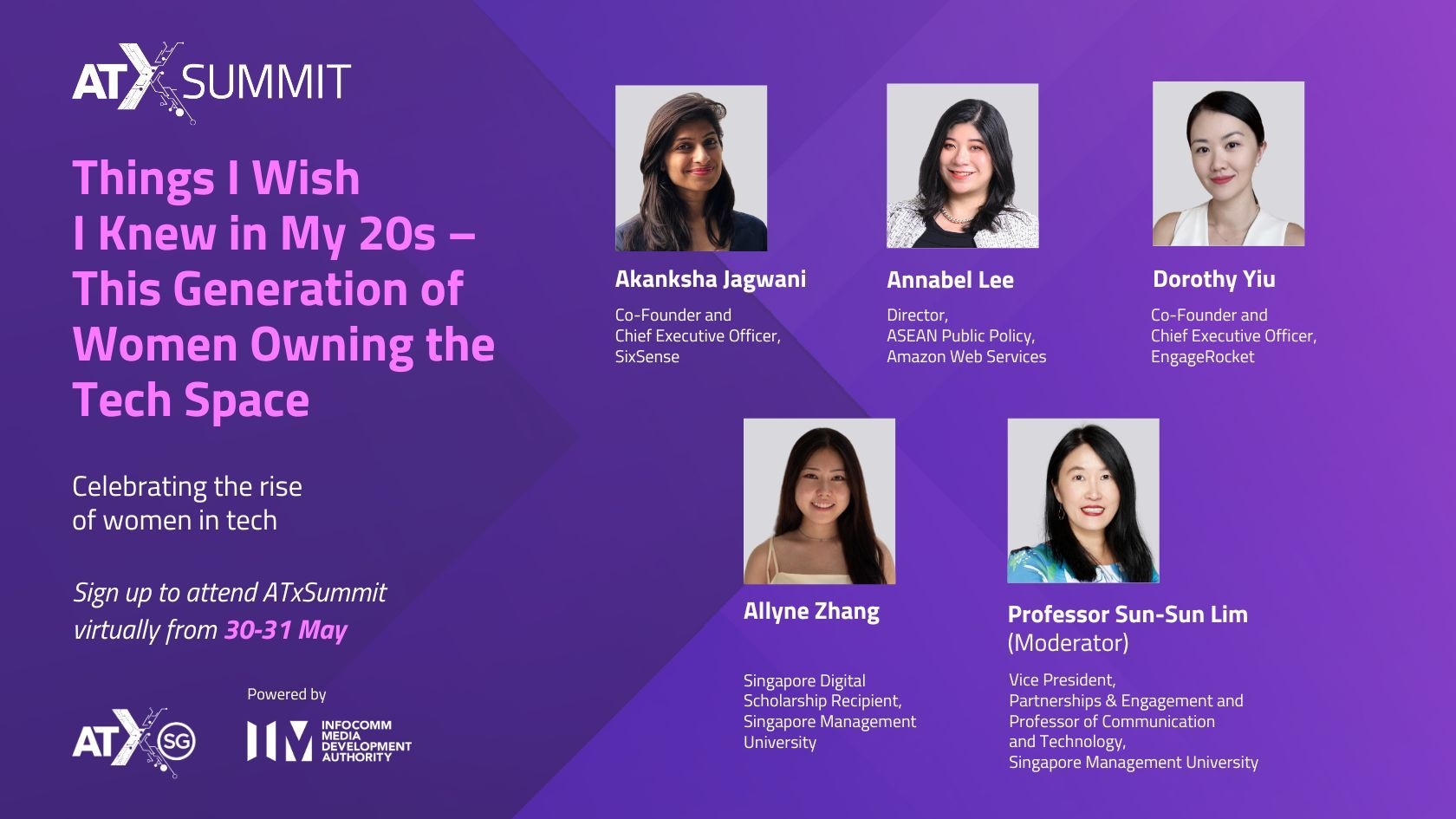
When the candidate gets to ask the questions
Yiu’s public writing also considers the employee before the employee has joined. In January 2025, she set out warning signs that job candidates should examine during interviews. The conversation, she argued, is a mutual evaluation. Applicants should investigate the company’s values, expectations and working practices while the company investigates them.
Her examples are revealing. A candidate needs room to ask questions. The hiring manager’s involvement matters. Vague answers deserve further examination. Even a warm promise of belonging requires a little inspection: the phrase about everyone being family can obscure expectations around loyalty and boundaries. The welcome mat deserves a glance at the small print.
The connection to her business is straightforward. Employee experience starts before someone completes an engagement survey. It begins with what the organisation promises, who explains the job and whether questions receive answers. Yiu’s advice gives a prospective employee permission to do some of the listening usually reserved for the employer.
Her conversation with Pauline Tay on The HR Impact Show brings another angle. Tay, Griffith Foods’ HR leader for Asia Pacific, described getting close to operations and customers rather than remaining in the HR office. Yiu’s role as host puts her in dialogue with practitioners confronting the same problem from different seats: how does an organisation turn its statements about people into daily decisions?
AI still needs a people plan
Yiu was watching the application of generative AI to HR and talent management in 2024. Her enthusiasm came with a practical concern. Leaders could describe the outcomes, budgets, timelines and performance measures of transformation projects, she wrote, while saying remarkably little about the people expected to deliver them.
She described herself as both a people person and a data person. The pairing explains her interest in technology without reducing a workplace to a collection of measurements. A plan for AI adoption needs attention to how employees experience the change. The project schedule may be beautifully organised while the people following it remain unsure of what comes next.
Her 2025 Asia Women Tech Leaders recognition described work on AI-driven predictive analytics alongside a commitment to inclusion. That combination continues the question that prompted EngageRocket’s founding: can information arrive in time to help? Prediction raises the stakes of that question. A warning is useful when somebody understands it, takes responsibility and decides how to respond.
The awards arrive. The question stays.
On 8 November 2024, at the HR Vendors of the Year ceremony in Singapore, Yiu received gold for Leader of the Year. EngageRocket also took gold in employee engagement software, employee feedback and recognition, and Local Hero. The photograph catches a public moment in a career spent working on things that are often private: employee opinions, management habits and conversations inside teams.
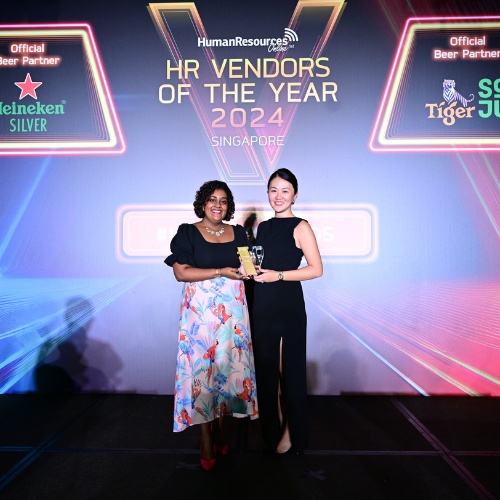
She was named an SG Digital Leader in 2024 and included among the Top 50 Asia Women Tech Leaders in 2025. In July 2026, EngageRocket won gold for Technology Solution Provider of the Year at the Economic Times Human Capital Awards. These are dated recognitions, markers along a continuing operating story.
The company now reports more than 450,000 users, more than 52 million responses and a presence in over 32 countries. Those are company figures, not a count of people whose working lives have demonstrably improved. They show how far the machinery for listening has travelled. The harder measure remains what a manager does with what an employee says.
Away from that machinery, Yiu’s tastes include Friends, macadamia nut ice cream and Bordeaux. She has also admitted to once sorting M&Ms or Skittles by colour; motherhood left considerably less time for confectionery administration. An employee analytics founder is allowed to leave a few things unsorted.
Her advice carries a local economy of words: “don’t try, don’t know.” It leaves room for experiments, mistakes and asking for an opportunity. EngageRocket began with two colleagues who had seen a slow process and decided to change it. Years later, Yiu is still occupied with the next step after the question. Someone has spoken. Now the manager has a job to do.