At Garasi.id, the problem arrived somewhere between three employees and 80. The Indonesian automotive marketplace was adding people, which meant adding candidates, interviews and opinions about candidates. Each opinion had to reach the next interviewer. Each applicant had to move through a process. Growth was turning a manageable conversation into a record-keeping problem.
In a customer interview published by peopleHum, CEO Ardy Alam described the difficulty: “It is very easy to get lost in the process”. The company needed a way to preserve interview scores, comments and hiring milestones. A sister company introduced peopleHum. The attraction was practical: keep the process together as more people joined it.
- Recruitment, employee records, performance and engagement share one platform.
- Customers describe fewer scattered processes and clearer hiring visibility.
- Pricing starts at $2 per employee monthly; the package needs scoping.
One employee, one continuous record
peopleHum sells cloud-based human capital management software. That is a large label for a familiar collection of jobs: finding candidates, collecting documents, approving leave, setting goals, reviewing performance and asking employees how things are going. Its organizing idea is that these jobs become more useful when their information travels together.
The recruitment module handles applications and interview feedback. HRIS stores employee information, documents, attendance and leave. Performance tools cover goals, review cycles, competencies and 360-degree feedback. Engagement adds surveys, recognition and ideas. Analytics offers dashboards across those activities. The company also markets payroll, learning, electronic signatures and collaboration tools.
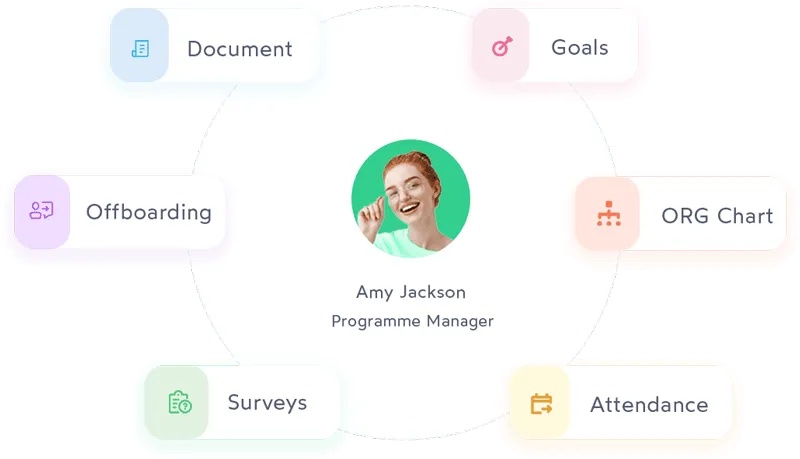
At Garasi.id, the continuity extended to digitally signed offers and onboarding without a physical visit. Alam also described viewing someone’s progress from candidate to employee and later toward promotion. Here is the useful detail: the hiring record does not have to become an abandoned folder when the employee gets a desk.
- 01ApplyInterview feedback
- 02JoinOffer + documents
- 03GrowGoals + reviews
The product has a longer public history than the current enthusiasm for workplace AI. In 2019, peopleHum won a SIIA CODiE award in talent management and human capital. The award is a useful historical marker. The everyday test remains whether the next person can retrieve the information they need.
The dashboard earns its keep
Blibli supplies a different view of the same problem. In its published customer account, the Indonesian e-commerce business described using separate software for recruitment, appraisals and surveys. With peopleHum, those activities could sit in one platform. More revealing was what the recruitment dashboard let the team inspect.
Blibli could follow how long candidates spent at stages including tests, interviews, medical checks and offers. A slow hiring process stopped being a single, shapeless complaint. The team could look for the step causing the delay. It could also inspect candidate sources. That makes analytics useful to the person who has to decide what to fix on Monday.
At o9 Solutions, the emphasis was feedback and adaptability. People manager Kanika Mendiratta described anonymous suggestions, comparisons across performance cycles and a team willing to respond to requested changes. The case-study headline links peopleHum with o9’s growth. The interview is stronger evidence of workflow fit and responsive support than of software causing growth.
Another vendor-published account, from Green Africa, describes scattered employee data and recruitment without a centralized applicant-tracking system. It recounts sending offer letters to nearly 200 staff through bulk upload. It also records a request for screening that better accommodates different resume formats and geographies. Even a favorable customer story contains unfinished work.
The hiring record does not have to become an abandoned folder when the employee gets a desk.
The continuity at the heart of the product
This places peopleHum in the market for integrated HR suites. Buyers may also consider BambooHR or Keka, or assemble specialist tools such as Lattice for performance. peopleHum’s argument rests on the connections between functions, configurable workflows and help with implementation. The sensible comparison is how well each option handles a real employee journey.
A small starting number
The advertised starting price is $2 per employee per month. At that rate, 100 employees implies $200 monthly. That arithmetic describes a starting point, not a promise that every product, service or implementation requirement comes in the same package. peopleHum invites customers to choose modules and have them packaged.
Employees × $2. Illustration at the published starting rate; your selected package determines the quote.
A seven-day trial without a credit card lowers the cost of looking. Making the system work still takes attention. Garasi.id described initial training. Gerent’s paperless-HR account highlighted APIs, website recruiting and personalized support. These are reminders that buying software includes deciding how people will use it.
The lesson a reader can copy is modest. Pick one candidate and follow the complete route: application, interview feedback, offer, signature and onboarding. Check who owns each handoff. Then test a review cycle. If your bottleneck lies in one specialized task, a broad suite needs to prove that its connections justify the move.
There is also the question of organizational appetite. A company that keeps reliable records in separate systems may need only a narrow improvement. One whose managers avoid documenting feedback has a behavioral problem alongside its software problem. A unified interface helps most when people agree to maintain what goes into it.
Keep a hand on the controls
Phia, peopleHum’s HR chatbot, adds another entrance. Employees can ask policy questions, check leave information and raise support tickets. Slack and Microsoft Teams integrations bring that access into existing conversations. The wider platform also lists payroll, calendar, single sign-on and biometric connections. Actual country coverage and connector fit belong in the buying conversation.
There is a useful wrinkle in the company’s recent writing. On October 22, 2026, peopleHum published an article about stopping faulty HR agents. It argued for named owners, stop controls and manual fallbacks. This was advice, rather than evidence of a newly released feature, and it points toward a practical limit of automation.
The company’s own July 2023 culture account offers a revealing companion to its software pitch: employees could choose mentors, and the organization said it did not track sick leave, relying on accountability. A vendor selling attendance tools was describing trust as a management choice. The distinction is worth keeping when configuring any HR system.
Connecting records can make a decision easier to inspect. It cannot make the underlying information accurate or make a manager listen. peopleHum’s customer accounts are persuasive where the problem is concrete: missing context, repeated administration, a process nobody can see. Start there. Ask the software to carry the interview notes all the way to the next person.