The trouble at Sym-Tech was email. A claim arrived, then a request for paperwork, then clarification, then another request. A business meant to settle claims had acquired a second occupation: corresponding about them. Every missing document made an apparently simple transaction a little longer.
This is an excellent place to meet PCMI. Its business sits behind the warranty and service-contract products sold alongside vehicles and consumer goods. The customer sees a promise. The administrator sees eligibility, documents, money, deadlines and a queue. PCMI sells software for that second view.
- The job: connect F&I sales, contracts, claims, payments and reporting in PCRS.
- The buyer: administrators, dealers, manufacturers and lenders.
- The useful result: Sym-Tech reports fewer follow-up emails and faster claim resolution.
- The next bet: apply governed AI inside the administration workflow.
01 / INTAKEThe paperwork has a queue
Sym-Tech, a Canadian F&I provider, used PCMI’s customer portal to replace email-driven GAP claim submissions with guided steps, centralized documents and visible status. The customer had to assemble the right information before the claim moved forward. A little friction at the entrance removed a great deal of friction inside.
Its customer account reports claim resolution up to two weeks faster. These are results from a particular implementation, with a particular workflow. Their appeal is wonderfully practical: an adjuster can work on a claim instead of repeatedly asking what belongs in it.
“The turnaround with the portal is much quicker.”Sym-Tech customer case study
The lesson travels well beyond warranties. Before recruiting another person to manage a queue, inspect what enters the queue. Some of the work may be requests to finish work that should already have been done.
02 / THE CONTRACTThe promise behind the product
F&I means finance and insurance. In this corner of automotive retail, it includes products such as vehicle service contracts and GAP protection. A sale creates administrative obligations that outlive the conversation at the dealership. Someone must know what was purchased, which rules apply and what happens when the customer needs help.
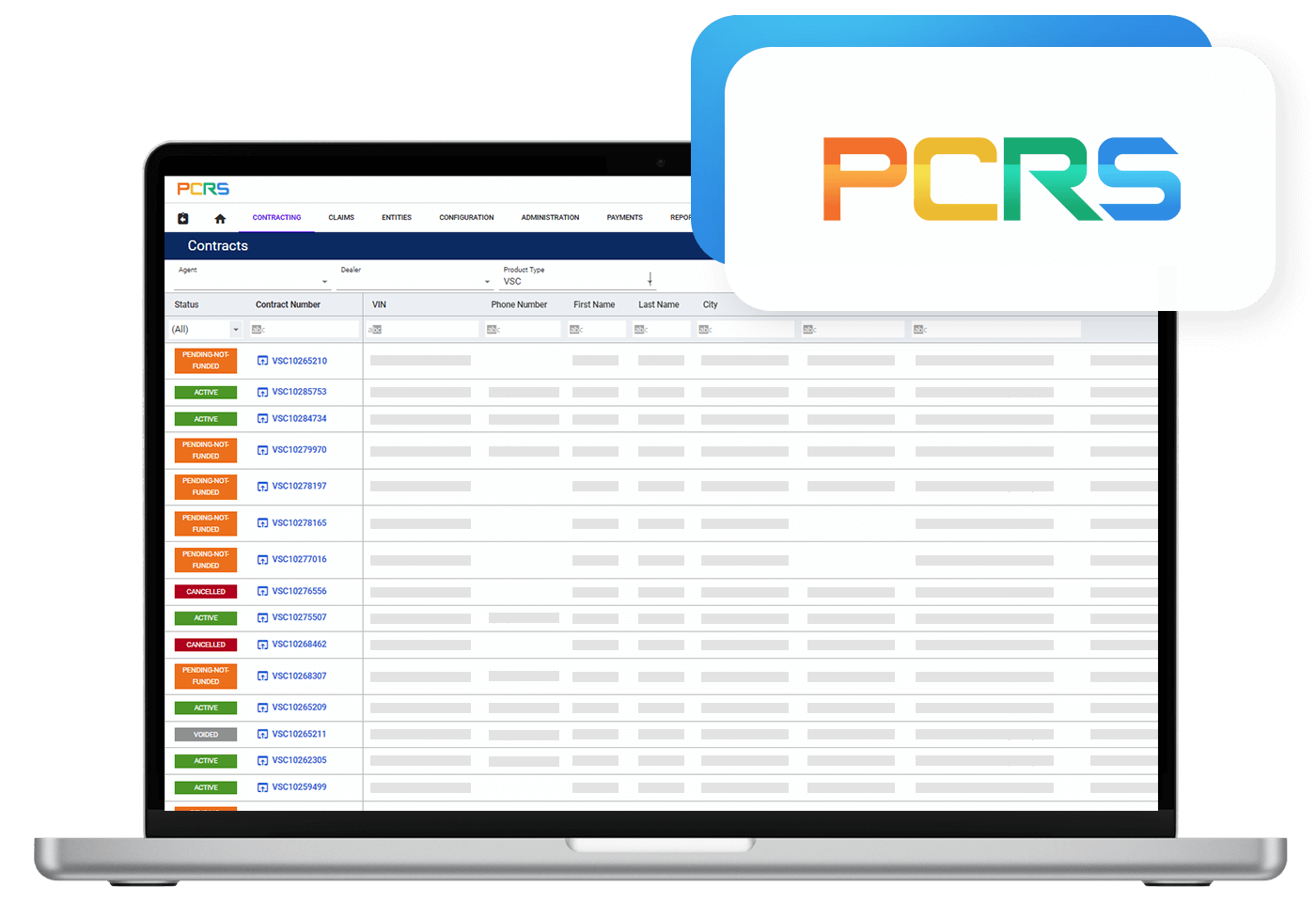
PCMI’s Policy Claim and Reporting Solutions, or PCRS, covers the lifecycle: rates and electronic contracts at the sales end; policy records, billing, commissions and cancellations in the middle; claims and payments when a covered event occurs. Risk and dealer-participation modules address earnings, reserves, reinsurance and related programs. It is a specialized operating system for a specialized business.
The market position becomes clearer once you follow the record. A menu presents products to a buyer; an administration platform keeps managing them afterward. PCMI also offers PCRS Consumer for areas including appliances, electronics and HVAC, with service-network dispatch among its capabilities. The machine changes. The obligation to organize its repair remains.
03 / BUY OR BUILDBuy the foundation, keep the useful bits
For Hendrick AutoGuard, the alternative was developing its own system. Its customer story describes an expensive effort whose parts worked unevenly. PCMI offered a way to fill the gaps while adapting PCRS to useful existing processes, including customized claims screens. Buying did not require treating every established habit as a mistake.
This is the less theatrical meaning of digital transformation: decide which machinery deserves to be yours. A dealership group can have a distinctive service process without needing to develop every accounting and administration function underneath it. Hendrick’s account credits PCRS with a 75% reduction in contract processing time.
Alpha Warranty approached the decision from another direction. Legacy-system uptime and weak connectivity had become business problems. It considered building, outsourcing and buying. PCMI’s experience converting customers from the same legacy system, along with stability and platform connectivity, helped persuade it to switch.
These stories explain PCMI’s practical differentiation better than a feature count does. Industry-specific functionality matters, but so does moving an old book of business without giving up useful tools. A claims tracker or sales application is valuable only while it can reach the administrative record.
04 / DECISIONSAI meets the rule book
PCMI launched Claims Intelligence in August 2025. The first available capability, Intelligent Payments, read service invoices, checked them against approved claims and issued virtual credit card payments under configured rules. That is a bounded task with a clear destination: the invoice matches, or it needs attention.
The current framework groups work into AutomationIQ, InsightsIQ and WorkforceIQ: perform routine actions, examine risk and portfolio patterns, and route claims according to complexity and staff capacity. PCMI describes configurable rules, audit trails and human handling of exceptions. Its proposition is that automation belongs where the claim already lives.
The distinction between observed results and projected savings matters here. PCMI’s current product materials label several performance figures as modeled. A buyer should test the relevant workflow with its own claims mix. A clean invoice, a disputed coverage question and a complicated repair do not impose the same demands on software.
What can another operator copy? Start with a narrow action, define the evidence it needs, retain a review path and measure the exceptions. A system gains little from processing incomplete information with exquisite speed.
05 / THE AWKWARD FITThe vehicle that would not fit
Some software problems begin with an assumption so ordinary nobody notices it. Automotive selling systems expect familiar vehicle identification and data workflows. Specialty sales can fit them badly, producing temporary-VIN workarounds or inconsistent rating inputs.
PCMI’s answer is PresentNow, a PCRS module for RV, powersports and personal-watercraft F&I. Its September 2026 expansion added digital lite menu capabilities: build packages, present options, capture selections or declinations, then proceed to contracting. The advantage begins with specialty-vehicle data and carries through the sale.
At the other end of the financial relationship, TruComply addresses lenders’ F&I loan refund workflows, joining cancellation, calculation, collection and reconciliation. It extends PCMI into an adjacent administrative problem rather than asking lenders to become warranty administrators.
06 / OWNERSHIPThe business behind the back office
Mark Nagelvoort founded PCMI in 2012. Its current company materials report more than 125 customers, 440,000 users and service in 14 countries. September 2026 figures put cumulative processing at more than 171 million contracts and 51 million claims. These are company-reported measures of activity, not revenue or a promise of results.
The commercial model is B2B SaaS, with administration modules, add-ons and integrations sold through a sales-led process. Evaluating it means pricing the whole implementation: software scope, conversion work, connections and staff training. The subscription is one part of the decision; a functioning workflow is the thing being purchased.
Equality Asset Management and First Analysis invested in 2021. Thoma Bravo followed with a strategic growth investment in March 2025. That November, PCMI acquired StoneEagle’s Enterprise Solutions Business Unit, including contract and claims administration systems. StoneEagle’s retail reporting, menu and service-drive products continued independently.

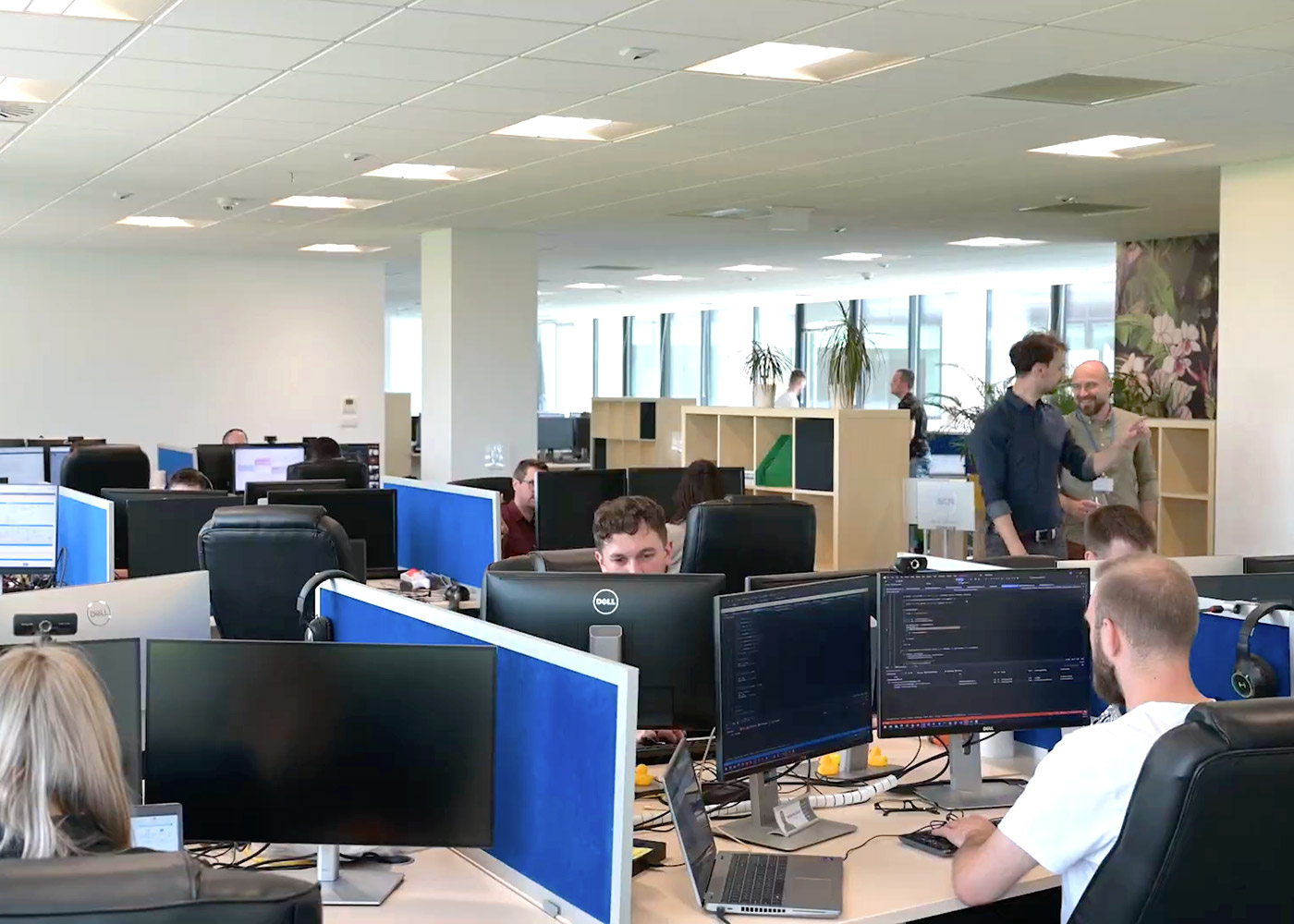
Owen’s appointment moved Nagelvoort to Executive Chairman. Behind that handoff is a distributed team: PCMI’s careers materials describe colleagues across North America, Europe and Asia and emphasize ownership and collaboration. A company selling dependable operations must organize some of its own.
07 / THE TAKEAWAYCount the handoffs
PCMI belongs in the budget of an organization administering a substantial book of contracts, connecting multiple participants and living with recurring claims or refund work. An operator choosing among platforms should examine migration experience, required integrations, policy configuration and customer adoption together. Lender-focused alternatives such as F&I Sentinel overlap with parts of TruComply’s remit; scope matters more than a loose competitor list.
The transferable idea is modest enough to be useful. Count the missing-document requests. Count the systems a person must visit. Count the moments when a claim waits for information already held elsewhere. Guided intake requires people to use it; automation requires dependable inputs and sensible escalation. The machinery cannot correct a process nobody has agreed to follow.
A warranty promises help when something goes wrong. The revealing measure of the software behind it may be how little correspondence is required to deliver that help.