A magazine subscription ought to be an easy thing to count. Someone sees an advertisement, chooses a title and pays. Paul Walsh's difficulty was the customer who did all the sensible things in the wrong medium: found the offer online, then picked up the telephone. The publisher gained a reader. The digital campaign lost the evidence.
For an agency buying search advertising, that gap mattered. Money went out against particular keywords; subscriptions came back through another door. Walsh helped build a way to connect the two, giving website visitors trackable telephone numbers. A routine piece of agency housekeeping became the basis of Infinity, the company he founded in 2010 and launched in 2011.
There is something pleasingly unglamorous about this origin. The telephone was already sitting on everybody's desk. Walsh's opportunity lay in making it answer a question that the advertising report could not.
A computer, a record shop, a change of direction
His interest in computing began with a ZX Spectrum and its instruction book. He wrote games. Later came university in Nottingham, an abandoned course and an online vinyl shop started with a friend. The shop lasted a few years. In 1999 he started Avondale IT, supplying technology services to small businesses.
The work moved through databases and websites into paid search. A magazine client's request in 2002 opened that route. Selling subscriptions brought a practical education in the difference between getting attention and acquiring a customer. Publishers wanted readers at a price they could understand. Search advertising supplied a way to reach them, provided someone kept an eye on what the words were costing.
Rob Pierre joined in 2005, and the business became Jellyfish. It is an unusually useful partnership to keep in view when looking at Walsh: his career includes bringing another leader into the business, changing its identity and, eventually, allowing somebody else to run it.
There were less rewarding experiments, too. A barber shop venture in 2006 went badly and taught him to investigate a market more carefully. Even a founder accustomed to search results can discover that a new business requires rather more research than a new haircut.
“Recognise when the right person is ready to step up”
Paul Walsh, on handing over responsibility
The number was only borrowed
Infinity's idea becomes easier to understand once you stop treating a telephone number as permanent furniture. A website visitor could be shown a number associated with that visit. If the visitor rang, the call could be connected to the online journey that preceded it. The number could later go back into a pool for another visitor.
The useful information was the connection: this enquiry followed this advertising activity. A company could then examine which search terms produced telephone responses and adjust its spending. The service addressed a specific irritation for people who already bought advertising, rather than asking them to adopt an entirely unfamiliar habit.
- 01A searchA visitor follows an advertisement.
- 02A numberThe website displays a trackable number.
- 03A callThe enquiry connects to that visit.
- 04A decisionThe marketer can review what worked.
Infinity's early brochure made the commercial purpose plain: knowing which keywords produced calls could help an advertiser decide where to raise or lower bids. That is a more consequential task than simply totalling how often the telephone rang. A busy line tells a business that people are calling; attribution helps explain what brought them there.
Walsh had experienced the problem from the buyer's side. That experience shaped the product's audience and its presentation. The software had to make sense to the person responsible for a marketing budget. However elaborate the machinery underneath, somebody still needed to decide what to do on Monday morning.
Reigate first. Baltimore on the horizon.
By January 2014, Infinity was moving into a larger office in Reigate. The announcement described open working space, meeting rooms and places to pause with colleagues. Walsh explained the choice in practical terms: access to London, connections around the country and Gatwick nearby. His ambition for that year was to double the UK workforce.
The same announcement set out a further step: a US client services team in Baltimore. Infinity already had American customers. Building support nearer to them would make the company's geography follow its business. These were stated plans at the time, rather than a reason to mistake a recruitment target for an accomplished headcount.
It is a useful snapshot of the founder's job. The invention had to become a place where people worked, with enough space for new colleagues and enough organisation to support customers across borders. A clever way of assigning telephone numbers does not arrange its own desks.
Smedvig Capital's investment was announced in September 2016, with product development and US expansion on the agenda.
Buying room to move
The Smedvig investment changed what Infinity could fund. Its September 2016 announcement identified a company already serving customers in the UK and US, with agency relationships and integrations in place. Walsh wanted the money to accelerate product investment and American expansion.
Warren Newbert had recently joined as chief operating officer. Jon Lerner, Smedvig's managing director, described backing Walsh, Newbert and the team as they built on the business's existing base. The cast was growing along with the ambition. Infinity was entering a stage in which capital, operational experience and distribution mattered alongside the original technology.
For Walsh, the funding was also recognition of a business built without outside investment. The attraction was concrete: more capacity to develop the product and reach customers. It is easy to make a funding round sound like a finishing line. Here it was a budget for the next stretch of work.
He liked the machines. He still needed the people.
In a 2016 interview, Walsh identified people as the chief executive's hardest challenge: recruiting them, motivating them and keeping them informed. He wanted a workplace he would have enjoyed joining himself. His description of the obligation was reciprocal: “it's a two-way relationship.”
That sits comfortably beside his way of approaching technical uncertainty. He talked about setting a direction, working backwards and finding people who could supply skills he did not yet have. The founder could be ambitious without personally containing the entire instruction manual.
His writing about artificial intelligence in early 2017 adds a useful complication. In January, he welcomed automation for routine customer enquiries and simple content, while stressing the need for human judgement and transparency. A customer ought to understand when a company was using a machine to communicate with them.
He also recognised the irritation of a system that makes it difficult to reach a person. Anyone who has negotiated a telephone menu will recognise the distinction between an efficient process and an enjoyable encounter. For someone building technology around calls, the experience at the other end remained part of the problem.
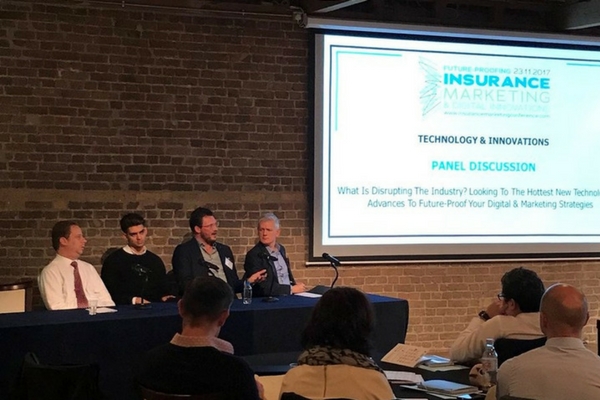
In February 2017, he turned to the future of paid-search account managers. His argument anticipated automation absorbing more everyday campaign work. Managers would need to learn the tools, supervise their operation and correct mistakes. He was interested in what a machine could accomplish, but also in how an employee's work would have to change around it.
Read together, those two essays show a technology founder thinking about the working arrangements that arrive with new software. The interesting question extended beyond whether a task could be automated. It included who would check the result, handle the complicated enquiry and preserve the customer's trust.
From finding a call to understanding it
The product moved further into the conversation. Infinity announced its Conversation Analytics suite in December 2018, allowing businesses to analyse speech across incoming calls. Among its uses were identifying particular words or scripts and recognising calls in which payments occurred.
Walsh's explanation centred on information that businesses were already receiving but struggling to use. “There's so much useful insight within these calls,” he said. The original attribution question concerned the route to the telephone. The newer product examined what happened once somebody answered.
A separate partnership with Vocalcom, announced in November 2017, had approached the handover from another direction. Call handlers could receive the caller's preceding website journey and the source of the enquiry. Information collected for marketing could help the person having the conversation, too. The customer's story no longer needed to restart quite so abruptly at the ringing phone.
A founder can change seats
By September 2021, Walsh was identified as an Infinity non-executive director in the financing announcement for its acquisition of ResponseTap. He was among the existing shareholders supporting the transaction, alongside Smedvig, with a growth debt facility from Claret Capital Partners.
The combined businesses reported more than £15 million in annual recurring revenue and a team of 135. Those figures belong to that transaction and that moment. They mark how far the undertaking had travelled from an agency solving its own attribution problem.
Warren Newbert was chief executive. Walsh's role in this chapter was backing the business as it combined complementary products and operations. The change of seat carries its own kind of continuity: a founder can remain involved while another executive takes responsibility for running the company.
Back to the school gates
Another destination was closer to home. At Carrington School, formerly Warwick School, Walsh became the ACE Foundation's founding benefactor and a co-founding trustee. He had attended the school as a teenager. His support began with a donation that allowed the foundation to start its work.
ACE describes widening access to experiences and essential skills, including opportunities beyond the classroom. Walsh explained his involvement in January 2022 through his connection to the community and his wish for young people's talent and potential to have a chance to develop.
It gives his career a quieter final scene than another software launch. A founder who built a business around the missing connection between two events returned to a place where he had spent his teenage years. Here the work was helping other people find opportunities to try.
Keep the conversation going
- Infinity
- Paul Walsh on LinkedIn
- Paul Walsh on X
- Walsh’s writing at Infinity
- The early magazine story
- A conversation about building Infinity
- The entrepreneur’s account
- The 2016 investment
- ResponseTap acquisition announcement
- ACE Foundation at Carrington School
- Watch: real-time caller insight
- Watch: the anniversary discussion trailer