The obituary arrived early. A competitor, Kamil Rejent later recalled, celebrated Halloween with a tombstone bearing the name Survicate. It was an unusually festive way to predict the end of somebody else’s business. Years later, Rejent had a reply: his company had reached $3 million in annual recurring revenue. The deceased appeared to be sending invoices.
He told that story in December 2023, in a post that mixed celebration with a refusal to manufacture a grand lesson. Progress had come through repeated improvements, the right colleagues, customer feedback and a stubborn hope that the next change might make growth accelerate. The famous hockey stick kept failing to appear on schedule. The business kept growing anyway.
That combination makes Rejent an interesting founder to follow. He can be blunt about the work and amused by his own expectations. He runs a company built around asking questions, yet its history contains repeated discoveries that he had been asking the wrong one. Even the category of software he was building turned out to be negotiable.
“Improve something every single day.”
Kamil Rejent, December 2023
The customer moved the sign on the door
Survicate began in 2013 with a small idea: a website visitor would answer a short question, and the answer would determine which call to action appeared next. Rejent wanted to make those invitations more relevant. The question was supposed to help the banner do its job.
But the survey portion grew more useful than its supporting role suggested. As he later described it, the team invested so much effort in that part that it built a website feedback tool almost by accident. Users were finding a purpose for the product while its makers were still discovering the vocabulary of the market.
Two years later came email surveys, then mobile. The little website interaction had become a multichannel customer feedback business. There is something quietly comic about this origin: a company devoted to finding out what customers want had to let its own customers explain what it was.
Rejent’s account leaves room for the untidy middle of product development. A founder proposes a use. A customer tries something else. The useful response requires enough conviction to keep working and enough flexibility to change the description on the door. In his telling, Survicate’s identity emerged through that exchange.
- 01A tailored
call to action - 02Website
feedback - 03Email & mobile
surveys - 04Research across
feedback sources
Before the questions, DVD players
His apprenticeship took place in businesses considerably larger than a startup. At Samsung, while finishing university, he began as a product marketing assistant and moved into coordinating the marketing and sales strategy for video products, including DVD and Blu-ray players. At Konica Minolta, he worked with document workflow software.
Those jobs gave him experience of both consumer and business products. They also exposed him to global companies, managers he valued and the practical difficulties of selling software. He credits that education without pretending it made starting a company straightforward.
Corporate life also chafed. Rejent has described himself as rebellious and direct, irritated by restrictions on his ability to act. Going independent carried risk, but he wanted to try before the decision became harder. His early picture of SaaS was rather agreeable: make a useful product, put it online, let customers arrive. Experience revised the picture.
His later advice gives away the revision. He warns against chasing growth tricks while neglecting customers and the gradual work of building a business. The appealing part of independence was the freedom to act. The bill for that freedom arrived in daily decisions.
Six years to a milestone that sounds small
In August 2019, Rejent marked Survicate’s 500 active customers on Indie Hackers. It had taken six years. He thanked the people buying the product for supplying both feedback and the energy to continue through experiments and struggle. The next target, 1,000 customers, was coming into view.
Five hundred is an awkward number for startup mythology. It sounds modest beside a platform’s millions of users, and substantial when each customer must choose to pay. Rejent’s note treats it as something earned over time. A milestone acquires a different weight when the calendar is left in the picture.
By the November 2025 Messy Growth conversation, the story was framed around $4.2 million in annual recurring revenue over twelve years. The discussion included competition with Typeform and SurveyMonkey, changes of direction and the practical limits of new tools. Rejent had even tried vibe coding and stopped after two days. Curiosity, evidently, did not oblige him to enjoy every experiment.
August 2019
November 2025 podcast
Different measures, six years apart. Neither is presented as today’s live total.
The attraction of those numbers lies in their elapsed time. Twelve years leaves room for revisions that a launch announcement cannot contain. It also makes the tombstone joke better: predictions of death are cheap; recurring revenue requires the customers to keep coming back.
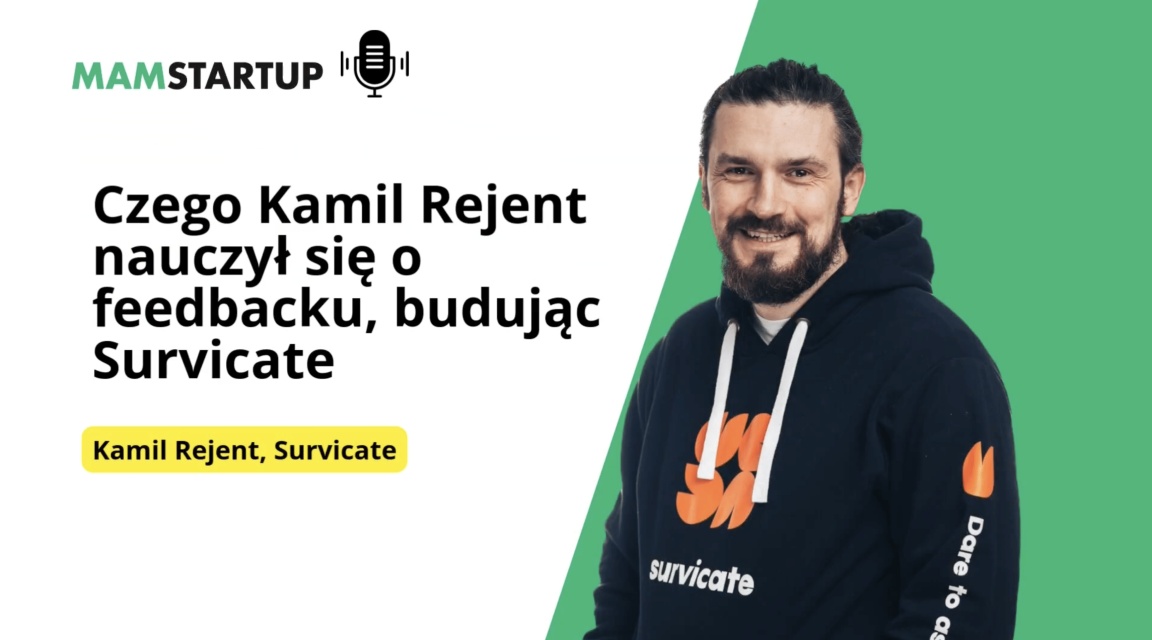
A laptop, a phone, a glass of water
A 2021 inventory of his working tools offers a less theatrical portrait. Asked what was on his desk, Rejent listed a laptop, a phone and water. He used a Dell XPS, wanted a long battery life and a good screen, and preferred a mouse for work. His task backlog lived in Notion.
There were tools for analytics, revenue tracking, recruitment and employee feedback. Asked what future technology he most wanted, he chose a hyperspace drive. It is a pleasingly disproportionate upgrade from a dependable laptop.
He also had a Diesel watch his mother gave him after he completed his master’s degree. He wore it when he needed to dress elegantly, which he said was rare. Among the software subscriptions and devices, that watch supplies a different measure of time: an achievement remembered through a gift.
His connections extend beyond software buyers. He has spoken about the time and attention needed for university partnerships, including benefits that arrive later through interns and community relationships. He has also publicly credited designer Aga Wawro for a Survicate redesign that prompted unsolicited compliments and requests for her contact details. He notices when somebody else’s work makes a difference.
The feedback was already in the room
As Survicate developed, another question became harder to ignore. Customers were offering opinions in support conversations, reviews and other interactions, whether or not anybody sent a survey. An account team might hear one thing while a product team saw another. Gathering answers was only part of the problem.
In his March 2025 conversation with Noah Berk, Rejent described bringing those scattered signals together through Insights Hub. He also credited integrations with established marketing tools, including HubSpot, for helping Survicate gain traction. His route to customers ran through the software they already used.
There was an unusually practical piece of advice for a survey company’s founder to give: at a small enough scale, talk directly to your customers. He also recommended going for a walk. The person selling software for collecting answers still made space for a conversation and some distance from the screen.
In his G2 interview, he emphasized timing, relevance and concise questions. A request for feedback has to fit the customer’s situation. Merely having permission to put a survey on a screen does not make that moment a good time to interrupt.
He also discussed the harder work after collection: interpreting unstructured responses, choosing priorities and showing people how their input affects a product. A completed questionnaire can feel like the finish line to the organization sending it. To the person answering, it may be the beginning of an expectation.
Learning to be corrected, again
By January 2026, Rejent was describing a company culture that circulated feedback through Slack, including especially positive messages called “Love Letters.” He wanted colleagues who could absorb criticism without immediately defending themselves. His phrase for that willingness was “feedback sponge.” It is an unglamorous household object to put at the center of a hiring philosophy, and a useful one.
He also described a better way to ask about pricing: invite people to say what they would change if they managed the pricing themselves. That question gives the respondent a job to do. It opens a wider conversation than simply asking whether something costs too much.
In a May 2026 post, he said the team had talked with more than 100 researchers before building Research Hub. His argument centered on keeping AI analysis connected to the material behind it: a synthesis should lead back to the exact quotation supporting a claim. He was proud of what the team had shipped, and characteristically impatient with products whose AI label promised more than their workflow delivered.
The original idea was to ask a small question before showing a visitor the next thing. Years later, the questions reach further: which evidence matters, what a team has overlooked, whether its first explanation still holds. Rejent keeps putting his own company through the exercise. The Halloween prop can stay in the past. There are customers waiting for an answer.