Patrick Meutzner became a chief executive because somebody had left a box on a form. Trengo was applying for a WhatsApp partnership. The application wanted the name of its CEO. Until then, the founding team had apparently managed the important business of building a company without making that particular label the centre of attention. Meutzner took it on. Corporate history occasionally arrives wearing a crown; this time, it arrived as required information.
The detail fits the business. Trengo began by helping local companies reach customers through WhatsApp, then brought their different communication channels into a shared inbox. Its founders had a practical problem to solve before they had an elaborate hierarchy to maintain. Three people could decide to build something and get on with it. Eventually, the company would become large enough that deciding what to build, and persuading everyone to move together, became separate jobs.
Meutzner has since tried several arrangements. He led Trengo as CEO, handed the role to Marili ’t Hooft-Bolle in 2023 and became its first Chief Product Officer. In April 2026, he announced his return to the chief executive role while keeping product responsibilities. The career looks less like a ladder than an ongoing negotiation with the work itself.
Before the inbox, a knock at the door
His first products were handmade Christmas cards. As a child, he sold them door to door. His father ran a lighting-design business; his mother handled the bookkeeping. Entrepreneurship was present at home in its ordinary working form: making something, finding someone who wanted it and keeping track of what happened afterwards.
By 2008, Meutzner was running a creative web design business, working on identities and logos for clients. He later described that period as an education in understanding what customers actually wanted. A client’s request and a client’s need can be distant relatives. Creative service work makes a person spend time introducing them.
That background matters to the shape of Trengo. Meutzner and Marcel van de Weerd had worked together through a software development agency. With Igo Trampe, they formed the team behind Trengo’s 2017 launch. The proposition was straightforward enough to explain without a slide deck: let colleagues see and handle customer conversations together, even when those conversations arrive through different channels.
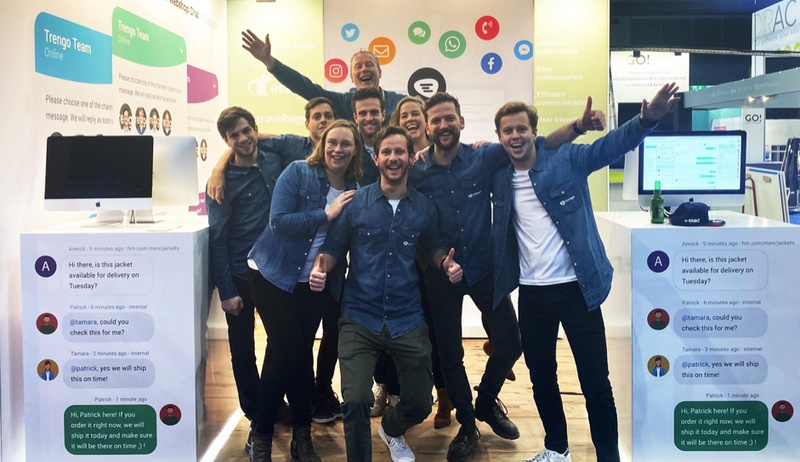
A message can arrive on WhatsApp while the relevant colleague is looking at email. Somebody else may already know the customer’s problem. The conversation then becomes a small administrative expedition. Trengo’s shared view gave teams a place to collaborate around the exchange. The early appeal lay in making a familiar annoyance easier to manage, rather than asking customers to acquire a new habit.
The money they could afford to turn down
For its first three years, Trengo grew without outside funding. By the time Peak announced its €1.75 million investment in February 2020, the company had more than 700 customers. It was already profitable. That gave the founders a useful freedom: they could consider investment as a choice about pace and partnership.
Peak had to make its case. The two sides held strategy sessions, discussed how the business operated and worked on plans together. An investor relationship would outlast a pleasant meeting. Trying some of the work before agreeing to the deal gave both sides something more informative than mutual enthusiasm.
In 2021, Insight Partners and Peak backed a $36 million Series A, reported in the Netherlands as roughly €31 million. At the announcement, Trengo had more than 2,000 customers across 60 countries. Europcar and OPPO were among its users. The round would support international growth, recruitment and further development of the platform. Those figures belong to that moment, when the company’s reach was expanding beyond its early base.
The celebration had rather less interest in understatement. Employees were brought together without knowing the announcement. During Meutzner’s speech, an aircraft appeared with a banner declaring the investment. He invited everyone to take champagne towards the beach. A shared inbox is a sober product; its funding announcement was permitted a little altitude.
A bigger team changes the question
Capital also bought the chance to stop doing everything personally. Meutzner had still been involved in tasks such as newsletters and marketing. Peak encouraged the founders to hire experienced senior leaders. The cost was initially uncomfortable, but those appointments took responsibilities off the founders’ desks and created room for strategy.
Customer service was particularly difficult for him to hand over. A founder accumulates product knowledge by being there for the decisions, mistakes and revisions. A new colleague has to learn it. Delegation therefore requires more than assigning an inbox. It means tolerating the distance between what the founder knows immediately and what someone else can learn with time.
By 2022, his leadership problem had changed. He described the difference between a small team agreeing to build something and an organisation of more than 100 people needing to understand the direction. He was also adapting the company’s growth plans to a more difficult economic environment, stressing efficiency and a faster return on the activities Trengo funded.
There was still plenty happening inside the product. In his review of 2022, Meutzner reported 50 million conversations processed during the year and more than 3.5 million automated by Trengo’s no-code Flowbot. The company had become a WhatsApp Business Solution Provider. These were different kinds of milestones from a financing round: evidence of the volume of work passing through the software.
In September 2023, the leadership arrangement changed. Marili ’t Hooft-Bolle became CEO, effective from the start of the month, and Meutzner moved into the newly created Chief Product Officer role. Trengo was setting out an AI-driven customer engagement strategy. He could work closer to the product while someone else carried the chief executive brief.
“How many of your guests actually read your automated messages?”
Patrick Meutzner · AHC 2025
A guest waiting to be noticed
Hospitality supplied a concrete test for those product ideas. Meutzner described arriving at a hotel where the reception staff were occupied with phone calls. He was physically present, waiting, while other guests received answers to familiar questions. A business could have diligent employees and functioning telephones, yet still make a person feel overlooked.
At the 2025 hospitality conference in Manchester, he demonstrated an AI receptionist called Isabella. Using a phone volunteered by an audience member, he asked about a penthouse booking, early check-in, bringing a dog and electric-vehicle parking. The choice of questions was revealing. Customer service is full of modest details that become quite important when someone is trying to make a plan.
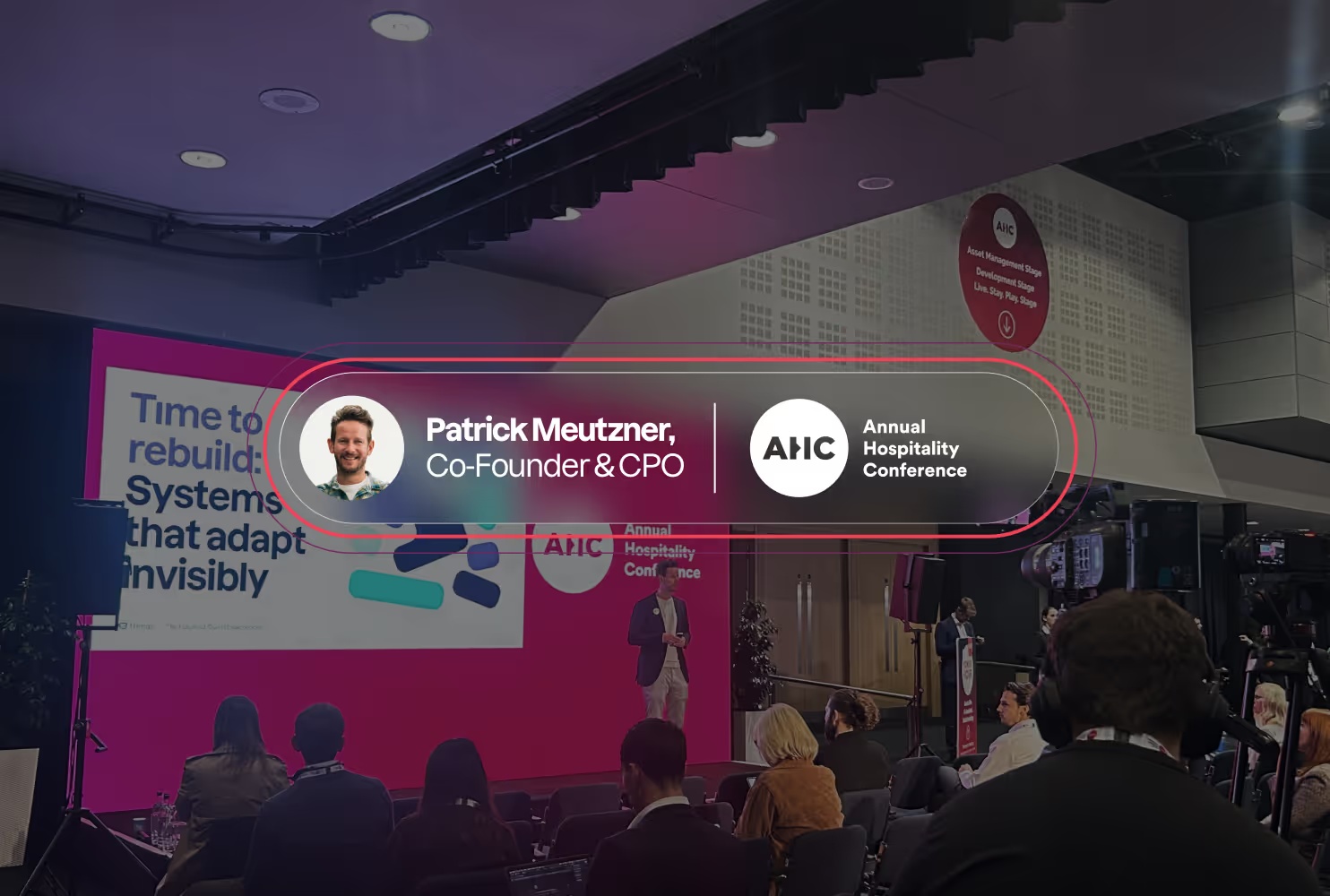
He also questioned the habit of treating automation as an invitation to send more messages. A hotel can schedule a pre-arrival email, a check-in reminder and a follow-up without knowing whether any of them helps the guest. His emphasis was on coordinating the conversation: choosing a useful channel and moment, keeping context and knowing when a person should take over.
Automated help
A colleague with context
Conceptual illustration of Trengo’s approach, not a performance measurement.
The commercial aim is clear. Staff should have more time for customers who need their attention, while routine requests receive answers without a queue. Whether a particular deployment achieves that depends on the work it can handle. A demonstration offers a useful glimpse; the repeated, untidy demands of customers supply the longer examination.
Back to the job, closer to the product
When Meutzner announced his return as CEO in April 2026, he credited Marili with reshaping Trengo and building its senior leadership team. He described a business ready for a period in which AI agents could take a more active part in support and sales. He wanted to combine product work with setting direction, supported by the people leading the organisation around him.
The latest e-commerce work extends that ambition. Trengo’s early-access page describes an agent intended to work with Trengo or another inbox. Meutzner argues that the platform around an agent can limit what it does. The practical challenge is to let useful automation reach the work, rather than stopping at the edge of a particular messaging tool.
He has tested the same impulse on a smaller and less glamorous territory: his private email. He described building an automation that closes messages which do not need his attention and leaves important ones visible. He said the setup took five minutes. Even a founder working on AI agents still has an inbox to tidy.
His advice to other founders has become correspondingly specific. After Trengo’s recognition among the Utrecht Region’s Top 20 Scale-ups at Crossroads 2026, he highlighted taking core values seriously before expansion, writing down expectations for each role and promoting from within. He also credited early international experiments and continued testing in product and marketing.
The advice brings his story back to people and the work they can usefully do. Meutzner has sold cards, interpreted design briefs, built software, raised money and learned to put responsibilities in other hands. He has also returned to a title he once took because a form demanded it. This time, the reason comes with a fuller job description: lead the company, keep building and make room for the next useful conversation.