Trengo Bet the Company on WhatsApp Beating Email
The Utrecht startup pulled a dozen messaging channels into one inbox and raised $36 million on a simple hunch - that customers would rather text a business than email it. Now its AI is chasing the 84% of questions nobody wants to answer twice.
Open your email once a day, maybe. Open WhatsApp forty times. Somewhere in that gap between how people actually behave and how companies still ask to be contacted, three founders in Utrecht spotted a business. Trengo runs on a claim you can test on yourself: a message pinged to your phone gets read almost every time, while an email waits in a folder until you are bored enough to look. Roughly 98% of WhatsApp messages get opened. Email struggles to clear half that. Build the company around the higher number.
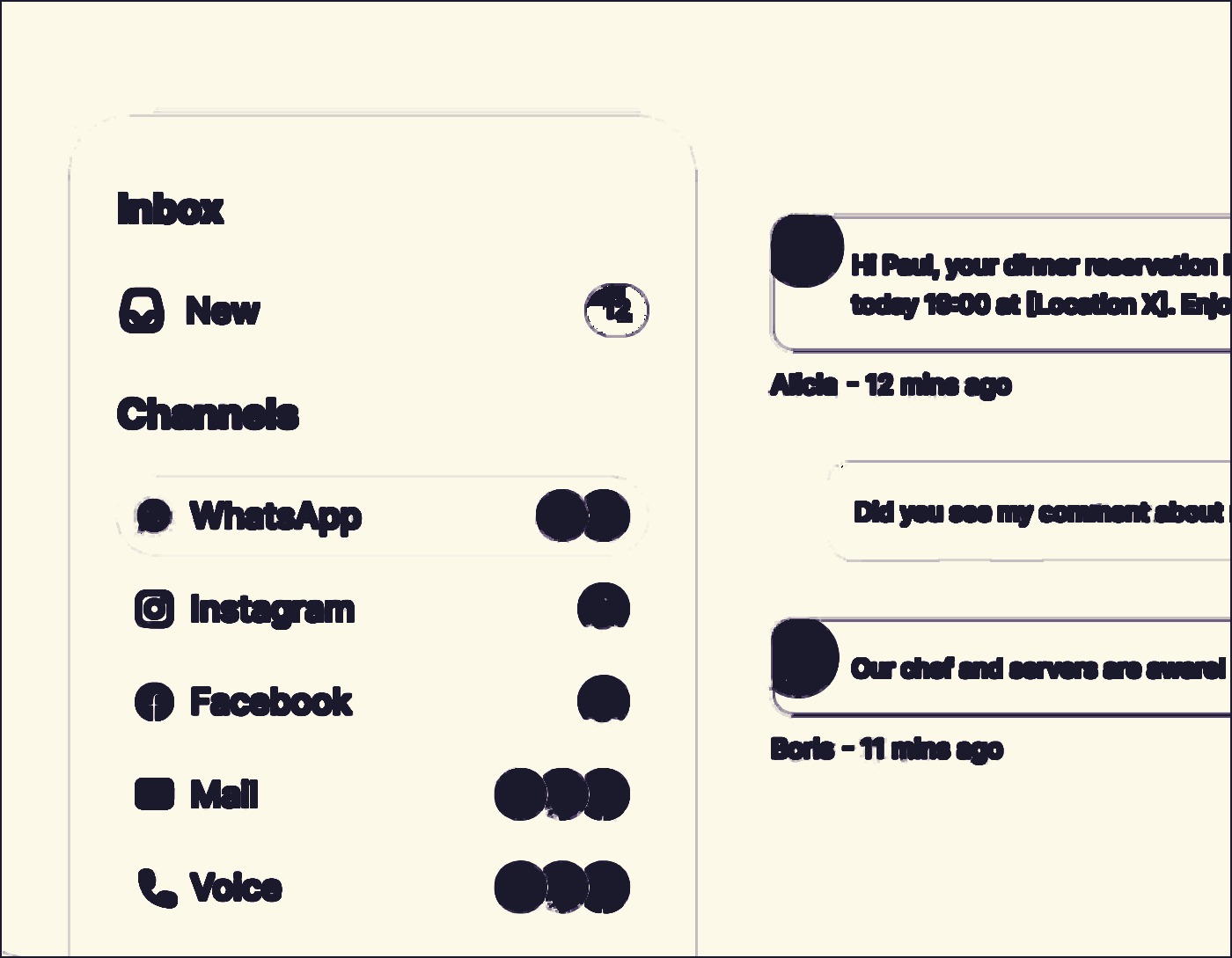
Trengo is a customer engagement platform, which is a tidy way of describing something most support teams live inside all day and quietly resent. Customers write in from everywhere - email, live chat, WhatsApp, Instagram DMs, Facebook Messenger, SMS, Telegram, a phone call. Each channel usually has its own app, its own login, its own notification badge. An agent spends the day tab-hopping, losing context with every switch. Trengo's answer is boring in the best way: put all of it in one inbox, so a person answers questions instead of hunting for where they landed.
01 / THE BETWhy one number ran the whole strategy
Plenty of tools promise more channels. Trengo's real position is narrower and sharper: chat should be the front door, and WhatsApp in particular should carry the weight. The Netherlands and much of Europe already treats WhatsApp as the default way to reach anyone, so pointing a support product at it was less a gamble than reading the room. Trengo became an official WhatsApp Business Partner and leaned into use cases most helpdesks treated as an afterthought.
The payoff shows up in customer stories the company likes to tell. Dutch DIY retailer Hubo reportedly drives around 60% of its revenue through WhatsApp conversations managed in Trengo. Cisco Meraki has used the platform to field more than 10,000 support requests a month. Digify Africa delivered training to 136,000 young people through automated messaging. Different industries, same underlying observation - the message channel people already prefer will do more work than the one companies keep insisting on.
The insight was not a new channel. It was refusing to make customers use the old ones on the company's terms. Sometimes that is the entire business.
Message open rates, roughly
02 / THE ORIGINThey earned the round before they raised it
Trengo was founded in Utrecht in 2017 by Patrick Meutzner, Marcel van de Weerd and Igo Trampe. Meutzner took the CEO seat, Trampe ran operations. The part worth pausing on is the order of events. Before any venture money arrived, the founders grew the product to more than 700 paying customers while bootstrapped. A small round led by Peak, around 1.75 million euros, came in 2019 - and even that landed after demand was already obvious.
Then it compounded. In the year around the raise, Trengo tripled its customer base from roughly 700 to 2,000, counting names like Europcar, OPPO and Pon's Porsche dealer group. It went from twelve employees to seventy in a single year and was processing more than 12.5 million messages a month. In September 2021, Insight Partners led a $36 million Series A, with Peak returning, to fund international expansion.
Bootstrapping to 700 customers first is not a fundraising story. It is product-market fit that happened to end in a check.
03 / THE PRODUCTSelling subtraction, not features
Most software sells you more. More dashboards, more integrations, more toggles. Trengo's pitch runs the other way - fewer open tabs, fewer places to check, fewer moments where a customer's message slips through because it came in on the channel nobody was watching. That framing matters because it changes what "winning" looks like. The strongest version of this product is not the one with the most features. It is the one so woven into ten daily workflows that ripping it out feels worse than keeping it.
Around the core inbox, Trengo adds the machinery a growing team needs: smart routing that assigns each conversation to the right person, no-code flowbots for the predictable back-and-forth, shared internal notes so agents stop forwarding screenshots, and analytics that measure both human and automated performance in one place. None of it is flashy. All of it removes a small daily annoyance, and small daily annoyances are what actually drive software churn.
One conversation layer
04 / THE AI TURNAutomate the questions no one wanted
The customer-service AI race is loud right now, and every vendor claims a bot that will change everything. Trengo's angle is quieter and, honestly, more believable. Its AI HelpMate and AI Agents are aimed squarely at the repetitive tier - where is my order, what are your opening hours, how do I reset this. Trengo says its AI can resolve up to 84% of those repetitive conversations, answer chats and emails instantly, suggest replies to human agents, and work across 26 languages, all built from a company's own knowledge base.
The useful mental model is a split, not a replacement. Hand the boring, high-volume questions to software, which never tires and never asks for a break, and route the interesting or sensitive ones to a person who actually has room to think about them. Done well, customers get faster answers and agents get their attention back. That is a less thrilling promise than "AI will run your support desk," and it is the one more likely to survive contact with a real Monday morning.
05 / THE FIELDWhere Trengo sits next to the rest
Trengo operates in a crowded room. Freshworks and its Freshdesk suite bring a broad ticketing stack. Kayako pitches a fuller customer-experience platform that connects channels into one journey. Groove keeps a shared inbox simple for smaller teams. Supportbench, TeamSupport and others each stake out a slice. The features overlap enough that comparison charts blur together.
What keeps Trengo distinct is the emphasis. It leans hardest on channel consolidation and WhatsApp-first messaging for small and mid-sized businesses, rather than presenting itself as a heavy enterprise help-desk. If your customers live in chat and you want one place to answer them with AI doing the repetitive lifting, that is the shape of Trengo's bet. If you need deep ticket workflows and sprawling enterprise routing, the comparison gets closer and the choice comes down to fit.
06 / THE TAKEAWAYWhat you can steal from it
Strip away the funding and the feature list and Trengo leaves a portable lesson. Find a channel your customers already love, then make it the easiest place for a business to show up. Do not invent the behavior. Notice it, and remove the friction that keeps companies from meeting people there. Trengo did not talk anyone into using WhatsApp. It just built the tool that let a business answer as fast as its customers were already writing.
There is a second lesson in the timeline. The founders proved demand with paying customers before they raised, which meant the venture money accelerated something real instead of searching for it. That order - product first, capital second - is unglamorous and keeps working. The clearest small idea, executed patiently, tends to scale faster than the clever complicated one.
Whether Trengo becomes the default conversation layer for growing businesses is still an open question in a market that adds a competitor every quarter. But the thesis has aged well. Customers keep drifting toward chat, email keeps sitting unread, and the tool that quietly holds every channel in one place keeps looking less like a nice-to-have and more like plumbing.
✦
Explore Trengo
- WEBtrengo.com
- PRODUCTAI HelpMate
- LINKEDINlinkedin.com/company/trengo
- FUNDINGSeries A announcement (Insight Partners)
- PRESSVentureBeat: Trengo nabs $36M
FAQQuestions people ask
What does Trengo do?
Trengo is an omnichannel customer engagement platform. It pulls messaging channels like WhatsApp, email, live chat, voice, Instagram and Facebook Messenger into one shared inbox, then adds AI agents and no-code flowbots to automate routine conversations and route the rest to the right team member.
Who founded Trengo and when?
Trengo was founded in Utrecht, Netherlands in 2017 by Patrick Meutzner, Marcel van de Weerd and Igo Trampe. Meutzner served as CEO and Trampe as COO.
How much funding has Trengo raised?
Trengo raised about €1.75M led by Peak in 2019 and a $36M Series A led by Insight Partners with Peak in 2021 - roughly $38M in total across two rounds.
How is Trengo different from Freshworks, Kayako or Groove?
Trengo leans hardest on channel consolidation and WhatsApp-first messaging for small and mid-sized businesses, where tools like Freshdesk emphasize a broader ticketing suite and Kayako focuses on connecting channels into a fuller customer-experience platform. They overlap in practice, but Trengo's pitch is a single inbox plus AI rather than a heavy help-desk stack.
What can Trengo's AI actually do?
Trengo's AI HelpMate and AI Agents can instantly answer chats and emails, suggest replies to human agents, resolve FAQs from a knowledge base, and support customers in 26 languages. Trengo says its AI can resolve up to 84% of repetitive conversations.