There is a small joke hidden in the public-relations business. An agency is hired to make a client distinctive, then the agency’s own website presents a parade of interchangeable promises: bold thinking, big ideas, measurable impact. Parsons + Co, a Seattle firm founded by Joanie Parsons in 1992, found a better piece of evidence. Look at whom it chooses to represent.
The list includes the nation’s largest food co-op, a national museum, a biodynamic winery, an organic doughnut company, an outdoor outfitter, a compostable lipstick startup, a farmland trust and a women’s events community. Different products, same pressure: each organization has a social or environmental idea sitting beside the thing it sells. The communications job is to keep that idea from becoming either invisible or insufferable.
That is where Parsons + Co fits. It is a full-service strategic communications shop, but “full service” understates the sequence. The firm can run stakeholder surveys, define a brand platform, write the message, design the website, court reporters and creators, produce a video, stage the event and handle the crisis afterward. The product is not any one of those items. It is the connective tissue between them.
The first decision happens before the pitch
Parsons calls its preferred clients “companies and leaders working to make change.” That sounds pleasantly broad until you inspect the portfolio. PCC Community Markets hired the firm to raise visibility and reengage consumers around sustainable food and community ownership. Vermouth Beauty needed crisp language for plastic-free lip crayons in a beauty market with its volume knob snapped off. Montinore Estate wanted its biodynamic farming to register as a real distinction, not a decorative adjective. The National Nordic Museum needed attention for contemporary exhibitions, including shows strange and specific enough to be smelled.
The recurring move is to locate the most defensible truth in the business and make it portable. For Fast Penny Spirits, it was a Pacific Northwest interpretation of amaro, made with consciously sourced ingredients by women founders. Parsons helped explain the unfamiliar drink, build relationships with spirits writers and even name the distillery’s charitable arm. For Filson, the assignment was almost the reverse: take an extremely familiar 1897 heritage and make a new flagship store feel like its next chapter.
“Brand strategy is the launchpad for everything we do.”Parsons + Co
This is more consequential than it looks. Publicity is often treated as a loudspeaker. Parsons treats it as the final component in a system. Its own shorthand has three parts: strategy, story and consistency. Strategy decides the position. Story gives people a reason to repeat it. Consistency keeps the marketing calendar, budget and voice from drifting apart.
A press hit is useful. A room is better.
The firm’s case studies are most convincing when attention becomes physical. Parsons led media outreach and coordination for the Seattle debut of the Travel & Adventure Show. Television segments and local coverage fed an event that attracted more than 9,000 people over two days, beating attendance forecasts. For Filson, it managed a flagship launch for more than 1,400 guests. Media mattered in both cases, but the coverage had somewhere to send people - a hall, a store, a shared experience.
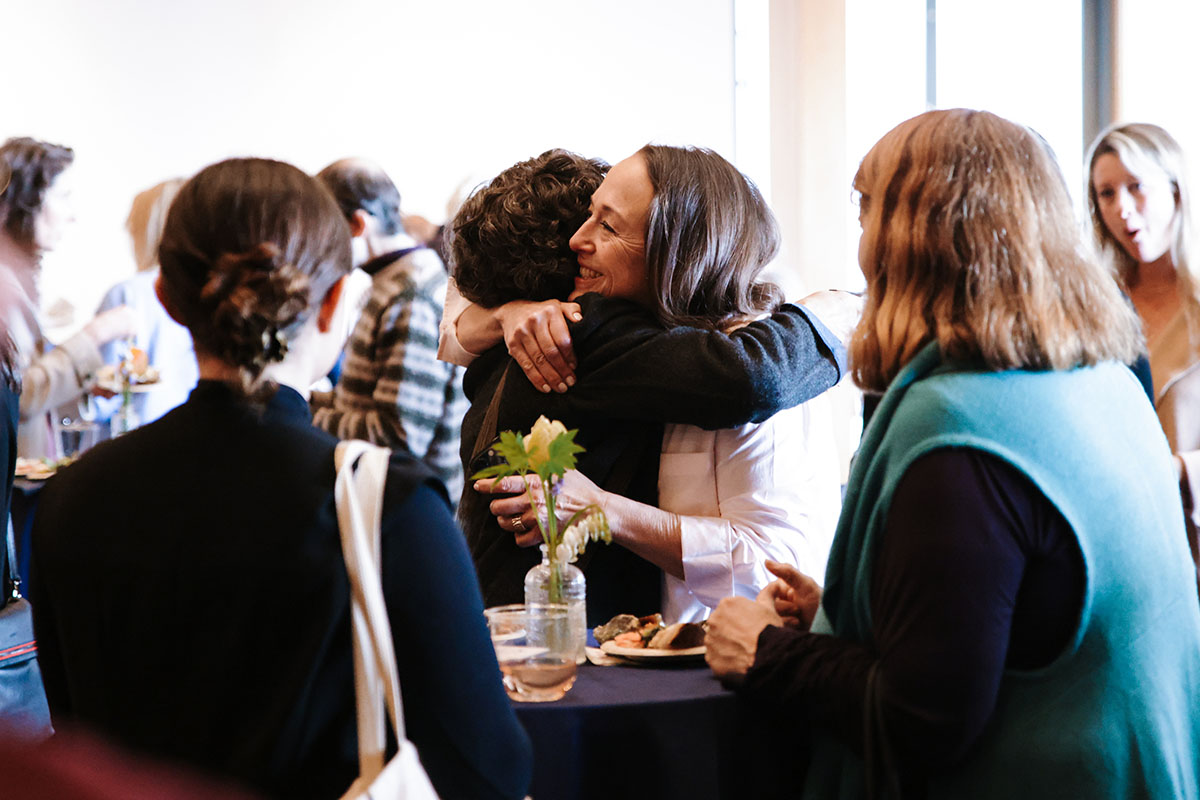
That adjacent business is RevelEleven, the women’s community Joanie Parsons co-founded in 2017. Parsons + Co developed the identity and messaging, planned communications, built the website, shaped social strategy, and produced events and retreats. The latest company tally lists more than 100 in-person events, 300 virtual speaker events and 20 retreats, with over 11,000 newsletter subscribers.
RevelEleven matters because it is more than a client logo. It is a demonstration model. The agency says it can build a community; here is the community. It says it can move between messages, software, speakers, logistics and social content; here are hundreds of gatherings produced across those channels. When the pandemic made rooms unreliable, the organizers shifted their energy into virtual speakers and fitness programming. The delivery mechanism changed first. The organizing idea did not.
The menu is broad. The taste is specific.
Parsons + Co competes with PR agencies, brand consultancies, social shops, event producers, web studios and in-house teams. Its advantage is not having invented a service nobody else offers. It is the ability to put many familiar services under one editorial judgment. A small organization does not have to teach six vendors the same truth six times.
Find the position
Brand and business strategy, messaging, leadership work, stakeholder research and perception surveys.
Earn attention
Media relations, social campaigns, influencer outreach, crisis communications and reporting.
Make the objects
Creative direction, writing, design, websites, content strategy and video production.
Build the room
Events, experiential marketing, community connections, employee culture and partnerships.
The customers range from startups to established brands, with depth in food and drink, travel, hospitality, culture, women’s leadership and the built environment. The business model is the classic independent professional-services model: clients buy the thinking and execution of a compact team. Its public roster lists strategists, writers, media operators, a creative director and two dogs assigned to “barketing strategy.” Prices are kept between agency and client, as agency prices generally are.
Culture, here, is not entirely an office foosball problem. Through Parsons Goodworks, the firm reports years of board service, donations and fundraising. It helped raise more than $30,000 for Boys & Girls Clubs of Bellevue during the pandemic. Parsons herself raised more than $90,000 for Plymouth Housing through Seattle Dances in 2022. The company’s preferred market - purpose-led organizations - overlaps conspicuously with the causes its people support.
The useful thing to steal
A reader does not need a public-relations budget to copy the central idea. Begin with selection. Pick the audience you are willing to disappoint, the claim you can prove and the clients or customers whose presence makes the claim believable. Then write one sentence that survives outside the conference room. Finally, build a repeatable occasion for the audience to experience it: a store opening, a tasting, a conversation, a newsletter, a useful ritual.
A four-line brief worth copying
1. Name the truth the product can defend.
2. Say it in language a customer would actually repeat.
3. Give the attention a destination - a room, event or community.
4. Count behavior, not merely impressions.
This works best when the mission is visible in the operations: compostable packaging, biodynamic farming, member ownership, preserved farmland. It is a poor fit when “purpose” exists only in the campaign, when leaders will not make choices that support the message, or when a commodity product is looking for a costume. Coherence cannot be bolted on at the press-release stage.
Joanie Parsons once described herself as an “inspiration junkie” and suggested replacing networking with “net-funning” - a walk, a bike ride, yoga or happy hour. It is a playful phrase with a serious observation inside it. Connection becomes more believable when people are doing something together. Parsons + Co has spent 34 years turning that observation into launches, stories, communities and the occasional very crowded room.