The most revealing slide in an agency pitch is usually not the one anyone remembers. It is not the lavish brand mockup or the chart pointing urgently up and to the right. It is the page where the agency explains what working together will feel like after the room has emptied and the invoices begin. Years ago, a new client told the Columbus firm then known as FrazierHeiby that this was precisely why he had hired it. The clincher was slide nine.
That page described a client-experience model built around three sturdy words: trust, transparency and tenacity. The words themselves would not trouble a copywriter. Plenty of agencies promise all three before lunch. What mattered was that a buyer could point to a single page and say, in effect, this is the part I bought. When the agency needed a new name in 2022, it returned to that remark. Slide Nine was sitting there in the minutes of an old win, waiting to be noticed.
The old name stopped telling the truth
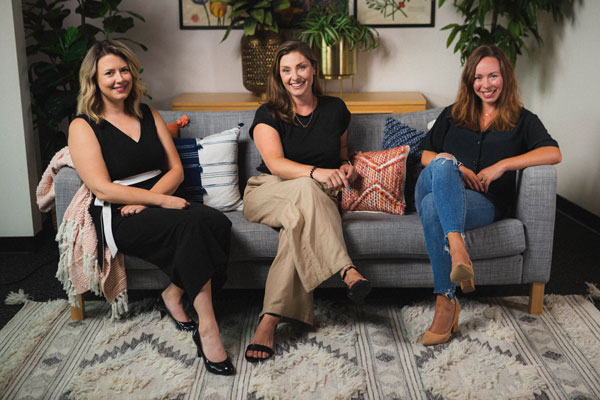
The business began in 1983 as Cleary Communications, founded by Sandy Cleary, and later became FrazierHeiby. By January 2020, another change was underway. Lauren Parker, Ann Mulvany and Whitney Somerville bought the agency from its retiring owners. Parker became president and CEO; Mulvany led operations; Somerville took charge of experience. They knew communications. Ownership introduced the less cinematic curriculum of cash flow, hiring, capacity and risk.
Then came the pandemic. The inherited firm survived, expanded and, under the new group, said it tripled annual revenue and more than doubled its workforce. By early 2022, the leaders faced an oddly fortunate problem: the old name still carried history, but it described people who no longer owned the place. The firm had changed before the stationery did.
This is the useful sequence. Slide Nine did not begin with the logo and hope behavior would catch up. The ownership, economics and team had already moved. Research for the new identity asked why clients chose the agency. The answer hiding in the pitch deck gave the new company a story with evidence attached. “Slide” suggested movement without friction; nine, the last single digit, suggested an ending that is also the edge of another beginning. A little numerology never hurt a naming presentation, but the customer anecdote did the heavier work.
The product is partly the cadence
Slide Nine sells the familiar shelves of an integrated communications agency: strategic planning, branding and positioning, public relations, social media, content marketing, crisis and reputation counsel, employee engagement, creative design and measurement. Clients can hire it for a retained agency-of-record relationship or a defined project. The buyers tend to be organizations with technical, regulated or easily misunderstood stories - healthcare systems, manufacturers, energy and agriculture groups, technology companies, financial institutions and nonprofits.
Its public client list ranges from AEP Ohio, Battelle and Honda to OhioHealth, Nationwide, Farm Credit Mid-America and Marriott Vacations Worldwide. The range can look scattered until you see the common assignment. These are not usually businesses whose product explains itself in a six-second clip. Their communications teams need to move a board, a newsroom, a workforce, a regulator, a patient, an investor or a skeptical consumer without sanding away the facts.
The differentiation is less a secret tactic than a visible rhythm. Slide Nine describes joint Slack channels and group email addresses, weekly status meetings, weekly flash reports, monthly analytics and quarterly strategy sessions. This is agency plumbing, and that is precisely why it matters. A clever campaign cannot compensate for a client who never knows what is happening, where the budget went or whether anyone noticed the market changed on Tuesday.
The model is also independent. The agency says its expertise goes into the client's brand rather than the priorities of a parent company or outside shareholders. Its WBENC certification formalizes the women-owned status restored in 2020. The team has been virtual-first since 2023, with people working beyond Columbus, but the company pairs flexibility with deliberate gathering and benefits that include paid family leave, professional-development room and reduced billable capacity.
Apples, space lasers and child care
Case studies are where an agency's adjectives have to report for work. For Crunch Time Apple Growers, a coalition of more than 150 New York growers, Slide Nine used paid media, influencer partnerships, recipes and a satellite media tour to make SnapDragon apples less anonymous in a crowded produce aisle. The tour generated more than 50 million impressions in priority states, while a New York television cooking segment reached more than 24,000 households.
For German laser-communications company Mynaric, the problem was credibility ahead of a 2021 U.S. listing. Slide Nine studied aerospace IPO coverage, coordinated with Nasdaq, prepared executives and ran the media, social and internal communications around the day. The agency counted 372 media results globally, 115 in the United States. It is hard to resist a case study involving employees with light sabers in Times Square, but the serious point is preproduction: the team tried to finish the thinking before the opening bell.
The most consequential numbers came closer to home. Action for Children needed Central Ohio families, educators and child-care operators to understand Franklin County RISE, a program created to steady a strained care system. Slide Nine began with focus groups, learned that misinformation and frustration were blocking action, and built an omnichannel campaign across paid, social, earned, print, events and the web. The program ultimately distributed $6 million in scholarships to 764 children, filled 86 child-care positions and awarded $1.3 million in incentives to programs. Communications did not create the funding. It helped the funding find people.
Selected outcomes, different units
The agency has since collected industry validation: repeat appearances on Columbus Business First's Fast 50, four Central Ohio PRism honors in 2025 and another campaign award in 2026 for helping Digital Diagnostics lead the responsible-AI conversation in healthcare. Marriott Vacations Worldwide selected Slide Nine as its corporate communications agency of record in 2024 after a competitive review. None of this reveals the firm's private revenue, purchase price or rebrand budget. It does reveal where buyers and judges found value.
The copyable part is not the number
There is a temptation to copy the surface joke. A consultancy could become Page Four tomorrow; a software shop might rename itself Tab Seven. That would miss the mechanism. Slide Nine first asked a customer which exact piece of the sale mattered. Then it checked that answer against the company it had become. Only after that did it make the finding public.
A small playbook worth stealing
- Ask recent buyers what specific promise, proof or moment closed the decision.
- Turn that promise into a repeatable operating cadence before it becomes a slogan.
- Show clients the work in progress, not only the polished reveal.
- Choose measures that connect attention to an action people can take.
There are conditions. The research-first model needs access to leaders and audiences; the reporting rhythm needs objectives worth reporting against. A client seeking a quick artifact while withholding context will get less from it. So will one that wants reach at any price, or a guaranteed viral hit. Slide Nine itself has written that there is no content hack. Its better proposition is slower and less magical: learn the business, find the friction, make the story easier to move, then count what moved.
The ninth slide worked because it made an invisible service tangible. Later, it made an old company newly legible. That is a neat trick for any brand, but especially for a communications agency: the name is not a claim that it tells good stories. It is a story about being chosen.