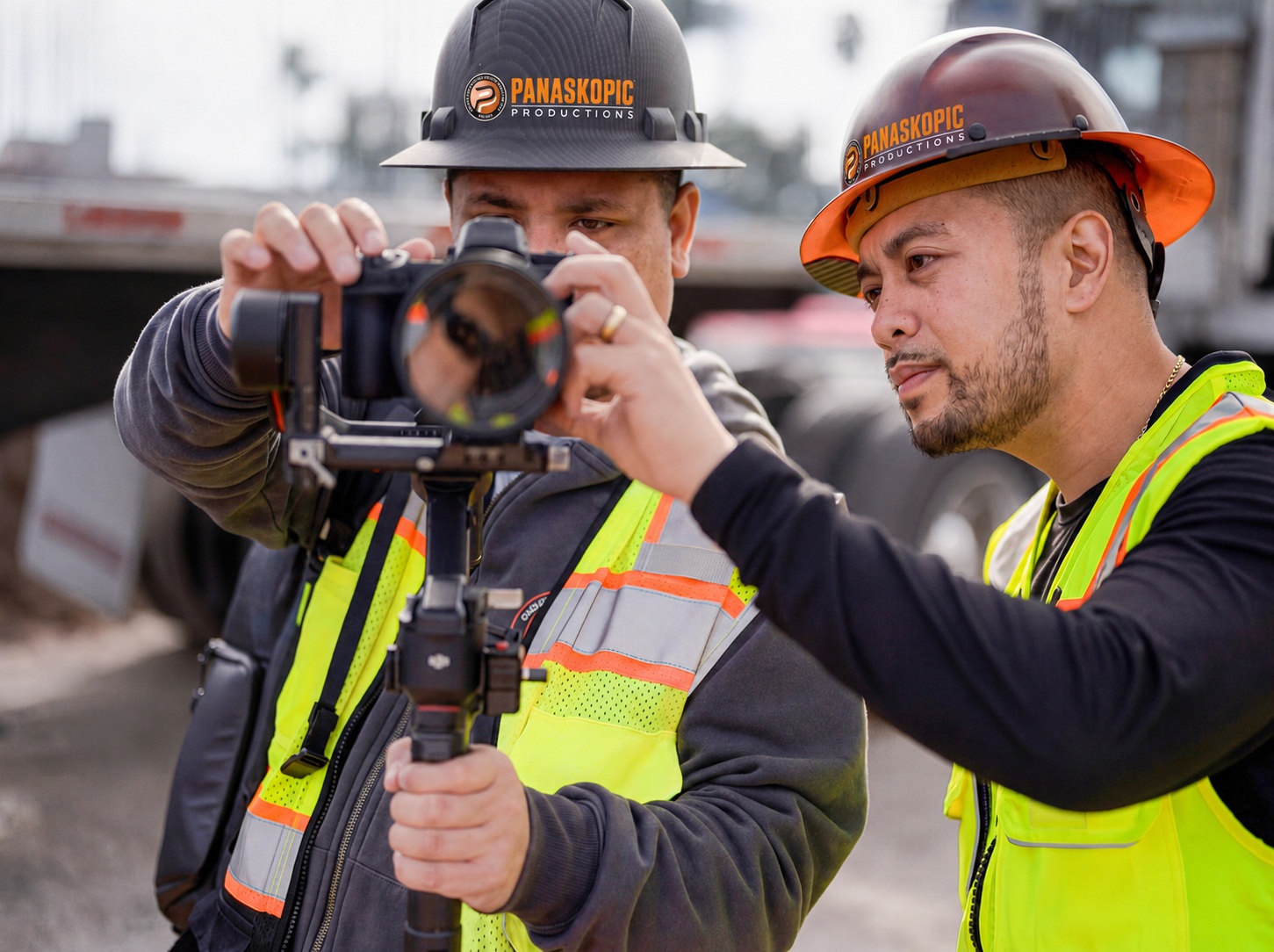
The drywall is going up. For the builder, that is progress. For the photographer, it is a deadline. Once a wall closes, the wiring, framing, and coordination behind it become much harder to show. Panaskopic Productions has made a business out of catching construction companies in the act of being good at their jobs, then giving those pictures somewhere useful to go.
The California firm sells marketing to general contractors, subcontractors, and construction vendors. Its menu stretches from websites and drone video to qualifications packages and embroidered jackets. The connecting idea is straightforward: a contractor’s completed work and daily field activity should help explain why someone should consider hiring that contractor again.
That makes Panaskopic an interesting business in a category crowded with promises about visibility. The company goes to the place where the evidence is being made. A crew photograph can become a recruiting post. A project sequence can support a proposal. A finished-building image can anchor a website. The commercial opportunity lies in organizing those connections.
The first problem was the shop window
In its account of the company’s beginnings, Panaskopic identifies Roy Panaligan’s construction background as the starting point. Before founding the business, he worked in operations with a general contractor and a fire protection subcontractor. He saw companies whose websites, pictures, and presentation did a poor job of representing what their people could actually deliver.
The business dates to 2015. Its origin story describes a familiar mismatch: substantial experience in the field, an unimpressive introduction online. Outdated pages, inconsistent imagery, and weak proposal materials could leave a capable contractor looking less established than it was. Panaskopic’s response was to bring the production and marketing work into one team.
Today, its team page identifies Roy as chief executive and Hazel as chief operations officer. The company describes an in-house operation spanning photography, design, and marketing. The relevant expertise is both visual and organizational: knowing what to record on a site, then making the result understandable to someone deciding whether that contractor belongs in a project conversation.
A building has more than one customer
Panaskopic’s target market includes commercial, multifamily, custom-home, and specialty general contractors, alongside trades such as concrete, framing, electrical, plumbing, roofing, and HVAC. Suppliers and manufacturers also fit. These customers have different things to prove. A supplier wants its capacity understood; a subcontractor needs its specific contribution to be visible inside somebody else’s larger project.
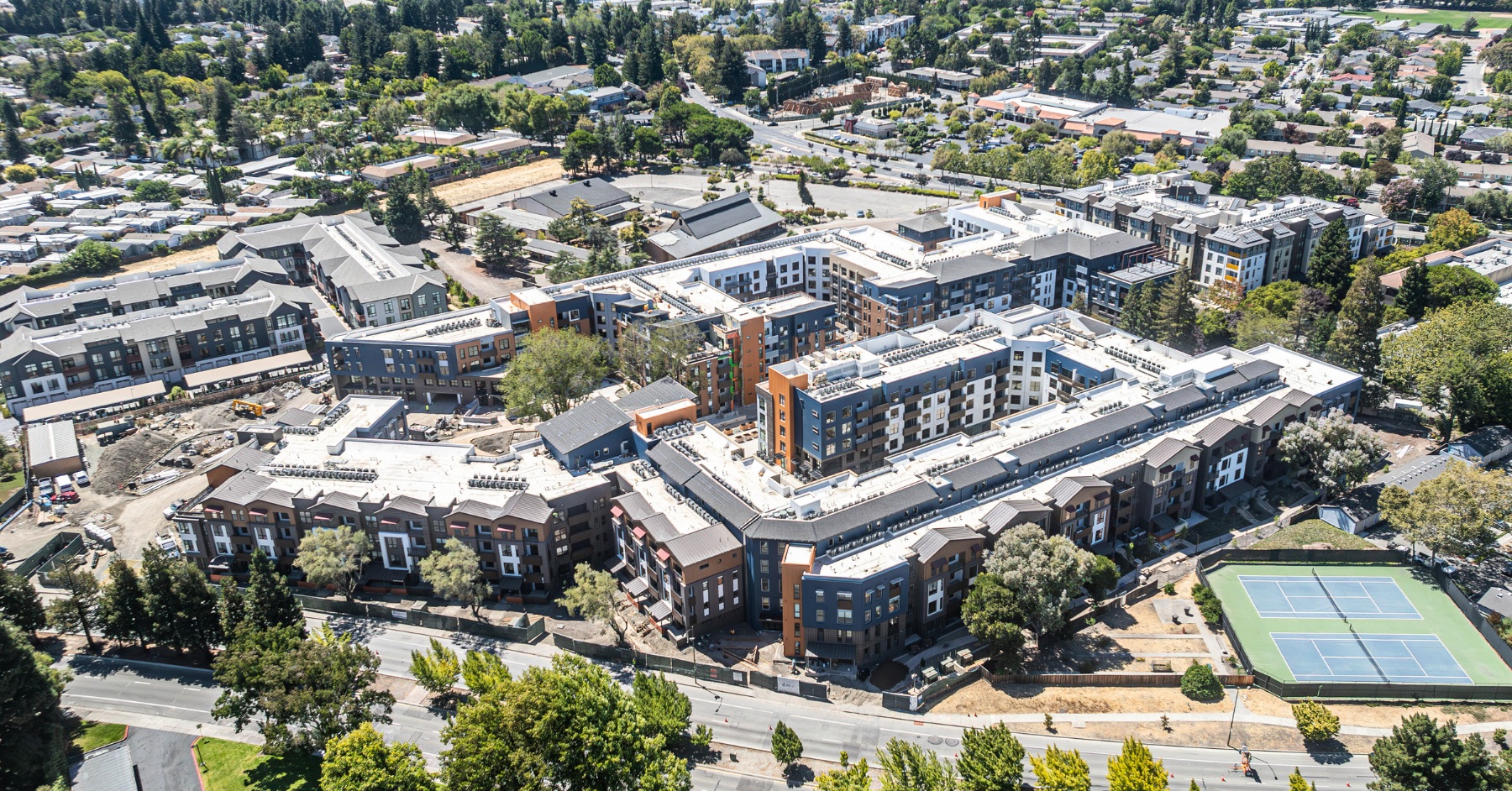
The company’s public work offers recognizable examples. Its LinkedIn feed carries construction photography credits from Palisade Builders, Pacific Bay Masonry, Ciarra Construction, and Next Phase Construction. A Next Phase post credits Panaskopic’s photographs of Sutter Green, a 248-unit apartment development in Sacramento. Those credits establish real production activity; they should not be read as evidence that every company buys every service.
Its published testimonials supply a more personal account of the buying decision. NorCal Lumber describes website development and work in the field. O’Kane Structural Steel discusses a new website. Another customer, identified as Corey G., puts the starting problem neatly: “Our website was outdated and vintage.” In that account, the assignment covered pictures and wording as well as design.
“Our website was outdated and vintage.”
Corey G., president, in a company-published customer testimonial
These accounts suggest that the purchase often begins with an obvious defect: the company’s public presentation has fallen behind its work. The resulting brief can grow because replacing a website exposes the next question. What, exactly, will go on it?
Get the picture before the wall closes
Panaskopic separates active-jobsite photography from finished-project photography. That distinction earns its place on the menu. Its July 2026 guide to active-site images points out that rough-ins disappear, utilities get buried, and crews move on. Waiting until completion can erase the opportunity to record the work a trade most needs to show.
The active-site service covers crews, field leaders, equipment, and specific phases such as framing, concrete, and mechanical, electrical, and plumbing work. It includes edited sets organized by project, with drone photos and video among the available outputs. The company estimates that most shoots take one to two hours, depending on scope and the shot list.
One unusually human item in the FAQ asks what happens if the site is messy. “That’s construction,” comes the answer. Panaskopic says it works around activity and follows site rules. The useful point is logistical: a marketing shoot has to fit around production, and its timing should reflect what will actually be happening that day.
Finished photography has a different appointment with the calendar. Panaskopic recommends shooting before turnover or owner handoff, when a completed project can be presented cleanly. Interior, exterior, and detail coverage, plus aerial work where needed, supply a record of the result. The images arrive in formats intended for websites, print, presentations, and social publishing.
The practical lesson is to commission both kinds of evidence deliberately. Progress pictures explain participation and process. Completion pictures show the outcome. For a contractor assembling a portfolio, those are complementary answers to a buyer’s questions.
The photograph has to survive the proposal
A good image cannot rescue a document that leaves the reader guessing. Panaskopic’s qualifications and proposal service includes project descriptions, team biographies, organization charts, and editable templates. An SOQ, or statement of qualifications, gives a selection team a structured account of experience. RFP response materials help a contractor present that experience for a particular pursuit.
The company estimates three to five weeks for most SOQ packages, with timing dependent on scope and the condition of the underlying material. That dependency matters. Someone still has to establish who did what, choose the relevant projects, and approve the facts. Attractive layouts work harder when the project descriptions are precise.
Website production follows a related logic. Panaskopic offers mobile layouts, construction-specific copy, service and project pages, inquiry forms, and photo and video integration. Its published estimate is four to six weeks for most websites. The aim is to make the contractor’s services and experience legible before a first call, while giving an interested visitor a clear next step.
And yes, it will do the jackets
The distribution work continues through social media. Panaskopic offers monthly planning, branded posts, construction-focused captions, and management of Instagram, LinkedIn, and Facebook. It incorporates site photos and video into that schedule. This is a continuing service, which gives the field material a route into public view between project milestones.
Lead generation extends the assignment toward business development. The company describes prospect research filtered by trade, geography, market, and project type, followed by contact lists, email campaigns, tracking, and follow-up support. It says the contractor’s team enters when there is a serious conversation or opportunity. That division of labor makes the client’s availability part of the service’s practical value.
Then there is apparel. Through Panaskopic Uniforms, the offering includes hi-vis gear, polos, jackets, hats, printing, and embroidery. It is a revealing addition. The same contractor whose project page needs a consistent identity may want that identity on the people turning up at the gate. Panaskopic gives ordinary workwear a place alongside digital marketing in its service list.
The big number belongs to the clients
Panaskopic’s homepage displays $2.6 billion in awarded projects, while its surrounding language describes client project wins supported. Read that carefully. It is a company claim about the value of client projects associated with its support, not Panaskopic’s revenue. The wording also does not establish how much of any award resulted from marketing.
A measure of client project value. Not agency revenue or an attributable marketing return.
The more useful buying question is what changes inside the contractor’s own workflow. Are current projects represented accurately? Can staff assemble a relevant qualifications package without chasing images? Does outreach produce suitable conversations? Panaskopic’s published process says it reviews lead quality, calls, page performance, advertising, and conversion points. Those are closer to the work a client can examine and discuss.
Commercially, this is a services business. Panaskopic sets priorities, pricing, and timelines during assessment, then supplies production and ongoing marketing work. A buyer should frame the proposal around deliverables and responsibilities: which sites need coverage, which documents need rebuilding, who approves them, and what continuing publishing or outreach is included.
The part a contractor can copy tomorrow
Panaskopic positions itself against generalist agencies and a collection of separate freelancers. Its argument is that construction knowledge and coordinated delivery reduce the burden of explaining the business repeatedly. For a contractor juggling a photographer, designer, and social manager, that is a concrete proposition. Its value depends on whether the coordination actually saves the client work.
The company’s onboarding requirements make the conditions plain: one person who can approve promptly, existing brand material, background on services and territories, and a clear view of the projects the client wants. An outsourced department still needs access to the company’s knowledge. Delayed approvals or vague targets make the proposed workflow harder to execute.
The transferable habit is modest enough to start this week. Choose an active project. Identify the stages worth documenting. Decide where the resulting pictures and descriptions will be used, and assign someone to approve them. Panaskopic has built a service business around doing that across multiple channels. The contractor’s contribution is to recognize the useful evidence while it is still standing in plain sight.